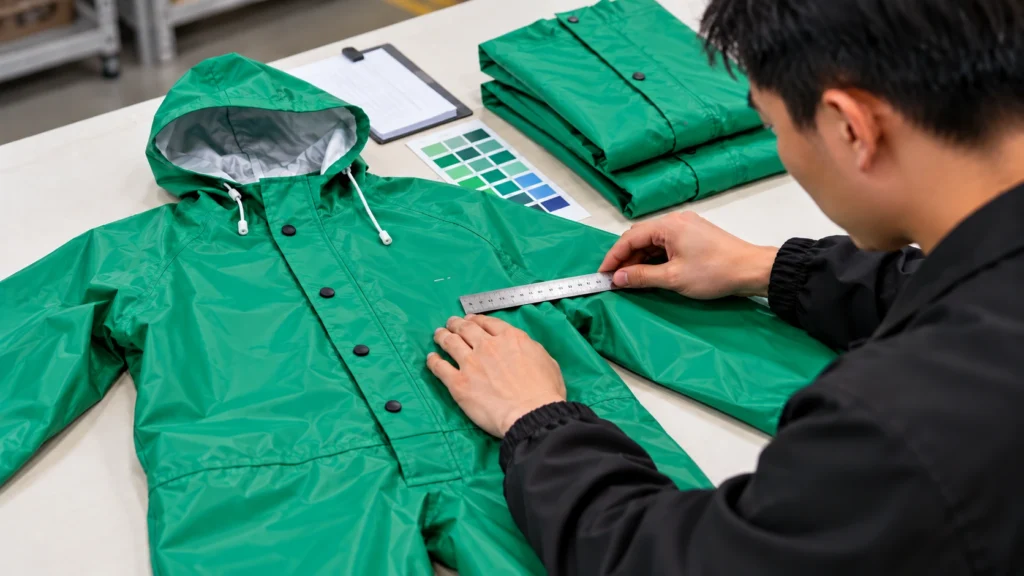
A PVC rainwear logo sample should be approved only after the buyer has checked the artwork, print position, color reference, surface appearance, adhesion behavior, and response to realistic folding. The purpose is to catch visible or repeatable defects before the supplier copies them across a bulk order. A desk review is useful, but it does not prove long-term print durability and should not replace an agreed test method when performance is critical.
Build a Controlled Approval Pack
Begin with one approval pack that identifies the garment model, material, artwork revision, logo dimensions, print method, color reference, and intended location. Mark the date and sample version so comments cannot be applied to an older file or a different garment. The physical sample, approved artwork, measurement sheet, and written test criteria should remain together as the production reference.
Confirm that the sample uses the production-intent PVC or PVC polyester surface. Ink behavior can change with coating, texture, color, thickness, or surface treatment. If the supplier made the logo on substitute material, record the sample as a visual proof only and require production-material confirmation before release.
Inspect Print Appearance Before Touch Tests
View the logo on a flat, clean panel under consistent neutral lighting. Compare it with the approved artwork at normal viewing distance and then at close range. Look for missing areas, pinholes, ink bleed, rough edges, double images, contamination, trapped particles, uneven coverage, or misregistration between colors. On transparent or translucent PVC, inspect the logo against both a light and a dark background because the substrate can change the apparent contrast.
Check the surrounding panel as well. The print process should not leave visible distortion, scorch marks, gloss changes, or damage near a seam or closure. Photograph the complete garment and any defect with a scale or ruler in the frame, and label each image with the sample version.
Check Adhesion Without Inventing a Standard
First confirm that the supplier considers the sample fully processed and ready for evaluation. Lightly inspect the logo edges and surface for lifting, flaking, tackiness, or transfer to adjacent material. A gentle dry rub or limited edge check may reveal an obvious problem, but use it only as an agreed screening step. It does not establish service life.
Do not improvise a tape, scratch, solvent, wash, or crosshatch test and then treat the result as a universal pass or fail. Tape type, pressure, cut pattern, conditioning, and ink system can materially change the outcome. If adhesion performance is a contractual requirement, ask the supplier to state the applicable method, sample conditioning, acceptance rule, and responsible test party in writing. Record the exact procedure used so a revised sample can be compared on the same basis.
Measure Logo Size and Placement From Stable Datums
Measure the printed width and height rather than relying on the digital mockup. For position, choose stable garment references such as a center-front line, zipper, panel seam, pocket edge, or reflective element. Avoid measuring only from a soft outer edge that changes when the garment is laid differently. Record the horizontal and vertical offsets and photograph the ruler position.
Placement should also be checked in relation to garment function. The logo placement and bulk packaging checklist explains why pockets, seams, closures, reflective details, backpacks, and work equipment can affect a useful print position. Put the sample on a wearer or dress form if the approved position must remain level and visible during use.
Compare Color Against an Approved Reference
Use the agreed physical swatch, approved printed proof, or specified color reference. Compare samples under the same lighting and against the same background. A monitor image is not a dependable production color standard because display settings, file profiles, ink opacity, and the PVC surface can alter appearance. For multi-color logos, check each color and the boundaries between them.
Record whether the approval concerns an exact specified reference or an agreed visual range. If the sample is unacceptable, describe the direction of the difference, such as darker, less saturated, or more transparent, instead of writing only that the color is wrong. This gives the supplier a usable correction request.
Run a Controlled Fold and Flex Check
Fold and flex the printed panel in the way the finished rainwear will actually be packed, issued, and worn. Use the planned fold line when one is known, and do not create an artificial sharp crease through the logo unless bulk packing will do the same. After the agreed movement, inspect the print while the panel is flat and while it is gently flexed.
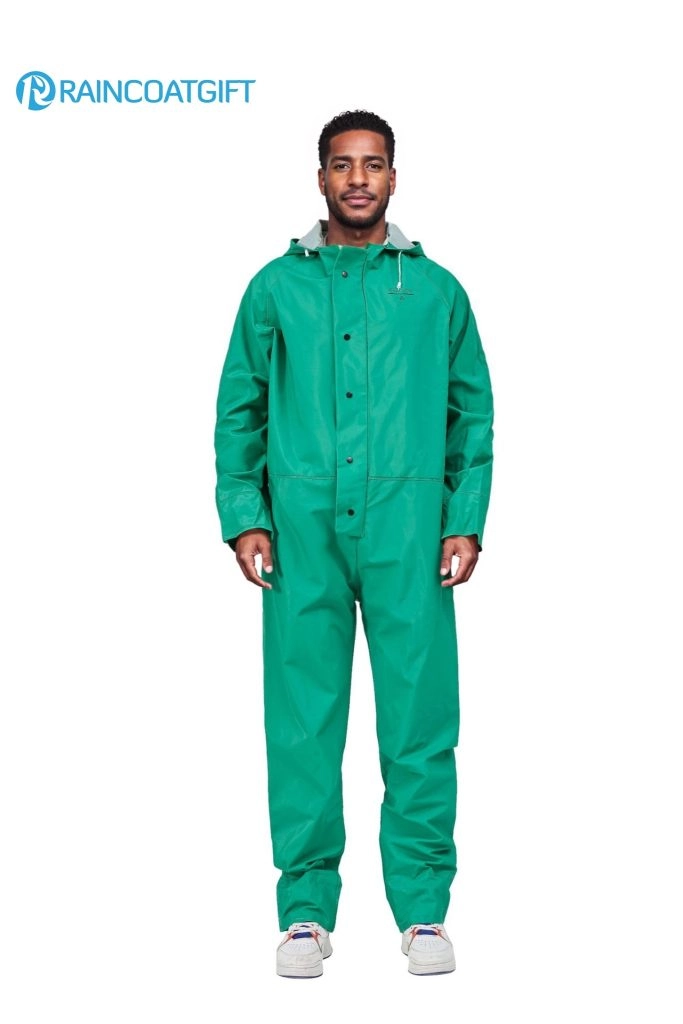
Look for cracking, whitening, edge lift, permanent distortion, blocking, or color transfer onto the opposite fold. If the garment will be packed individually, repeat the check with the approved bag and folding arrangement. RAINCOAT GIFT lists one piece per PE bag for its PVC polyester rainwear product, but the buyer should confirm that the sample packaging and bulk packing method match the current order specification.
Use Clear Approval Outcomes
Convert observations into one controlled decision. Avoid vague notes such as improve the logo. Identify the defect, its location, the reference it failed to match, and the required correction. The decision should state whether the supplier may proceed, must provide evidence of a correction, or must submit another sample.
| Outcome | Use when | Buyer action |
| Approve | Artwork, placement, color, and agreed checks match the approved criteria. | Sign and retain the controlled master sample. |
| Revise | A defined deviation appears correctable without changing the core specification. | Issue numbered comments and request correction evidence or a new sample. |
| Reject | The sample uses the wrong version or shows material lifting, transfer, cracking, or functional conflict under the agreed check. | Stop production release and require investigation and resampling. |
Lock the Production Reference
After approval, sign or otherwise identify the master sample and attach the final artwork, measurements, color reference, photographs, packaging fold, and agreed test record. Send one consolidated approval rather than comments spread across chat messages. Any later change to material, ink system, logo size, artwork, placement, or packing should trigger written review and, where the change can affect appearance or adhesion, a new approval step.
The approved sample is a control reference, not proof that every bulk unit will match. The purchase order should state how production will be checked, which defects are critical to the buyer, and what happens if bulk goods differ. A pre-shipment inspection can then compare selected units with the same master instead of relying on memory.
Apply the Checklist to a Real PVC Rainwear Order
RAINCOAT GIFT lists a PVC polyester rainwear product with a customized-logo option, standard adult sizing, a stated MOQ of 500 pieces, custom-design sampling of 5 to 7 days, and a listed production time of 30 days. These published details help frame an RFQ, but the buyer should confirm the current logo method, artwork requirements, sample scope, acceptance criteria, and schedule for the specific order.
For material and decoration choices before sampling, review the custom PVC raincoat guidance. Keep that selection decision separate from sample approval: first define what should be produced, then use the physical sample to verify what was actually made. This separation prevents an approved mockup from being mistaken for approval of adhesion, color, or folding behavior.
Conclusion
A useful PVC rainwear logo approval is controlled, repeatable, and documented. Compare one production-intent sample with the final artwork and physical references, measure placement from stable garment features, apply only agreed adhesion and fold checks, and record a clear approve, revise, or reject decision. When performance matters, add a specified test method rather than treating an office check as proof of long-term durability.
Frequently Asked Questions
Can a digital mockup replace a printed rainwear sample?
No. A mockup can confirm the artwork concept and approximate location, but it cannot show ink coverage, edge quality, substrate influence, adhesion behavior, or the effect of folding. Use it as an artwork step, then approve a production-intent physical sample when those risks matter.
Should buyers use a tape test on every PVC logo sample?
Only when the tape, procedure, conditioning, and acceptance rule have been agreed for the relevant print system. An improvised tape pull may damage the sample or produce a result that cannot be compared with later testing. A non-destructive visual and flex screening check is safer when no formal protocol exists.
How should logo placement be measured on flexible rainwear?
Lay the garment consistently and measure from stable datums such as a zipper, center line, panel seam, pocket, or reflective element. Record the logo width, height, and offsets, and photograph the ruler position. Also check the position on a wearer or form when drape changes visibility.
What should be kept after sample approval?
Retain the identified master sample, final artwork revision, color reference, logo dimensions, placement measurements, photographs, fold arrangement, test record, and written decision. These items give production and inspection teams one reference and reduce disagreements about which version was approved.
For a project review, contact the rainwear team with the garment model, material, quantity, logo file, print dimensions, positions, color reference, packing method, delivery destination, and required date. RAINCOAT GIFT can then confirm which details must be resolved before a custom sample is prepared.