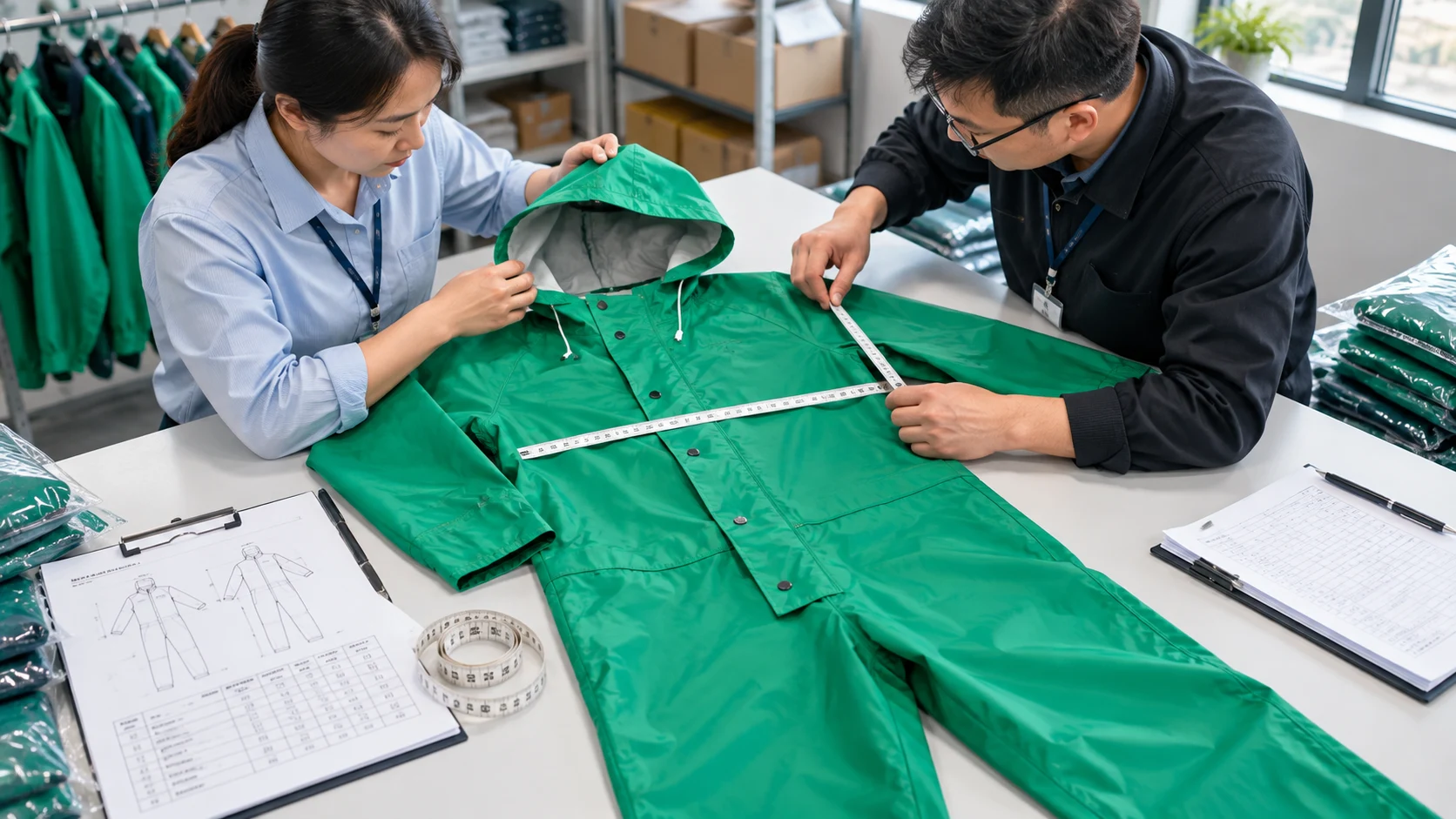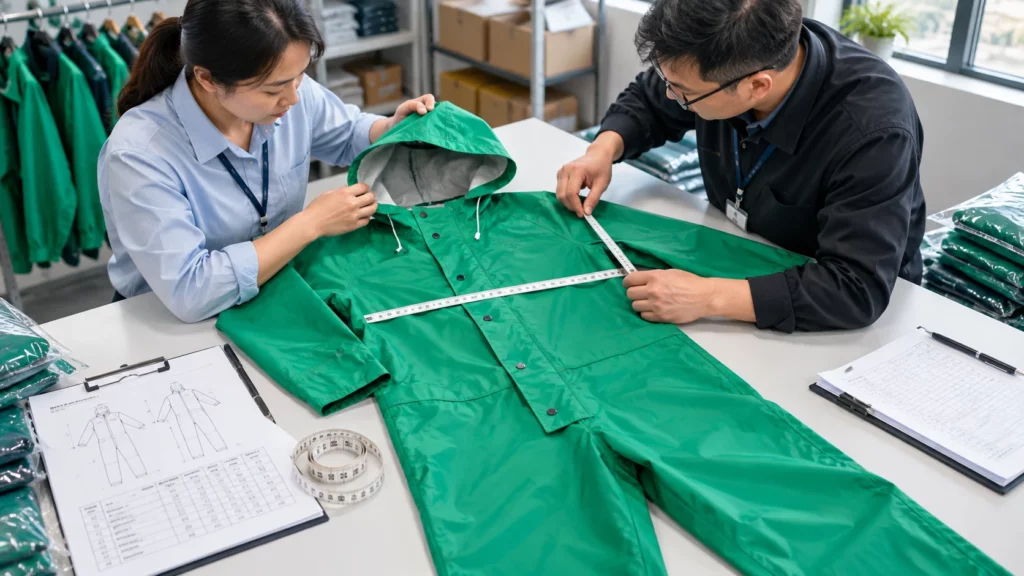
A work rainwear sample should be approved only after it matches the written specification, operates correctly, fits over real work layers, and allows the movements employees perform on the job. A clean-looking sample is not enough. Buyers need a repeatable inspection that exposes weak seams, awkward closures, restrictive dimensions, and unclear production details before the factory starts bulk cutting.
The goal is to compare one production-representative garment with an agreed requirement, document every finding, and decide whether to approve, revise, or reject it. The following process is designed for procurement teams, safety managers, operations leaders, and brand buyers evaluating reusable rainwear for outdoor crews.
Confirm That the Sample Represents the Planned Order
Start by checking what the sample actually represents. A development prototype may use substitute fabric, generic trims, or an unapproved size. The approval sample should reflect the intended material, color, construction, closure type, logo method, and size whenever possible. If any item is substituted, record the substitution and require confirmation before production.
Review the sample beside the purchase specification, measurement chart, artwork proof, packaging requirement, and revision history. Mark each document with the same style or project identifier. This prevents an old sample or outdated artwork from being approved after a later change.
Inspect the Seams and Waterproof Construction
Seams deserve close attention because they combine cut edges, stitching or bonding, and repeated stress. Work in good light and inspect the exterior and interior. Follow every major seam from end to end instead of checking only the most visible area. Look for skipped stitches, loose threads, puckering, uneven allowances, incomplete bonding, lifted tape, bubbles, sharp residue, or openings at seam intersections. The appropriate seam method depends on the material and agreed construction, so compare the sample with the approved specification rather than assuming one method suits every rainwear design.
Pay particular attention to the hood attachment, shoulders, underarms, crotch, pocket corners, and the points where a closure or drawcord is anchored. These areas often receive concentrated force during reaching, kneeling, or dressing. Gently flex the garment and open the seam allowance where accessible; do not use a destructive pull as a substitute for an agreed test. A desk spray or short water check may reveal an obvious leak path, but it does not prove full waterproof performance. Formal performance requirements should be verified with the supplier and an appropriate test plan.
Cycle Closures and Adjustments
Operate every zipper, snap, hook-and-loop strip, storm flap, cuff adjuster, hood drawcord, and pocket closure repeatedly. Use bare hands and the gloves workers normally wear. A closure should engage without excessive force, catching the surrounding material, or leaving the wearer unable to operate it. Check whether the front closure stays aligned, whether a storm flap covers the intended area, and whether snaps are supported by enough material.
Close the garment while standing, sitting, and wearing base layers. Confirm that pocket openings remain usable and that adjustment hardware does not press into the body or interfere with tools. Record a recurring snag or misalignment as a defect, even if the closure eventually works.
Measure the Garment Against the Written Tolerances
Lay the sample flat without stretching it and use the same measurement method defined in the tech pack or purchase specification. Typical control points may include chest width, back length, sleeve length, shoulder width, inseam, rise, hood opening, and cuff opening. The exact list depends on the garment design. Compare the result with the target dimension and its written tolerance; a verbal statement such as “standard adult size” is not enough for workforce approval.
Measure at least twice if a result is close to the limit, and note the method used. A tolerance is an agreed acceptable range, not permission for uncontrolled variation. If a key point is outside the range, request a corrected sample or written resolution before approval.
Test Fit Over Real Work Layers
A rainwear sample can appear roomy on a mannequin and still restrict a worker wearing a uniform, fleece, or insulated jacket. Select wear testers who represent the intended size range and have them wear the actual layers used in wet conditions. Check the chest, shoulders, elbows, seat, knees, and rise while the garment is fully closed. Sleeves and legs should provide coverage without creating dangerous excess, and the hood should be evaluated with any routinely worn headgear when compatible with the job’s safety rules.
Use a consistent fitting form for each tester: wearer measurements, usual workwear size, layers worn, sample size, pressure points, excess length, coverage gaps, and comments. If the order includes multiple sizes, do not approve the entire size run from one middle size alone. Review the critical dimensions across the planned range or agree on a size-set approval process.
Run a Short Worker Mobility Trial
Fit and mobility are related but not identical. A garment may fit while standing and bind as soon as the wearer works. Ask the tester to perform controlled versions of the real tasks, in a safe area and without introducing unrelated hazards.
- Reach overhead and forward to reveal tight shoulders, short sleeves, or a rising hem.
- Bend, squat, and kneel to check the seat, rise, knees, and leg coverage.
- Step onto a low platform or simulate climbing to check stride and crotch restriction.
- Sit, turn, and access normal pockets or tools to identify bunching and blocked access.
Watch the garment rather than relying only on a comfort rating. Note where fabric pulls, closures gap, cuffs ride up, or the hood obstructs the field of view. Repeat the same movement sequence after any pattern or sizing revision so the two samples can be compared on the same basis.
Record an Approval Decision That Production Can Follow
Photograph each issue with a scale or clear reference, identify its location, and classify it as acceptable, revise, or reject. Consolidate comments into one dated approval record instead of distributing contradictory messages across email threads. The record should identify the exact sample, specification revision, color, size, artwork version, defect list, required correction, owner, and decision date.
If the sample is approved with a change, state whether a revised sample, close-up photo, updated measurement sheet, or written confirmation is required before cutting. Keep the approved sample as the physical reference for production and later inspection. Sample approval does not replace in-process checks or pre-shipment inspection; it defines what those checks should compare against.
Convert the Approved Sample Into a Clear Purchase Order
Before requesting final pricing, align the sample decision with the commercial details. Quantity, size breakdown, colors, logo artwork and placement, individual packing, carton requirements, delivery destination, and required arrival date should appear in the RFQ or purchase order. The workforce planning checklist for size runs, logo placement, and bulk packaging can help teams prepare these inputs before sampling.
RAINCOATGIFT lists a PVC-polyester work rainwear option with customized logos, a 500-piece minimum order quantity, packing of one piece per PE bag and 20 pieces per carton, a 5-7 day custom-design sampling time, and a listed 30-day production time. These published details provide a useful starting point, but buyers should reconfirm the current specification, sample status, size requirements, production schedule, and delivery basis for each order.
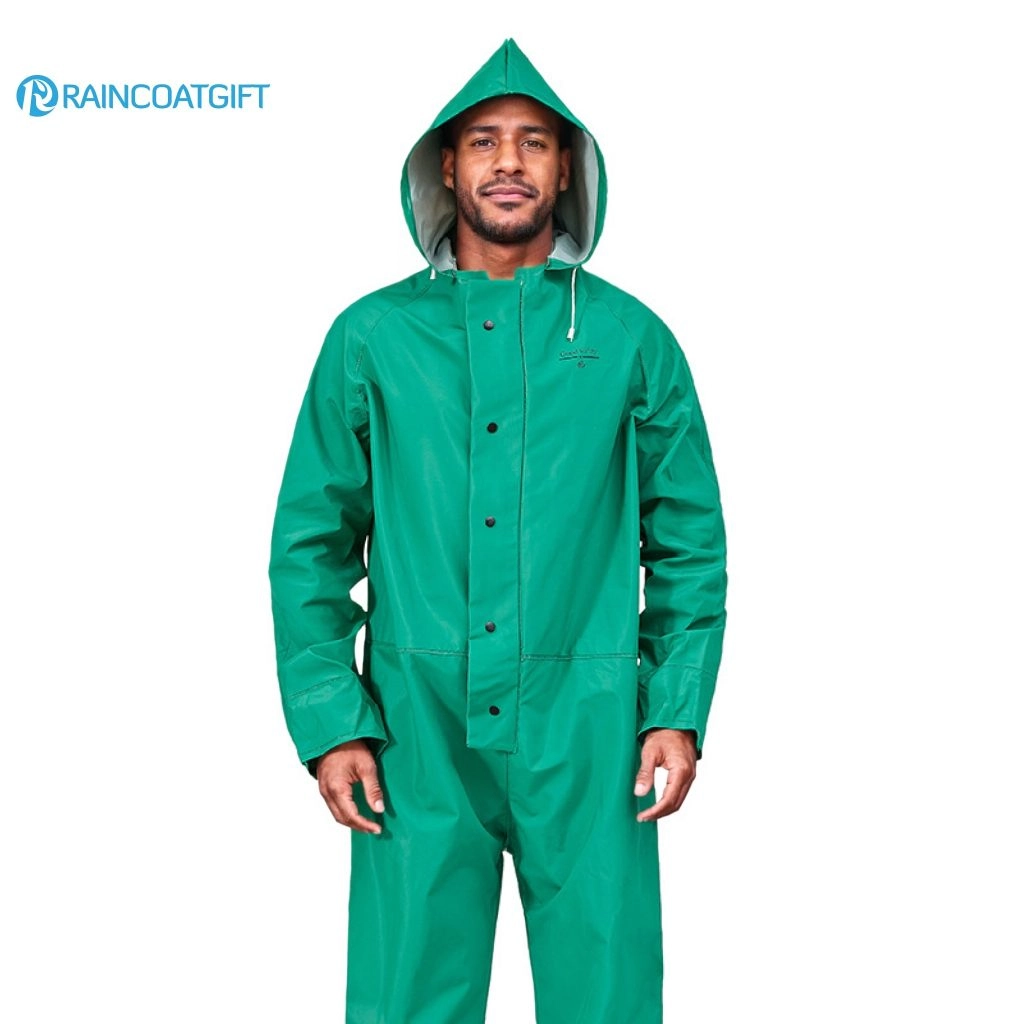
When comparing custom rainwear sourcing options, ask which details on the approved sample will be controlled in bulk production and how deviations will be handled. A useful supplier response should connect the physical sample, measurement sheet, artwork, and packing instruction to the same order reference.
Conclusion
A reliable rainwear sample inspection follows a simple sequence: verify that the sample represents the order, inspect seams and closures, measure against written tolerances, test fit over work layers, run job-relevant movements, and record one unambiguous decision. This process turns subjective approval into a usable production reference and reduces avoidable disagreements after bulk manufacturing begins.
Frequently Asked Questions
What is a production-representative rainwear sample?
It is a sample made to reflect the intended bulk material, construction, trims, dimensions, color, and branding as closely as possible. Any approved substitution should be documented before production.
How many people should test the fit?
Use enough wearers to represent the intended size range and work layers. For a multi-size order, one person in one middle size is not a sufficient basis for approving every size.
Does a spray test prove that the sample is waterproof?
No. A simple check may reveal an obvious leak path, but it does not establish full garment performance. Required performance should be tied to a suitable specification and agreed test method.
Should buyers inspect again after sample approval?
Yes. The approved sample is a reference, not a substitute for production control. In-process or pre-shipment checks should confirm that bulk goods remain consistent with the approved construction, measurements, branding, and packing.
For a sample review or order-specific fit check, contact RAINCOATGIFT with the rainwear style, material, quantity, size breakdown, logo artwork, work layers, intended tasks, delivery destination, and required arrival date.