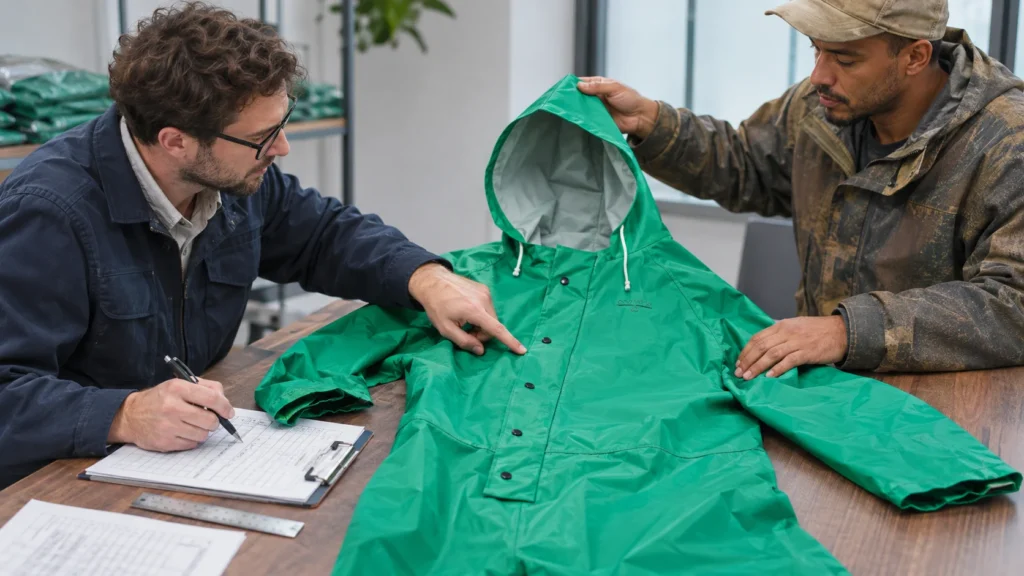
Low-cost raincoats can fail in bulk workwear orders when the fabric construction, seam sealing, or fit cannot withstand the intended work. A low price alone does not establish poor quality. The purchasing risk is accepting an undefined specification, then discovering that a garment chosen for occasional rain cannot support repeated movement, contact with rough surfaces, or the required cleaning routine.
For procurement and operations teams, the first step is to identify how the raincoat failed. Wet clothing can result from a damaged panel, a leaking seam, an exposed opening, or trapped perspiration. Each cause calls for a different correction. Buying a heavier coat without that diagnosis may repeat the problem.
Start With the Failure Pattern
Collect affected garments before cleaning, repairing, or discarding them. Record the style, size, shipment or lot reference, time in use, work task, layers worn, and care history. Photograph both sides of the affected area. Mark where dampness first appeared; water can travel along clothing, so the wettest spot may be below the entry point.
Use these observations to direct the investigation:
- A localized wet patch beside a scrape or pinhole suggests panel damage.
- A narrow wet line following stitching suggests a seam leak.
- Wetness starting at wrists, neck, or the front opening suggests rain entry through a gap.
- Widespread clamminess during exertion warrants checking perspiration and ventilation.
These are clues, not proof. Compare returned garments with unused units from the same delivery and the approved sample. A repeated defect in one location across several wearers supports a different investigation from isolated damage after a known snag.
Fabric Failures Start With Construction
A raincoat material name describes only part of the construction. A plastic film, a coated textile, and a laminated fabric carry loads differently. Ask what forms the water barrier, whether a textile backing supports it, and what the quoted thickness or weight includes. Total fabric weight does not reveal coating uniformity or the strength of the backing.
In a lightly specified garment, abrasion can wear through vulnerable areas, while a small cut can develop into a tear under tension. Kneeling, carrying materials, and repeated folding concentrate wear in different places. Compare damage locations with actual tasks before deciding whether the problem requires another fabric construction, a pattern change, or different handling.
Where a coating or laminate is used, cracking, peeling, or separation between layers requires investigation. Flexing, age, storage, cleaning, and material compatibility may contribute; visible damage alone does not identify the cause. Request appropriate abrasion, tear, or coating-adhesion evidence when those properties matter. Compare equivalent methods and conditioning, including relevant care cycles.
Some textile rainwear also uses a water-repellent surface finish. Loss of surface beading does not by itself prove that the underlying water barrier has failed. Do not apply that diagnosis to every PVC or film raincoat: confirm the actual construction first.
Seams Can Leak Before Panels Fail
Joining panels creates another potential failure path. Stitching makes needle holes that need suitable sealing where waterproof performance is required. Taped seams depend on continuous coverage and a compatible bond. Welded or bonded seams depend on the material and controlled processing. A seam-method label alone cannot establish finished-garment performance.
Inspect hood attachments, shoulders, underarms, pocket corners, and seam intersections. Gaps, lifting tape, wrinkles, incomplete bonds, or damaged material beside a join can indicate where water enters or a tear starts. A tight garment can also pull on an otherwise acceptable join, making seam failure partly a fit problem.
Ask whether the proposed raincoat seam sealing covers all required joins or only selected areas. Tie the answer to a construction drawing and an agreed check. A fabric waterproofness result applies to the tested fabric; it does not establish the performance of the hood, seams, pockets, and closures together. A brief spray check can reveal obvious defects but cannot substitute for a suitable performance test.
Fit Can Turn Movement Into Damage
Raincoat fit affects both durability and coverage. Insufficient room across the shoulders, elbows, seat, or knees places tension on panels and joins during work. Sleeves may ride up, the hem may rise, and the front closure may gape. An oversized garment can introduce snagging or interference, so simply ordering a larger size is an incomplete solution.
Check finished dimensions against a measurement diagram and written tolerances. Test the garment over the layers workers actually use, then observe reaching, bending, sitting, and controlled versions of relevant tasks. If complaints cluster around one size or one movement, investigate the pattern and size grading before changing the fabric for the entire order.
Examine openings during the same trial. A loose cuff can admit rain even when its seam is sound. A hood that shifts as the wearer turns may expose the neck or affect sightlines. Record the specific adjustment or dimension needing correction so the supplier can reproduce the improvement.
Separate Condensation From Rain Entry
Work rainwear can keep external water out while retaining moisture generated by the wearer. Dampness that increases with physical effort, especially without a repeatable entry point, warrants a comfort assessment alongside leakage checks. Waterproofness and moisture-vapor performance are separate properties; neither a material name nor a vent opening proves both.
Compare work rate, temperature, clothing layers, and ventilation settings across complaints. Follow the garment care instructions; an unsuitable wash or heat treatment may damage some constructions. Avoid applying a generic reproofing or seam-repair treatment to a whole delivery before compatibility is confirmed. Preserve representative failed units for review and keep any repair trial separate from the evidence used to assess the original supply.
Use Failure Evidence to Change the Next Order
Turn the findings into requirements suppliers can quote. Specify the construction and tolerances, seam coverage, critical dimensions, closures, care conditions, and acceptance method. Compare suitable raincoat and poncho constructions against the job and expected reuse. An inexpensive emergency layer can serve a different purpose from repeatedly issued waterproof workwear.
RAINCOATGIFT offers custom PVC polyester rainwear with logo customization. It is a candidate for an order-specific review, with seam construction, size availability, and required performance evidence to be confirmed. The material description alone does not establish suitability for a particular workforce.
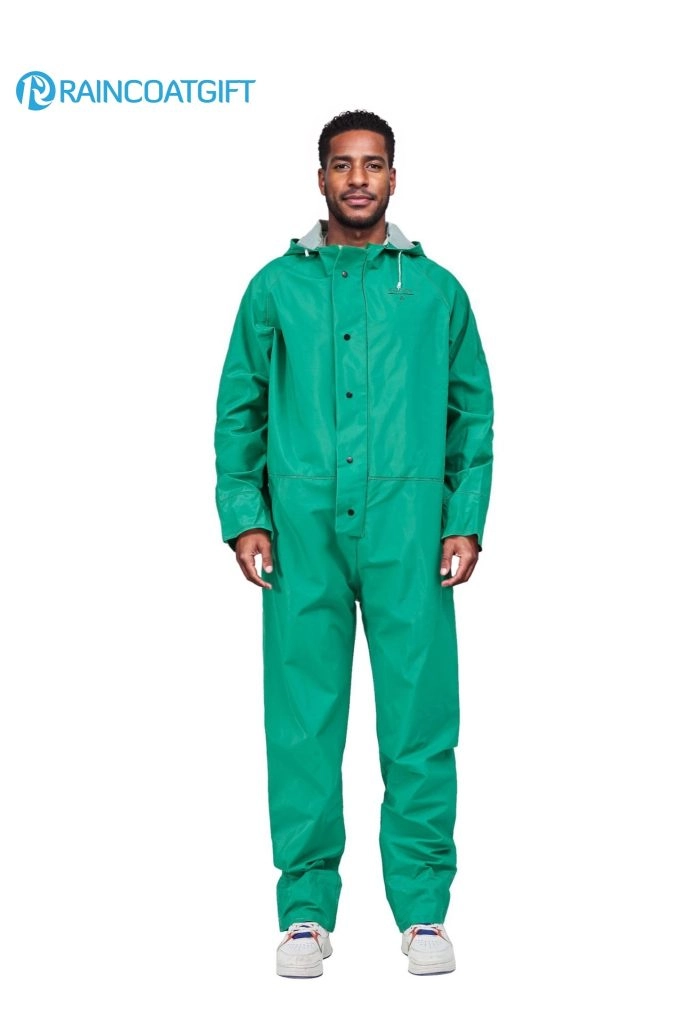
Send RAINCOATGIFT the failure photographs, affected locations, use conditions, and proposed corrections alongside the RFQ. Use the work rainwear sample inspection process to validate the revised specification before approval. Check randomly selected production units against that reference; one corrected sample does not establish consistency throughout a shipment.
Compare quoted price with freight, inspection, replacements, reissuing, and disruption where those costs can be documented. Agree how deviations will be recorded and resolved. When requesting revised samples from RAINCOATGIFT, ask which change addresses each observed failure and what evidence will confirm that it works.
Conclusion
Low-cost work raincoats become a costly purchase when their construction and fit do not match the job or vary beyond agreed limits. Diagnose the location and circumstances of failure, distinguish leakage from retained perspiration, and convert the findings into measurable purchasing requirements. This gives buyers a practical basis for comparing quotations and checking the next delivery.
FAQs
Does a low price mean a raincoat will fail?
No. A low-cost garment may suit short or occasional use. Problems arise when construction, fit, consistency, or care requirements do not match the intended work. Compare defined specifications and evidence.
Will thicker raincoat fabric solve tearing?
It may help in some constructions, but backing strength, cuts, seam condition, fit, and abrasion also matter. Identify where the tear starts and what loads that area before changing thickness.
Why can a waterproof raincoat feel wet inside?
Perspiration can accumulate inside the garment. Check work intensity, layers, and ventilation alongside possible leaks. Dampness alone cannot distinguish internal moisture from rain entering through panels or openings.
What should buyers send when reporting failures?
Provide the order reference, affected quantity and sizes, photographs, first wet locations, tasks, time in use, and care history. Retain failed and unused comparison units where possible.
For a bulk order or specification review, discuss your work rainwear requirements with the intended tasks, quantity, size breakdown, material preference, failure evidence, logo artwork, and delivery requirements. Request confirmation of the proposed construction and sample validation before committing to production.