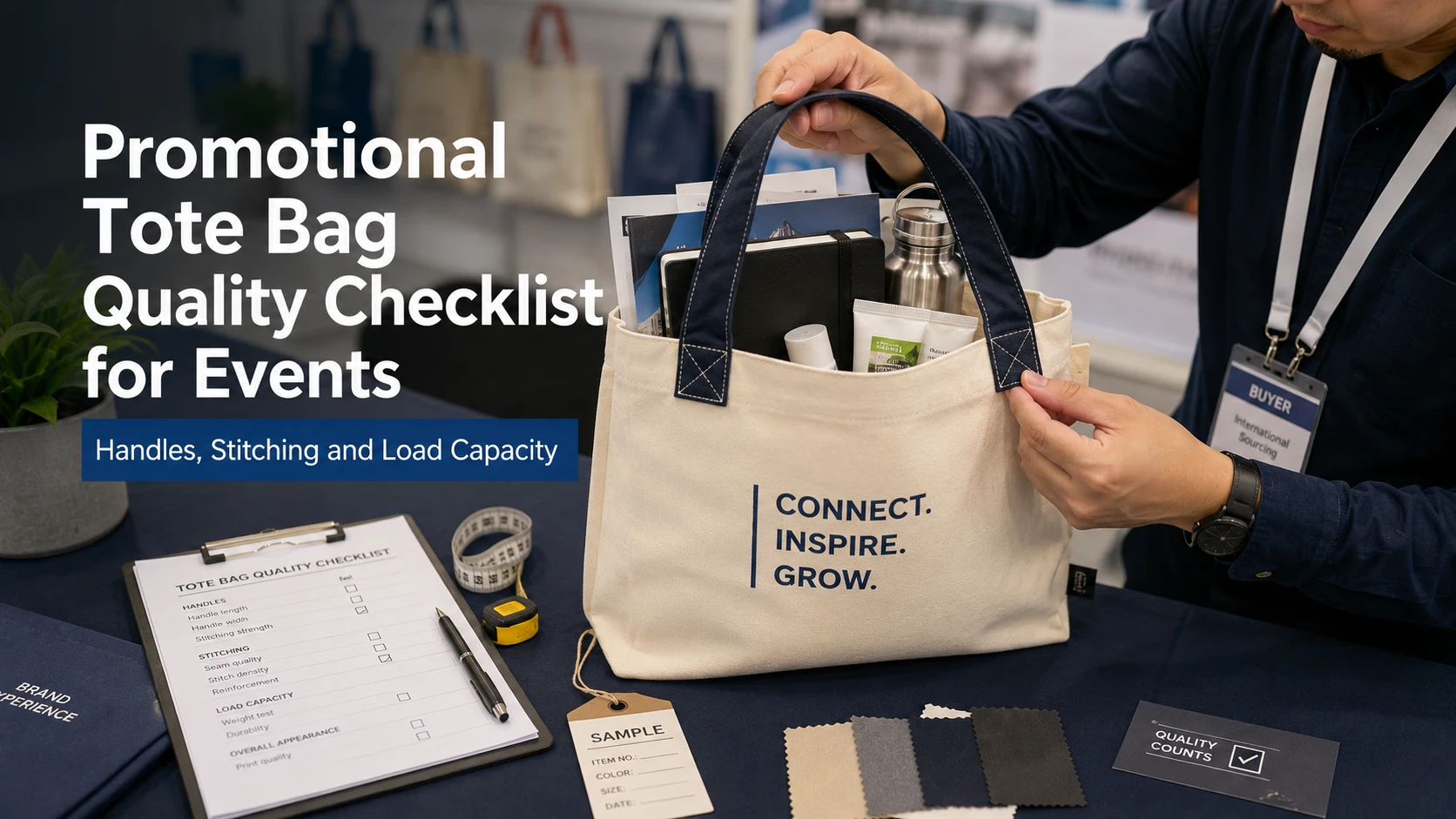
Promotional tote bags often fail at events because the finished bag was approved by appearance rather than by real use. A bag may look acceptable while its handles, seams, gusset, or load rating does not match the items placed inside. A practical promotional tote bag quality checklist should evaluate the complete construction under a realistic event load before bulk production begins.
Why Do Promotional Tote Bags Fail at Events?
A bag usually fails where load is concentrated: the handle roots, side or bottom seams, gusset edges, or fabric around needle holes. Material thickness alone does not explain the problem; dimensions, handle geometry, stitching, contents, and carrying method also affect promotional tote bag durability.
Handle Attachment and Seam Failure
The handle root transfers weight through a small area. Risk increases when the bag carries catalogs, bottled drinks, boxed samples, notebooks, or merchandise rather than light leaflets. Inspect handle width and material, but also check attachment depth, reinforcement position, and the fabric surrounding the stitches. Enlarged needle holes, puckering, or stitch movement are warning signs.
Side and bottom seams require the same attention. Distinguish thread breakage from seam slippage or fabric tearing because each calls for a different correction. For rigid contents, inspect the filled shape and pressure points, not only total weight.
Load Claims That Do Not Match Real Event Use
“How much weight can a promotional tote bag hold?” has no universal answer. Capacity depends on the specific size, material, handle construction, seams, gusset, contents, and test procedure. A short static hold does not reproduce repeated lifting, walking, shoulder carrying, or setting the bag down.
SATRA’s luggage test methods separate static handle loading, repeated lifting, snatch loading, and fitting attachment strength. These methods are intended for luggage rather than being a universal tote standard, but they show why test conditions and failure location matter. Ask what was loaded, how long it was applied, whether lifting was repeated, and how failure was defined.
How to Check Tote Bag Handle and Stitching Quality
Sample inspection should determine whether the bag suits the intended event.
Evaluate Handles, Stitching, and Reinforcement Together
Handle material should match the bag body, expected weight, and carrying style. A wider handle may improve comfort, but width alone does not confirm attachment strength; long shoulder handles also change the force direction. Record handle material, width, total length, drop, spacing, attachment depth, and reinforcement in the RFQ.
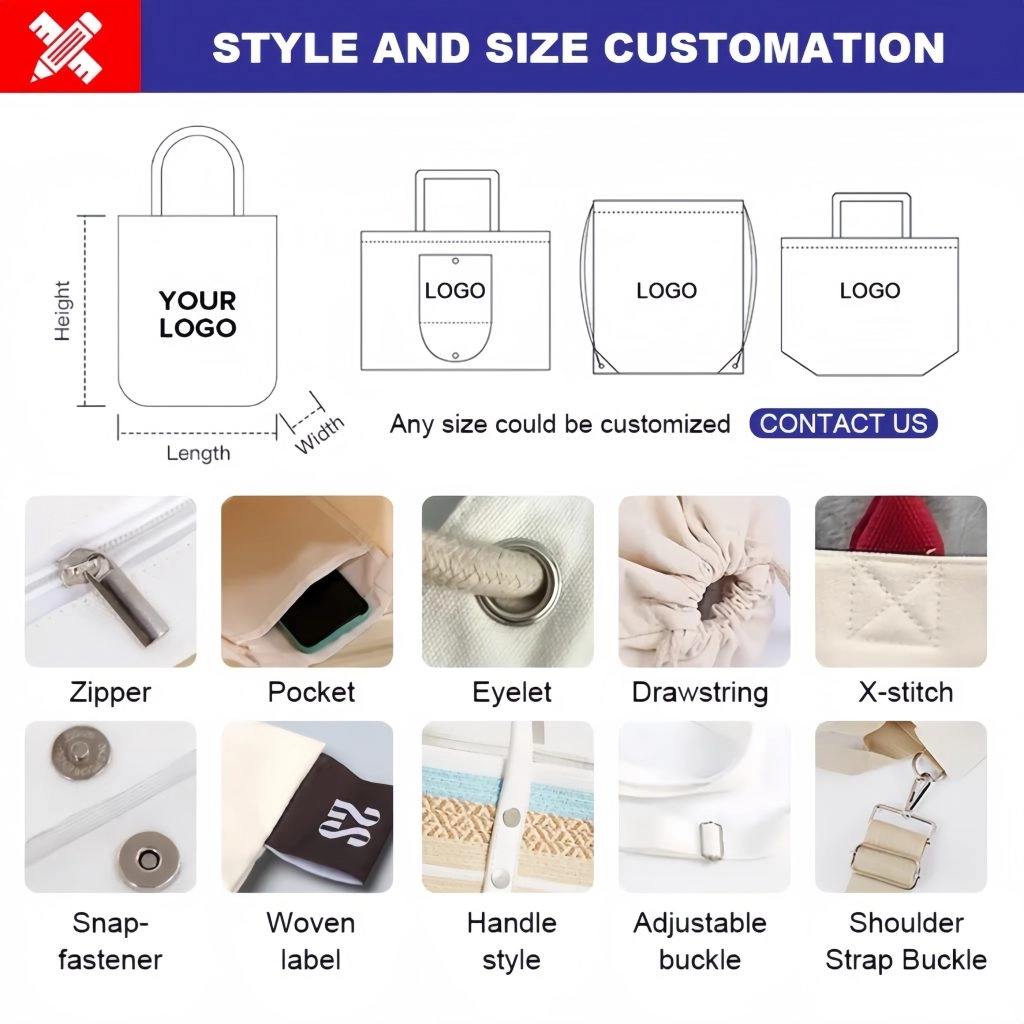
Inspect stitching from both sides for skipped stitches, loose thread, irregular spacing, narrow seam allowances, or reinforcement that misses the load-bearing area. Box-X stitching, bar tacks, or multiple rows may all be suitable in the right construction; none is automatically stronger for every fabric. Extra needle holes can weaken some materials if the surrounding fabric tears first.
A custom promotional canvas tote can be configured with different dimensions, printing, handles, and accessories. RAINCOAT GIFT’s listed canvas tote options include X reinforcement, inner pockets, zippers, and labels, but the selected construction should still be checked against the actual project load.
How Should Buyers Test Promotional Tote Bag Load Capacity?
A useful tote bag load test starts with realistic event contents rather than an arbitrary weight.
Build a Realistic Event Load Profile
List every expected item, including quantity, unit weight, and dimensions. Include brochures, bottles, samples, notebooks, packaged gifts, and items attendees may add later.
Shape matters. A bottle may press against the bottom seam, while a rigid box loads the gusset or sidewall. Test with the real items when possible, or use substitutes with similar weight and dimensions. A light flyer bag does not require the same construction as a reusable event kit carrying merchandise.
Use Static, Repeated-Lift, and Visual Checks
Fill the sample and first inspect its shape, handle comfort, seam alignment, and logo distortion. A static check can reveal immediate deformation; repeated lifting and setting down better represents normal event handling. Record handle elongation, stitch movement, seam opening, fabric tearing, bottom sagging, and permanent distortion.
If damage appears, identify where it began before changing several specifications. A stronger thread will not solve fabric tearing around the handle root, and thicker fabric may not correct a narrow seam allowance. Testing to destruction may help locate the weakest point, but production approval still needs a defined working load and acceptable condition.
Decide What Evidence the Project Requires
A filled-sample check is a practical starting point for many promotional programs. More formal testing may be appropriate when a retailer, procurement policy, contract, or public performance claim requires documented evidence. Internal approval, supplier checks, and third-party reports serve different purposes.
Set the evidence requirement before quotation and sampling. Do not automatically apply a report for another size, material, or handle design to the current order. If the specification changes after approval, decide whether the load check must be repeated.
How to Prevent Tote Bag Failures Before Mass Production
Turn the approved sample into a written specification. Record bag dimensions, gusset, material, handle dimensions and position, reinforcement, seam construction, intended contents, filled weight, printing position, and the agreed inspection method. Keep the physical sample as the golden sample.
During bulk inspection, compare load-bearing details, not only color and logo. Confirm that handle placement, seam allowances, reinforcement, and material match the approved version. The buyer and supplier should agree on which characteristics affect function, how they will be checked, and how nonconforming bags will be handled.
How to Compare Promotional Tote Bag Suppliers
Supplier comparison should focus on construction and evidence, not only unit price. Similar-looking bags may use different handles, attachment areas, seam allowances, or sample procedures.
Compare Written Specifications and Sample Evidence
A suitable supplier should ask about contents, filled weight, size, carrying method, quantity, printing, packaging, and schedule. The quotation should identify the proposed construction instead of relying on words such as “strong,” “heavy-duty,” or “reinforced” without details.
Request a physical sample or clear images of the handle roots, seams, gusset, and reinforcement. Ask whether the sample shown is the same configuration that will enter production. A load video can support discussion, but it should identify the load, duration, lifting method, and sample.
RAINCOAT GIFT is a China-based supplier of customizable rainwear, umbrellas, and shopping bags. Published capabilities include customized handles, fabrics, printing, branding, and shopping-bag options for promotional and event applications. Buyers can review custom cotton and canvas tote bags when comparing possible structures, then approve the exact sample and written specification for the order. The broader RAINCOAT GIFT website presents related promotional categories, while performance should be verified for the selected configuration.
Promotional Tote Bag Quality Checklist for Buyers
| Stage | What to Confirm | Evidence to Keep | Risk if Omitted |
|---|---|---|---|
| Before quotation | Contents, filled weight, size, carrying style | Load profile | Unsuitable construction |
| Before sampling | Material, gusset, handles, reinforcement, printing | Written specification | Sample does not reflect use |
| Sample approval | Filled shape, seams, comfort, deformation | Golden sample and test notes | Failure after production |
| Before production | Final construction and artwork position | Approved specification | Unapproved changes |
| Pre-shipment | Handles, seams, workmanship, consistency | Inspection record | Defects reach the event |
| Before claims | Test scope and applicable configuration | Supporting evidence | Unsupported performance claim |
Conclusion
Promotional tote bag failures are easier to prevent when buyers evaluate the whole load path: contents, dimensions, handle attachment, stitching, seams, gusset, and real handling conditions. A stated load figure should not replace a filled-sample review and written specification.
For a project discussion, prepare the intended contents, estimated filled weight, bag dimensions, preferred material, handle requirements, artwork, quantity, packaging needs, destination, and event deadline. These details can be submitted through contact RAINCOAT GIFT to discuss an appropriate sample and quotation without treating an unverified specification as a performance promise.
Frequently Asked Questions
How Much Weight Can a Promotional Tote Bag Hold?
It depends on the material, size, gusset, handles, seams, contents, and test method. Verify the selected sample with realistic event contents and ask for the conditions behind any load claim.
How Do I Check Tote Bag Handle Strength Before a Bulk Order?
Inspect handle width, drop, attachment depth, reinforcement, and surrounding fabric. Fill the sample and perform repeated lifts while checking for stitch movement, distortion, seam opening, or tearing.
Is Thicker Canvas Always Stronger for Event Tote Bags?
Not necessarily. Heavier fabric may support the bag body, but handle attachment, seam construction, needle perforations, and load distribution can remain the weakest points.
What Stitching Is Suitable for Tote Bag Handles?
The choice depends on fabric, handle material, attachment area, and expected load. Box-X stitching, bar tacks, or multiple rows should be evaluated in the finished sample rather than selected by name alone.
What Should Be Included in a Promotional Tote Bag RFQ?
Include bag dimensions, gusset, material, intended contents, filled weight, handle dimensions, reinforcement, printing position, quantity, packaging, sample requirements, inspection expectations, destination, and delivery date.