Ordering custom rainwear for outdoor staff is not simply a matter of selecting a waterproof garment and adding a logo. For a uniform program, the real procurement task is to create a specification that fits the crew’s work, covers realistic size needs, keeps branding usable, and arrives in a format that supervisors can distribute without sorting errors.
This matters for construction crews, field-service teams, farm operations, logistics yards, maintenance staff, and other outdoor work groups. A rain jacket that looks suitable in a product photo may still create problems if it does not fit over existing uniforms, if the logo conflicts with garment panels, or if mixed cartons slow down issue day. A clear plan before quotation reduces those risks.
Start With the Uniform Rollout, Not Just the Rainwear Style
Outdoor staff rainwear should be selected around the job, not around a generic product name. Before comparing options, identify who will wear the garment, how long they will wear it, what they already wear underneath, and how the order will be issued.
Define the Job, Weather Exposure, and Layering Requirement
The right work uniform rain jacket depends on the activity. A crew that moves between vehicles and works outdoors in short intervals may need a different solution from employees who spend full shifts walking, loading, servicing equipment, or working in wet ground conditions.
Start by documenting whether rainwear needs to fit over a polo, sweatshirt, work jacket, tool belt, or other protective clothing. A garment that fits comfortably over a light shirt may feel restrictive when worn over a layered uniform. On the other hand, an oversized garment can snag on equipment, interfere with movement, or create an untidy uniform appearance.
For repeated outdoor work, buyers should also decide whether staff need a jacket only or a coordinated jacket-and-pants set. This decision affects the size list, packing plan, and number of SKUs in the RFQ. It should be made before comparing supplier prices.
Separate Uniform Use From Emergency or Promotional Distribution
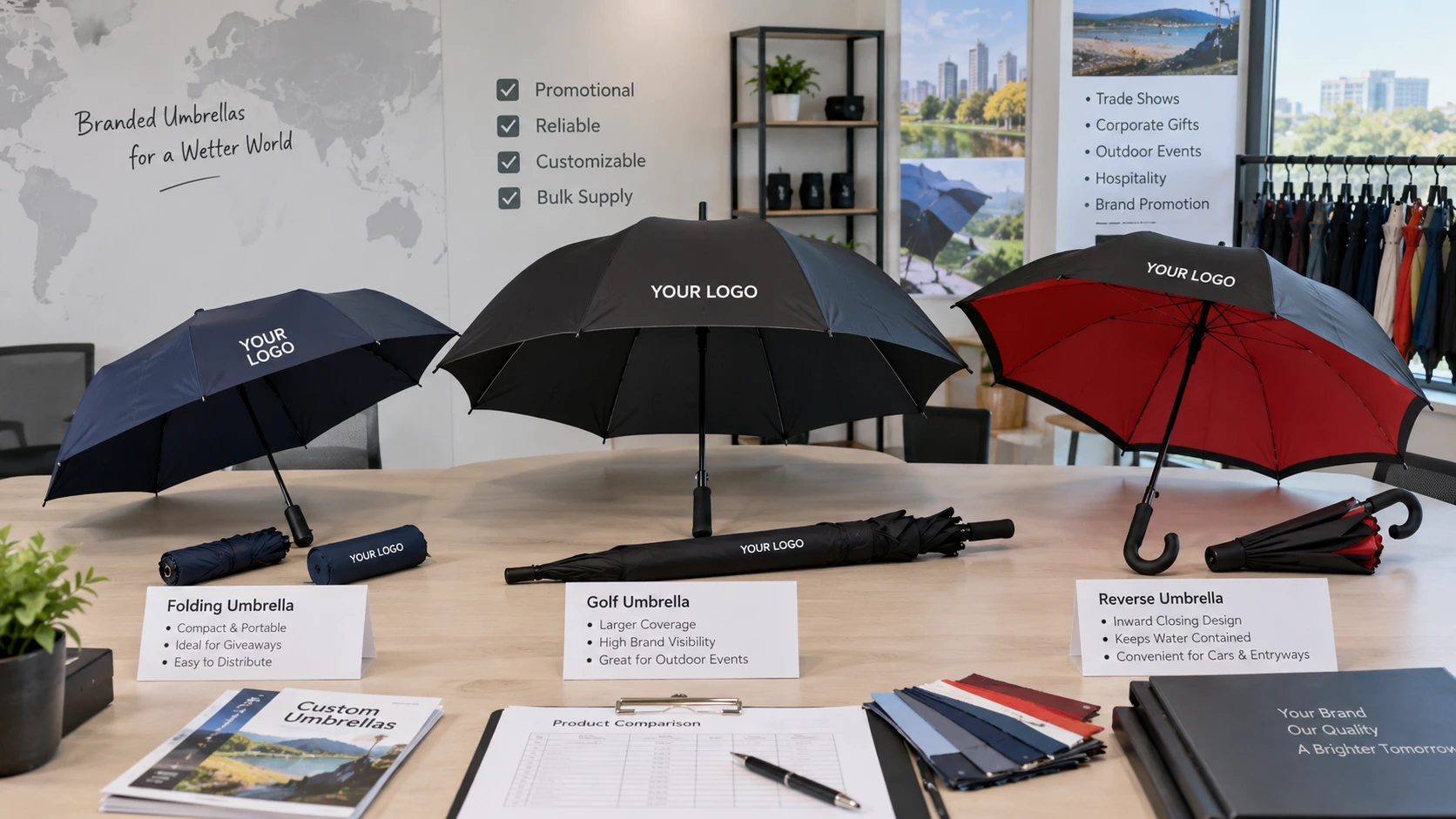
Employee rainwear uniforms are different from emergency poncho stock or promotional giveaways. A one-size rain poncho can be practical when a large group needs temporary coverage, but it may not provide the controlled fit, consistent appearance, or repeat-use planning required for a staff uniform program.
Use size-specific custom work rainwear when employees are expected to wear the product regularly, perform active tasks, or represent the company in public-facing work. A looser distribution approach may be acceptable for visitors, seasonal backup stock, or short-term weather contingencies.
Mixing these two purposes in one order is a common source of confusion. If part of the order is for permanent staff uniforms and another part is for emergency distribution, list them as separate product requirements. This makes it easier to control materials, size runs, Logo placement, packaging, and pricing.
Build a Work Rainwear Size Run Before Requesting a Quote
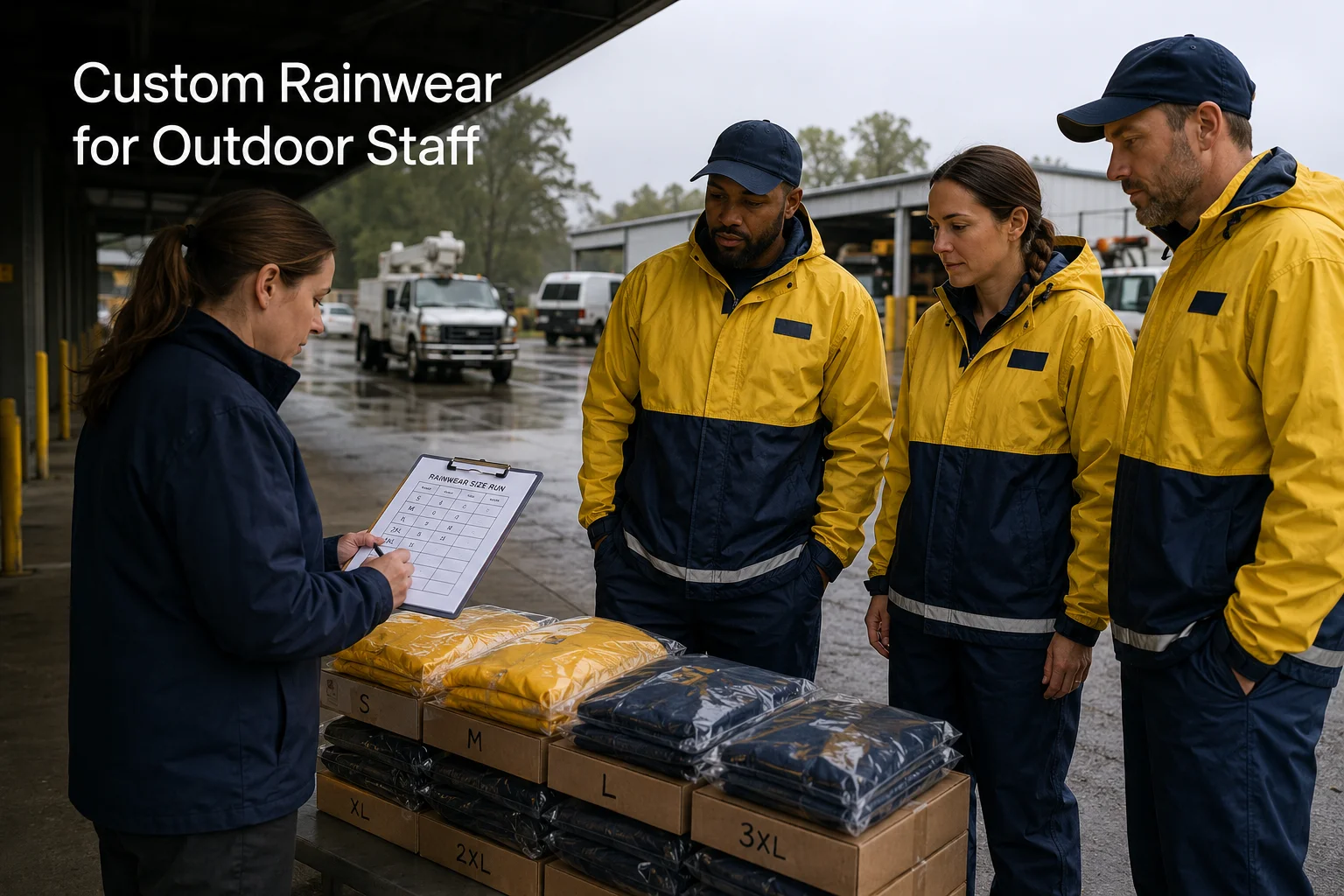
A work rainwear size guide should be treated as a procurement input, not a detail to settle after the garment has been selected. The size plan determines usable inventory, issue-day accuracy, and whether a supplier can quote each variation correctly.
Choose Between Named Wearer Sizing and a Forecasted Size Ratio
Named wearer sizing is most useful for stable teams, higher-value uniform programs, and projects where rainwear must be issued directly to each employee. It reduces guessing, especially when garments need to fit over existing workwear. The buyer should collect sizes using the relevant garment measurement method, rather than relying only on employees’ usual casual-clothing size.
A forecasted size ratio may be more appropriate for distributor stock, fast-growing teams, or programs with frequent turnover. In this situation, the goal is not to guess a universal ratio. It is to create a controlled range based on available workforce data, expected reorders, and the number of spare garments required.
When planning a rain jacket size run for employees, avoid splitting a modest order into too many low-volume lines. A separate color, size range, logo version, or garment style can create an additional SKU. Buyers should ask whether minimums apply to the whole order, each color, each style, or each customized version.
Confirm Finished Garment Measurements and Layering Allowance
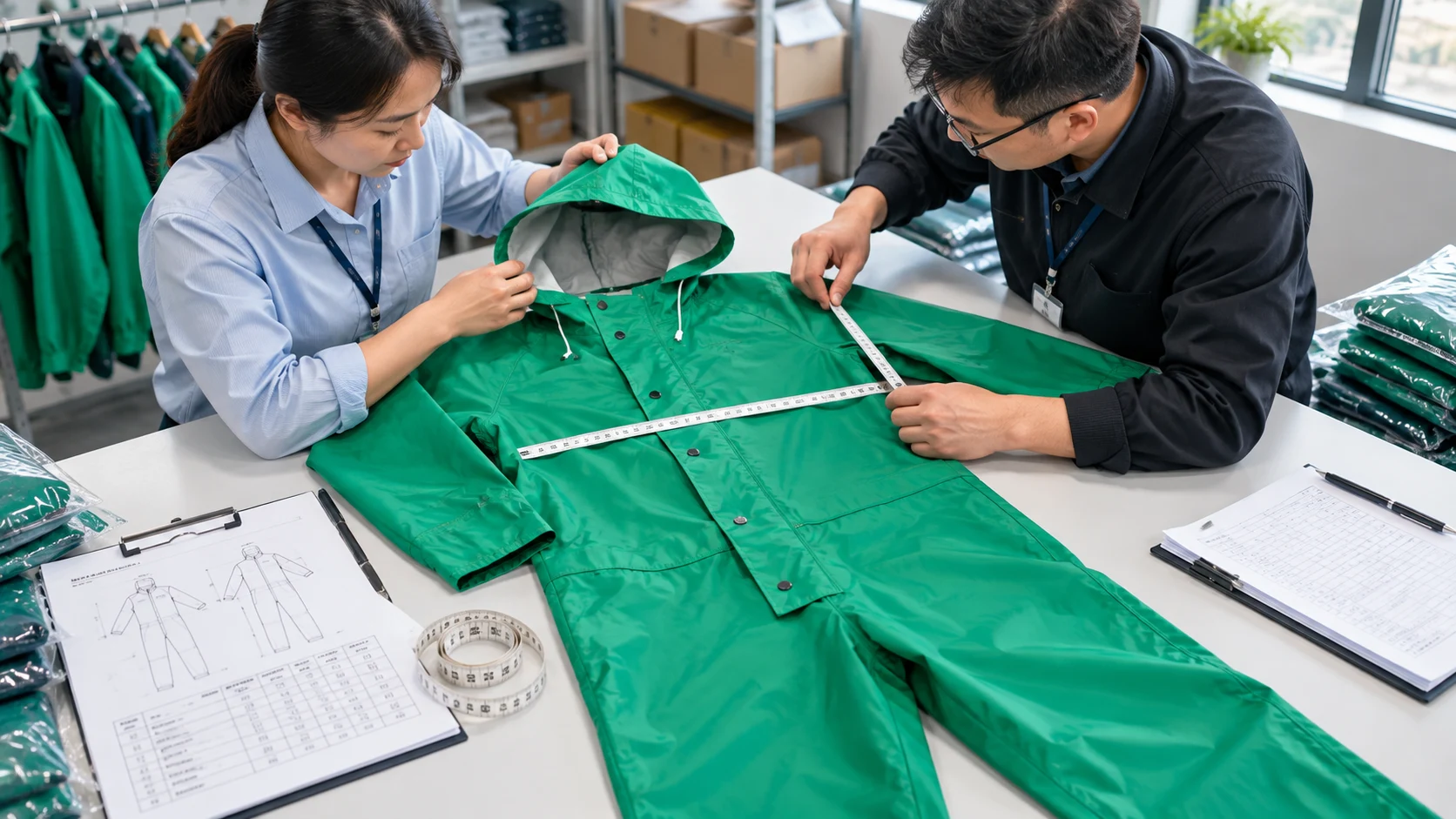
Size labels such as S through XXXL are not enough for a custom rainwear order. Buyers should request the finished-garment measurement chart and confirm how the garment is intended to be worn. This is especially important when staff will wear rainwear over uniforms, hoodies, or light jackets.
A practical size confirmation should address chest or body width, garment length, sleeve length, trouser length where applicable, and the room allowed for layering. Measurements may vary by style, material, and construction, so one chart should not be assumed to apply across a full rainwear range.
For larger or higher-risk programs, a pre-production sample or a representative size sample can help reveal problems before the bulk order is released. It is also useful for confirming whether the hood, cuffs, pockets, and closures work with the team’s actual duties. This approach is more reliable than correcting an inaccurate size split after cartons have arrived.
Plan Logo Placement Around Garment Construction and Field Use
Custom raincoats with logo branding should support identification without compromising garment function. The logo location needs to work with the intended viewing distance, employee movement, garment panels, and any pockets, zippers, seams, or visibility details.
Select the Logo Position by Visibility, Garment Panels, and Work Conditions
A left-chest logo may suit close-range identification, while an upper-back logo may be more useful when employees work facing away from supervisors, traffic, customers, or site visitors. Sleeve placement can provide an additional branded area, but it may be less visible when employees carry equipment or wear gloves.
The right choice depends on how the garment is used. A large back graphic may not be suitable if workers regularly wear backpacks, harnesses, or equipment that covers the panel. A chest logo may need to avoid a zipper, pocket flap, seam, or reflective element. Buyers should not select placement from a flat design file alone.
For logo placement on waterproof work jackets, provide the supplier with artwork, intended position, approximate dimensions, and a description of the garment’s use. The supplier should then confirm whether the requested area is available on the selected style.
Approve Artwork, Dimensions, and Placement Before Bulk Production
A logo file does not fully define a production requirement. The purchase specification should also state the logo color, print or decoration method if known, location, dimensions, and the number of branded positions. If front and back designs differ, each version should be listed separately.
A digital mockup can help, but it should show the logo in relation to the actual garment panels. For a new custom workwear program, buyers should consider approving a sample or a marked production reference before authorizing bulk production. This is particularly useful when the logo is placed near reflective strips, seams, pockets, or a hood.
The next step is to preserve the approved reference with the final order documents. This gives the procurement team a consistent basis for reorders and reduces the risk of artwork changes being introduced through informal communication.
Choose Bulk Packaging Based on How Rainwear Will Be Issued
Bulk rainwear packaging has a direct effect on warehouse work, site distribution, and replacement control. Packaging should be planned around the receiving process, not added as an afterthought.
Compare Bulk Cartons, Size-Sorted Packs, and Individual Employee Packs
| Packing method | Most suitable for | Main risk to control |
|---|---|---|
| Mixed bulk cartons | Central warehouse storage and later internal sorting | Slow issue day and higher risk of size errors |
| Size-sorted packs | One-site teams issuing garments by size | Supervisors may still need to match garments to employees |
| Individual employee packs | Multi-site rollout, new-hire kits, or direct employee issue | More detailed packing data and confirmation are required |
Individual packaging for staff rainwear can simplify distribution when each wearer, department, or location has a defined kit. It is not automatically the right choice for every order. A centralized warehouse may prefer bulk cartons, while a distributor may require size-sorted packing that supports downstream fulfillment.
Before choosing a format, ask who receives the shipment, who performs final sorting, and whether staff names, site codes, or department labels are required. The answer may change the quoted packing method and the project timetable.
Specify Carton Marks and Distribution Information in the RFQ
A useful packaging instruction covers more than “one piece per bag” and “units per carton.” It should state how cartons are identified and how the recipient will verify the contents. Depending on the project, carton marks may include style, color, size, quantity, purchase-order number, and destination or department code.
This information is especially important when a uniform order contains multiple sizes, colors, or logo versions. If packing decisions are delayed until after production planning, the buyer may have to accept cartons that are difficult to distribute or pay for unplanned repacking.
The same principle applies to future replenishment orders. A repeatable carton-marking format makes it easier to compare deliveries, check shortages, and issue the correct garments to staff.
Turn the Uniform Plan Into a Comparable Custom Work Rainwear RFQ
A custom work rainwear RFQ should allow several suppliers to quote the same requirement. Without a controlled specification, one quote may include basic bulk packing while another assumes custom distribution packing, making the prices impossible to compare fairly.
Include the application, style, material requirement, total quantity, quantity by SKU, finished-garment sizing requirement, logo artwork, logo positions, packaging method, carton marks, sample requirements, shipping destination, and required delivery date. If the project involves multiple sites, identify the quantity allocated to each location.
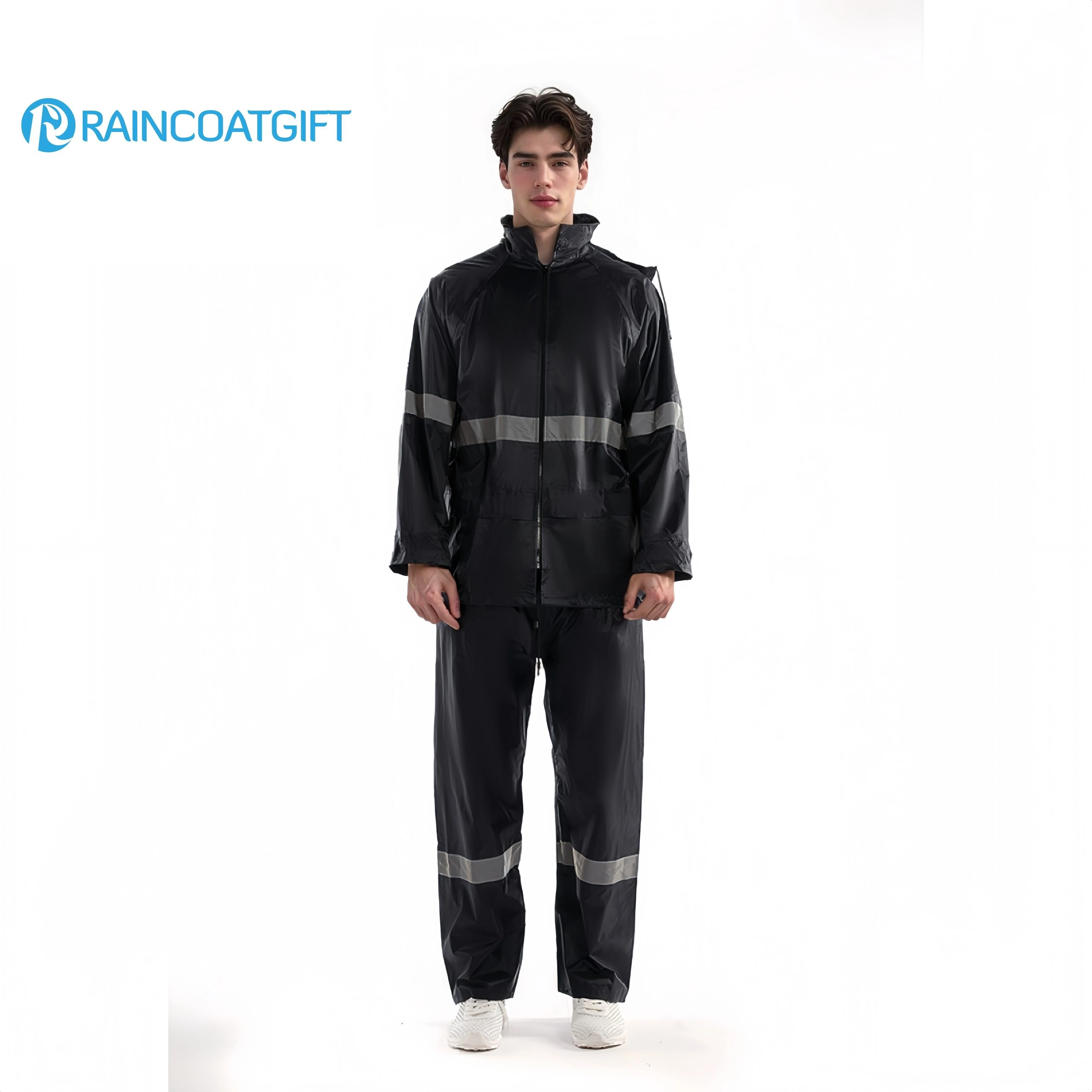
A buyer considering a polyester PVC rainwear set can review the stated configuration of 170T 18S Polyester PVC Raincoat Set with Reflective Strips as a reference point. The product page publicly lists polyester with PVC coating, S–XXXL sizing, customized color, a 500-piece MOQ, and basic polybag/carton packing. Final materials, logo treatment, packing, MOQ applicability, and delivery details should still be confirmed against the approved specification.
Evaluate Suppliers by Specification Control, Not Unit Price Alone
A qualified supplier for branded work rainwear should be able to respond clearly to the size split, logo position, packaging, sample, and SKU questions in the RFQ. A low unit price is not meaningful if one supplier assumes standard adult sizing and bulk cartons while another includes separate size sorting or customized packaging.
Buyers should ask what approval step applies before production, what information is needed for artwork confirmation, and whether the requested order breakdown is workable. It is also sensible to clarify which requirements may affect the MOQ: total quantity, style, color, logo version, or packaging format.
RAINCOAT GIFT publishes rainwear categories that include PE, PVC and EVA, PVC polyester, polyester, and PU options, alongside custom rainwear product pages. For buyers who need to understand the company background before requesting a quotation, About RAINCOAT GIFT provides the relevant company overview. The final decision should remain based on a written confirmation of the project specification rather than general product descriptions.
Conclusion
A successful staff rainwear program starts with a usable specification: define the work environment, build the size run, approve practical logo placement, and choose packaging that matches the distribution process. These steps make supplier quotations more comparable and reduce avoidable rework after delivery.
For a custom rainwear for outdoor staff project, prepare the garment style, target quantity, size breakdown, logo file, intended logo positions, packaging method, work scenario, and required delivery point before sending an inquiry. To discuss a project requirement or request a specification review, contact the rainwear team with those details.
FAQs
How do I choose a rain jacket size run for employees?
Use named employee sizes when the team is stable or the garments must fit over existing uniforms. For stock or high-turnover programs, use a controlled size ratio based on workforce information and planned spare inventory. Confirm finished-garment measurements before placing the order.
Should work rainwear be ordered by employee name or by size ratio?
Employee-name packing is useful for direct issue, multi-site teams, and new-hire kits. A size ratio is more practical for warehouse stock or distributor programs. The decision depends on who will sort and hand out the garments after delivery.
Where should a company logo go on a work rain jacket?
Common locations include the left chest, upper back, and sleeve. The appropriate position depends on how staff work, whether backpacks or equipment cover the garment, and where pockets, zippers, seams, or reflective details are located.
Should employee rainwear be packed individually or in bulk cartons?
Individual packs can reduce sorting work and issue errors, while bulk cartons may suit centralized storage. Confirm the distribution process first, then specify packaging and carton marks in the custom rainwear RFQ.
What should I ask a custom rainwear supplier before ordering?
Ask for confirmation of the garment specification, finished measurements, quantity by size and color, logo positions, sample approval process, packing method, carton information, MOQ basis, and the requirements that could affect production planning.