Custom umbrella artwork can look balanced on a screen and still fail on the finished product. The canopy is curved, divided into panels, tensioned by ribs, and often folded for storage. For B2B buyers, the goal is not simply to submit a logo file. It is to turn that file into a production-ready specification that remains readable when the umbrella is open, closed, packed, and distributed.
This matters for promotional umbrella printing, corporate gifts, hotel programs, retail collections, golf events, and public campaigns. A vague instruction such as “print the logo on one side” leaves too much open to interpretation. Before approving a bulk order, buyers should define the umbrella model, panel layout, artwork direction, print dimensions, and proofing process.
Why Flat Artwork Fails on a Finished Umbrella
A flat mockup does not show the full conditions of an open canopy. It may hide the way seams divide the surface, how ribs create structural lines, or how a folding umbrella compresses the fabric when closed. These details determine whether a logo remains recognizable in real use.
Understand the Difference Between a Flat Mockup and an Open Canopy
An umbrella canopy is made from individual fabric panels joined along seams. Each panel narrows toward the top and follows the curve created by the frame. That means the visible printing area is not a rectangular billboard. It is a shaped surface with usable and restricted areas that vary by model.
Long horizontal logos are particularly sensitive to this geometry. A wordmark that fits a broad flat layout may need to shrink significantly when it is placed inside one tapered panel. Small text, thin lines, and detailed icons can also lose impact when the canopy is opened and viewed from a distance.
A custom umbrella artwork template should therefore be based on the selected model, not a generic umbrella outline. Ask the supplier for the panel layout, panel count, canopy construction, and recommended print area before setting final dimensions. A buyer who needs a large display mark may need a different model, a simpler artwork version, or repeated branding across more than one panel.
Identify the Structural Areas That Can Interrupt Artwork
Ribs, seams, the crown area, panel edges, and any vented sections can interrupt a design. A seam through a letter, a logo placed too near the narrow crown, or a detailed graphic positioned over a fold line can make the finished result look misaligned even if the original artwork is correct.
Keep critical content—such as the brand name, logo symbol, key message, or a face in a graphic—away from structural boundaries unless the design was specifically created to cross them. This is especially important when the artwork has fine detail or relies on precise alignment.
If a key element cannot fit cleanly within the safe area of one panel, there are several options: simplify the layout, change the mark to a stacked version, repeat independent logos on selected panels, or choose a canopy with a more suitable panel format. The correct choice depends on the intended viewing distance, the number of printed positions, the selected umbrella model, and the supplier’s confirmed printing capability.
Choose the Right Artwork Layout for the Umbrella Type
The same logo should not be applied automatically to every umbrella type. Folding umbrellas, straight umbrellas, golf umbrellas, and other constructions can create different artwork conditions. Buyers should first decide how the umbrella will be used, then adapt the design to the model.
Design for Folding Umbrellas: Manage Creases and Closed-Product Presentation
Folding umbrella logo printing requires extra care because the canopy is repeatedly folded and stored. Artwork may look clean when the umbrella is open but appear fragmented or obscured when the product is closed. This does not mean folding umbrellas are unsuitable for branding; it means the layout should account for both open-canopy visibility and closed-product presentation.
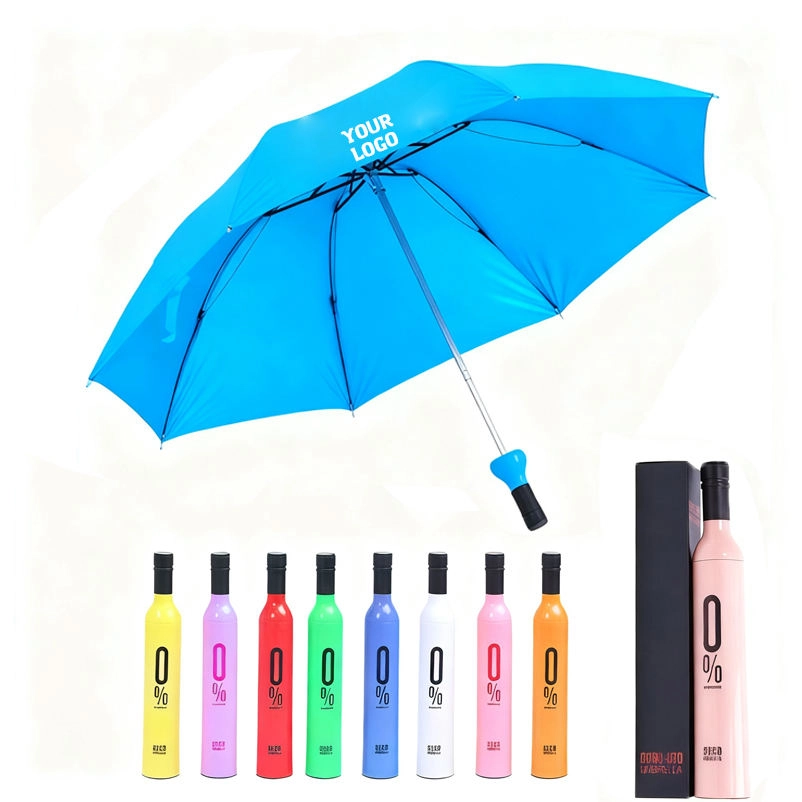
A simple, high-contrast mark centered within one panel is often easier to evaluate than a wide artwork extending across multiple fold zones. A compact corporate gift, travel promotion, or daily-carry program may benefit from this approach because portability remains the priority.
For example, the published specification for 8-rib custom folding umbrella for artwork review identifies a manual folding umbrella with eight ribs and bulk, OPP bag, or color-box packaging options. Those details make it useful for discussing why the selected model, panel arrangement, folded form, and packaging should be reviewed together. Final printable dimensions and placement should be confirmed for the exact production configuration.
Before approval, review the artwork in at least three states: fully open, normally closed, and packed in the intended sleeve or box. A design that depends on a sleeve for recognition should not be treated as the same thing as a canopy logo intended for outdoor visibility.
Compare Single-Panel, Repeated-Panel, and Cross-Panel Artwork
| Artwork layout | Suitable use | Main risk | What buyers should confirm |
|---|---|---|---|
| Single panel | Corporate logos, controlled budgets, clean branding | Limited visibility from some directions | Panel number, artwork direction, and print dimensions |
| Repeated panels | Events, campaigns, golf programs, public distribution | Inconsistent orientation or excessive repetition | Exact panel sequence and whether all artwork is identical |
| Cross-panel artwork | Large patterns or continuous visual concepts | Seams can interrupt alignment and shift the graphic | Exact panel template, production feasibility, and sample approval |
Single-panel printing is often suitable when the audience sees the umbrella from a known direction or when the primary goal is a restrained corporate presentation. It becomes less suitable when umbrellas will move through crowds, appear in event photography, or need recognition from multiple angles.
Repeated-panel artwork can provide broader exposure, but more print positions create more variables. The RFQ should identify whether the same logo repeats on opposite, adjacent, alternating, or all panels. Instructions such as “print on four sides” are not specific enough for sampling or inspection.
Cross-panel artwork should be used only after the buyer has reviewed how seams, panel tension, and opening geometry may affect the final visual. It may suit a graphic-led project, but it carries more approval risk than an independent logo centered within a panel.
Match Artwork Ambition to the Selected Umbrella Model
A larger canopy may offer more visual space, but it does not automatically solve artwork problems. Panel count, rib layout, vent construction, canopy material, and intended use can still limit the practical print area. Likewise, a compact umbrella may be the right choice for a travel campaign even when it requires a simpler logo treatment.
Start with the required outcome. If the project needs distant brand visibility at an outdoor event, prioritize a model and layout that support clear recognition when open. If the project is a compact corporate gift, portability, closed presentation, and a clean one-panel logo may matter more.
Buyers who have not selected a model can compare custom umbrella artwork specifications against the intended application before deciding whether a folding, straight, or golf umbrella is suitable. This avoids spending time perfecting a large or detailed layout that is not practical on the final product.
Turn the Design File Into a Production-Ready Umbrella Artwork Proof
A strong umbrella artwork proof is not merely a visual preview. It is a production document that connects the selected umbrella model to the artwork file, panel positions, dimensions, colors, and approval history.
Specify Position, Direction, and Dimensions Instead of “One Side”
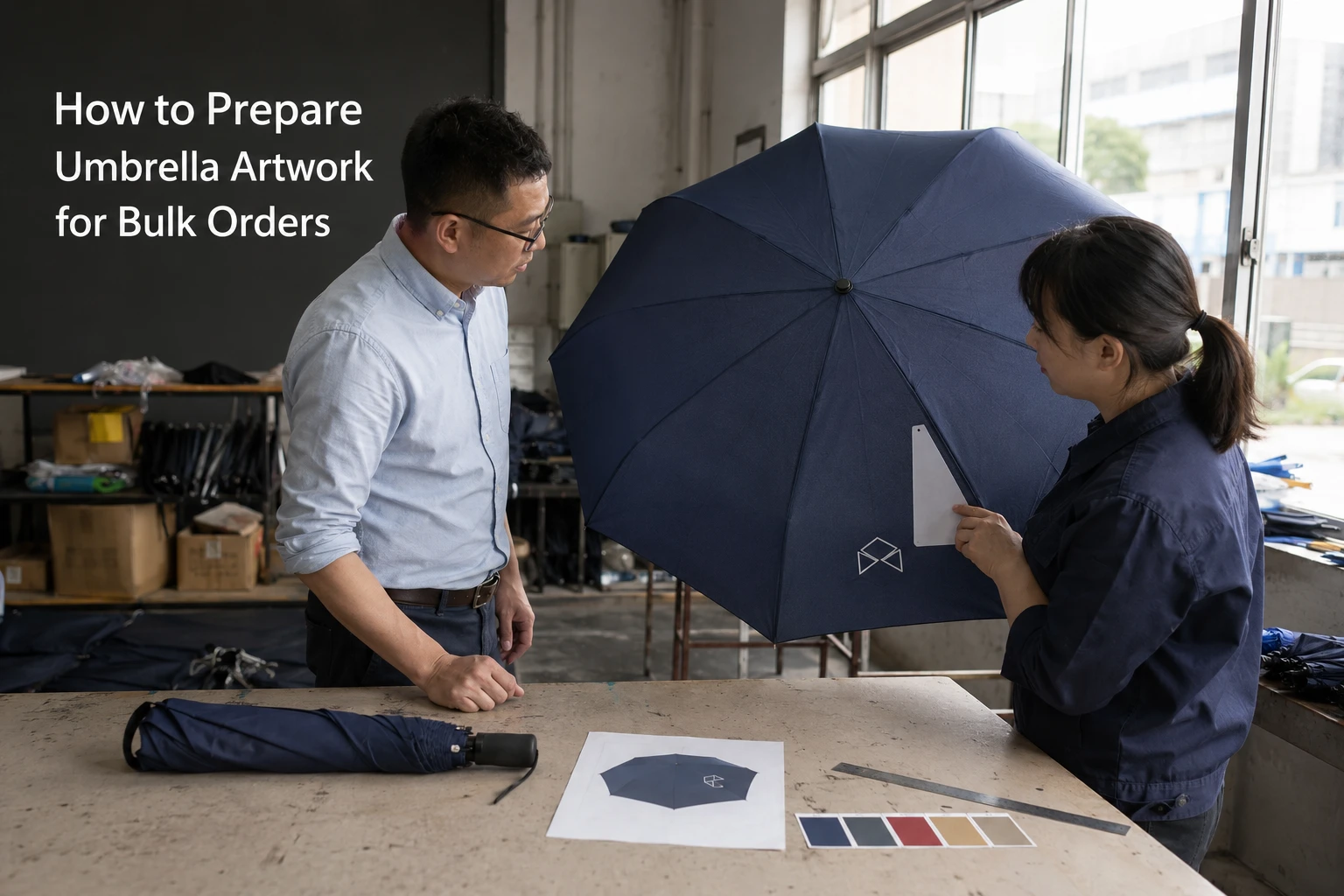
The phrase “one side” can mean different things to a designer, buyer, printer, and production team. A usable proof should identify the umbrella model, canopy color, panel count, printed panel number, logo orientation, finished width and height, and position relative to a defined reference point.
The artwork direction is essential when text is involved. The buyer should confirm how the logo reads when the umbrella is normally held open. If multiple panels are printed, the proof should show whether all logos face the same direction, whether opposite panels are mirrored, and how the panel sequence is numbered.
Dimensions should be stated as actual measurements, not as a subjective instruction such as “make the logo large.” The maximum appropriate size depends on the panel template, logo proportions, print method, canopy fabric, and seam clearance. Those factors should be verified against the selected product specification.
Prepare Files That Can Be Reviewed at Actual Print Size
Source-file quality matters, but it is only one part of custom umbrella artwork preparation. A clean editable file may scale well technically while still producing an unreadable mark if the text is too small, the contrast is weak, or the artwork contains large invisible margins.
Before submitting artwork, remove unnecessary blank space around the visible design, identify the correct version, and confirm the intended colors. If the mark includes fine text, gradients, multiple colors, or delicate outlines, ask the supplier whether the selected umbrella and printing route can reproduce it consistently.
A useful artwork proof should show the design at the intended final size on the actual panel template. It should also identify the artwork filename or version number. This makes it easier to compare quotations, prevent an earlier logo revision from being released, and establish a reference for repeat orders.
Prevent Rib, Fold, and Panel Problems Before Bulk Production
Most artwork problems can be reduced before production begins. The key is to separate two approval stages: the marked proof confirms the intended layout, while a physical sample confirms how that layout behaves on the finished umbrella.
Use a Marked Proof to Catch Layout Errors Before Sampling
A marked proof should show the exact panel structure and not just a floating logo on a generic canopy image. Before approving it, check that the correct model is named, the intended printed panels are numbered, the logo direction is clear, and important design elements remain away from seams and other structural boundaries.
This step is particularly valuable for multi-panel umbrella printing. It allows the buyer to catch a reversed panel sequence, a logo placed too close to a fold area, or an artwork version that has not been updated. It is also the right stage to decide whether an oversized design should be simplified or moved before sampling costs are incurred.
A digital proof may be enough for a simple, independent, single-panel logo where the selected model and print location are already clear. It is less reliable for cross-panel artwork, detailed graphics, complex repeated layouts, or projects where brand color and visual consistency are important.
When a Physical Sample Is Necessary—and What to Check
A physical sample is especially useful when the artwork crosses panels, approaches seams, contains detailed color work, or will be used in a large promotional umbrella order. It should be reviewed as a working product, not only as a tabletop display piece.
Open the umbrella fully and check whether the logo appears centered, readable, and correctly oriented. Examine the artwork near seams and ribs. Close the umbrella and inspect whether folds distort important elements or create an unintended visual break. If a sleeve, bottle case, color box, or other packaging is part of the project, review the complete packed presentation as well.
The approved sample should be documented with the corresponding artwork version, layout, dimensions, and product specification. It becomes a more useful reference when it is tied to the purchase order and quality requirements rather than treated as an informal visual example.
Build an Umbrella Artwork RFQ Suppliers Can Quote Correctly
A clear umbrella artwork RFQ helps suppliers quote the same project and helps buyers compare offers beyond unit price. It should include the following:
- Intended application, such as a corporate gift, hotel program, event, retail collection, or campaign
- Preferred umbrella type or the required use case if the model is not yet selected
- Total quantity, color variations, artwork versions, and destination split
- Single-panel, repeated-panel, or cross-panel layout
- Panel count, numbered print positions, and artwork reading direction
- Target print dimensions, color references, and requested proof format
- Whether a marked proof, physical sample, or both are required
- Packaging format, carton marks, and target receiving date
The supplier should be able to explain what is confirmed by the artwork proof, what requires a sample, and which details may affect the quotation. This is more meaningful than a generic promise that a logo can be printed.
How to Evaluate a Supplier’s Artwork-Control Process
A suitable supplier should be able to translate a logo file into a specific production plan. Ask whether the supplier can provide a panel template for the selected model, identify the usable artwork area, clarify the reading direction, and distinguish between a simple single-panel logo and a higher-risk cross-panel layout.
The supplier should also explain what information is needed before providing a reliable quote. If the project has multiple logos, colors, panel arrangements, or packaging versions, each variation should be listed clearly. A price based on one small imprint is not comparable with a quotation for multiple large printed panels.
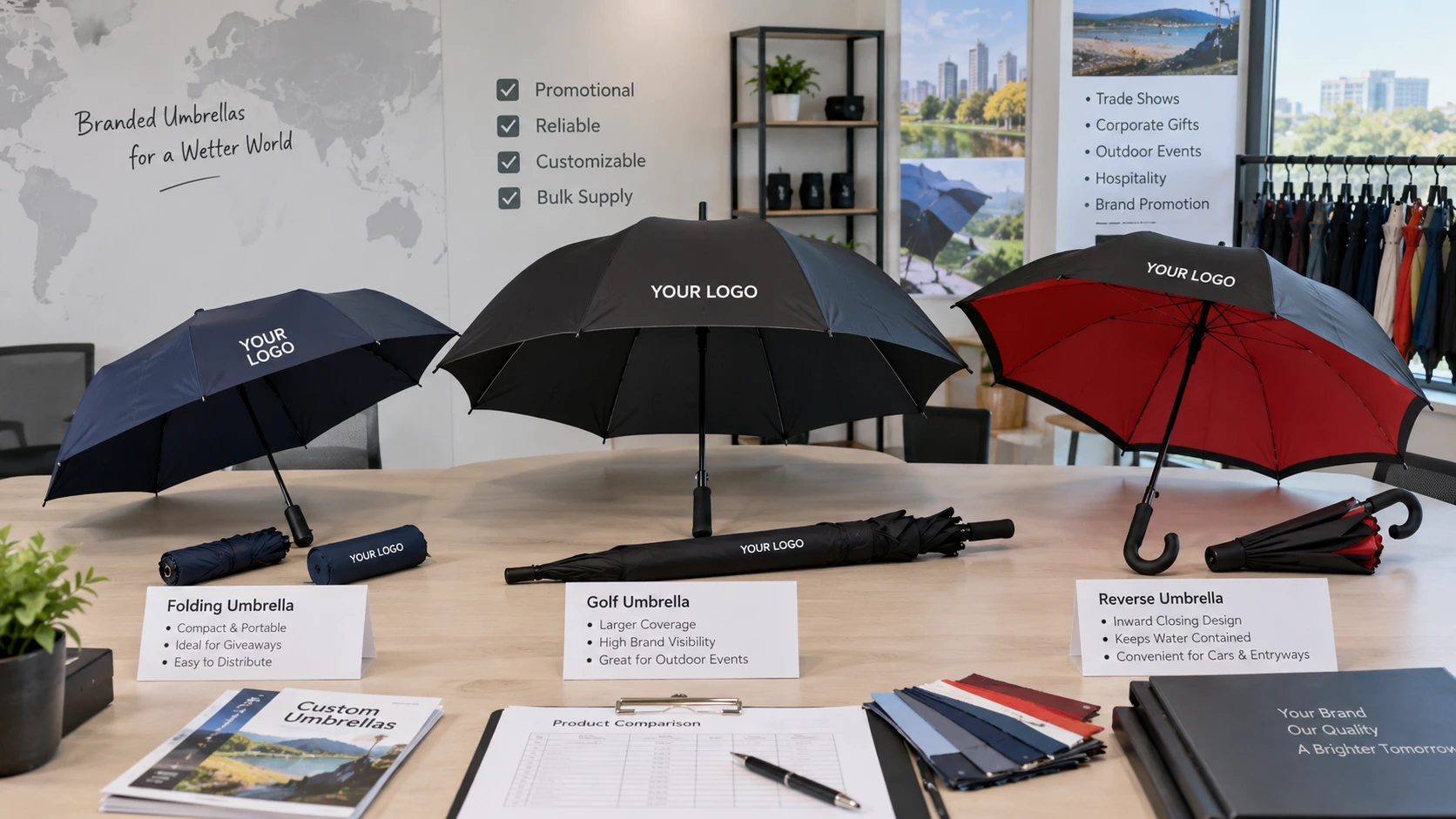
RAINCOAT GIFT offers umbrella categories that include folding, golf, beach, reverse, and transparent umbrella types, alongside custom-logo product options. Its published umbrella information includes folding models with eight-rib construction and stated packaging choices. For company background and product scope, buyers can review About RAINCOAT GIFT before submitting an artwork project. Final print areas, artwork treatment, sample requirements, and commercial terms should be confirmed for the selected model and order specification.
Conclusion
Good umbrella artwork is a production specification, not only a design file. The buyer should confirm the umbrella model, panel layout, artwork direction, dimensions, structural boundaries, proof version, sample requirement, and packaging before approving bulk production.
For a bulk umbrella project, submit the intended application, estimated quantity, selected model or preferred format, artwork file, desired panel layout, packaging requirement, and delivery destination. To request an artwork review or quotation, contact the custom umbrella team with those details.
FAQs
What should an umbrella artwork template include for a bulk order?
It should identify the exact umbrella model, panel count, printed panel positions, artwork direction, finished print dimensions, color references, file version, proof requirement, and any packaging or SKU details that affect the order.
Can a logo cross umbrella panel seams?
It may be possible for some designs and processes, but it carries more alignment risk than a single-panel logo. Cross-panel artwork should be reviewed on the exact panel template and normally benefits from physical sample approval.
How should artwork be prepared for a folding umbrella?
Keep critical elements away from likely fold and seam areas, use an artwork layout that remains readable when open, and review the design in open, closed, and packed states. The final safe area depends on the selected model.
When is a physical sample necessary for custom umbrella printing?
A physical sample is particularly useful for cross-panel layouts, detailed graphics, multiple printed panels, important brand colors, folding umbrellas, and higher-volume orders. It confirms the result on an assembled product rather than a flat proof.
What information should be included in an umbrella artwork RFQ?
Include the umbrella application, model or preferred type, quantity, canopy color, panel layout, logo file, target dimensions, print positions, color references, proof and sample requirements, packaging, destination, and requested delivery date.