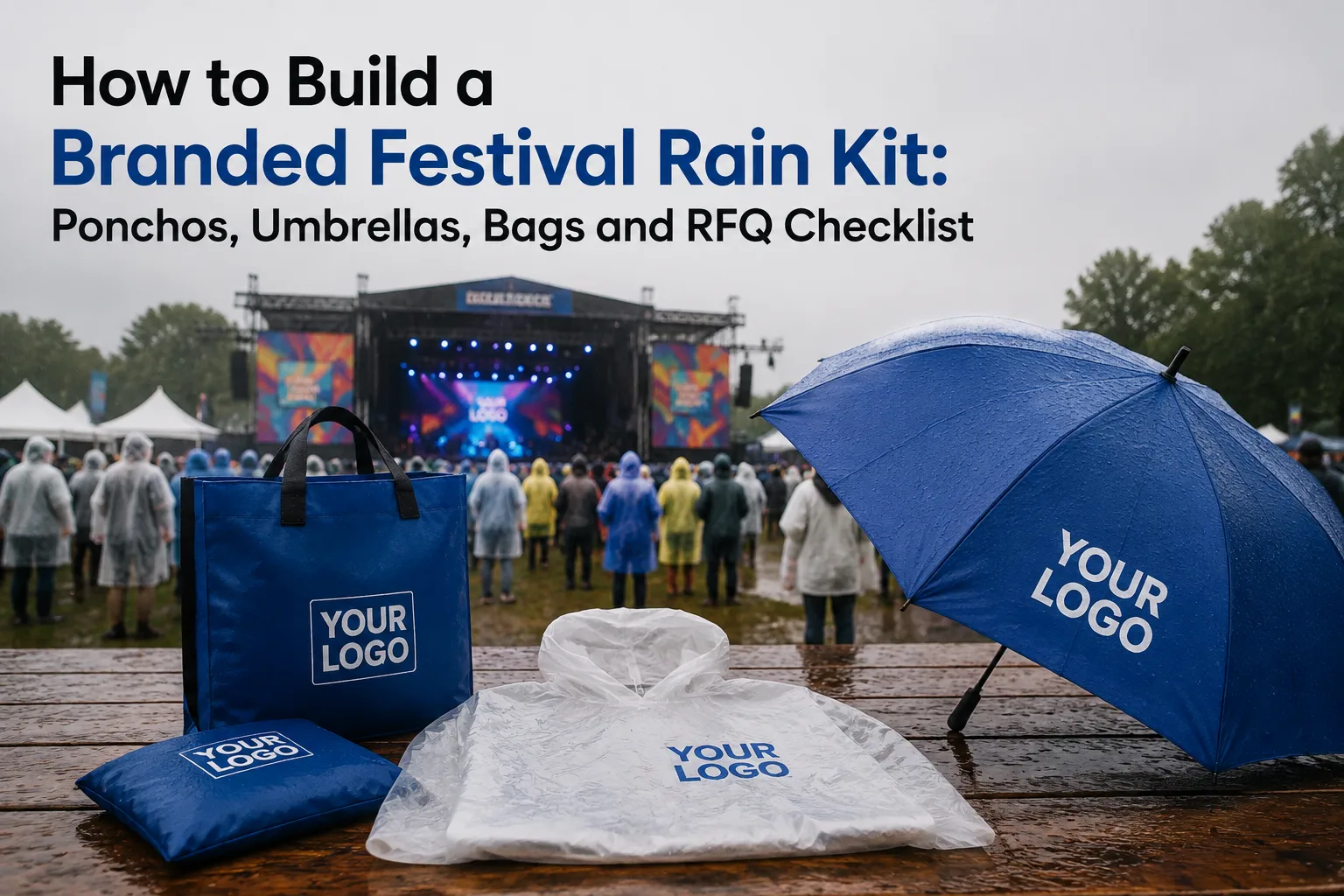
A branded festival rain kit helps organizers prepare for wet weather while giving sponsors useful, visible merchandise. The right kit may combine custom rain ponchos, promotional umbrellas, and event bags, but the products should not be selected on appearance alone. Audience size, venue restrictions, wind exposure, distribution method, logo visibility, and delivery deadlines all affect the decision.
For B2B buyers, the main challenge is determining which products fit the event, where the artwork should appear, and what information a supplier needs to provide an accurate quotation. The following process turns a general sponsorship idea into a practical procurement plan.
Why Outdoor Festivals Need a Rain-Ready Sponsorship Kit
Rain changes how attendees move, protect personal items, and interact with branded materials. Giveaways that work well in dry conditions may be stored or discarded once bad weather begins. Rain gear has a more immediate purpose, but only if it matches the venue and expected conditions.
When Rain Gear Is More Useful Than Ordinary Giveaways
A festival rain kit is particularly relevant for outdoor music events, sporting events, brand activations, temporary exhibitions, and staff operations. Ponchos can be suitable when thousands of items must be stored compactly and distributed quickly. Umbrellas may provide longer-term brand exposure at smaller events, but they can be impractical in dense crowds, high winds, or venues that restrict their use.
The buyer should first identify who will receive the products. General admission attendees may need lightweight items that can be handed out rapidly, while sponsors, VIP guests, staff, or distributors may expect a more reusable product.
This decision also determines the branding objective. A sponsor seeking visibility during the event may prioritize large, visible print areas. A campaign focused on post-event use may prefer products that recipients are likely to keep.
Matching Ponchos, Umbrellas, and Bags to the Audience
A poncho addresses immediate body protection, while an umbrella provides personal coverage and a large elevated branding surface. A bag protects or carries merchandise but does not replace rainwear. Combining all three products may be appropriate for selected recipients, but it is rarely necessary for every attendee.
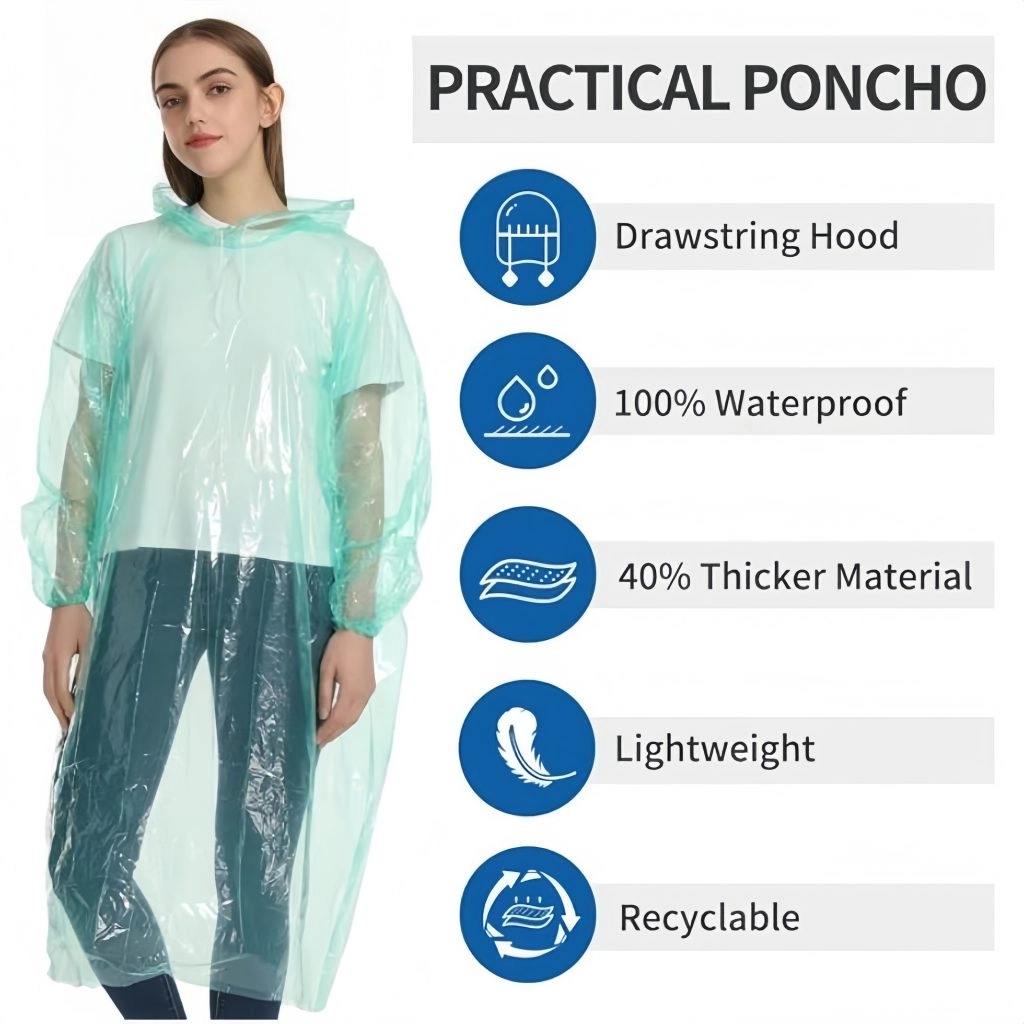
Buyers exploring custom branded rain ponchos should consider distribution speed, packed size, garment coverage, and whether one size can serve the expected audience. Umbrellas require more storage and handling space. Bags must be checked for capacity, closure style, carrying method, and the level of rain exposure they may encounter.
How to Choose the Right Festival Rain Kit Combination
The product mix should be based on weather risk, audience size, budget allocation, and the expected value of each recipient group. A single-item kit may be more effective than a three-product package if it solves the primary weather problem and leaves enough budget for appropriate materials and printing.
| Product | Suitable scenarios | Main purchasing concern | Common limitation |
|---|---|---|---|
| Rain poncho | Large crowds, rapid distribution, general admission | Size, material, packed format, print position | Artwork may fold or distort when worn |
| Umbrella | VIP gifts, staff use, smaller outdoor events | Structure, panel layout, packed size, venue rules | Less suitable for dense crowds or strong wind |
| Event bag | Merchandise packaging, sponsor kits, personal-item storage | Capacity, closure, carrying strength, print area | Does not provide full personal rain protection |
Building the Kit by Weather Risk, Quantity, and Budget
For a large festival with uncertain rain, the first priority may be a sufficient quantity of easily distributed ponchos. Organizers can reserve umbrellas or more substantial bags for staff, partners, and VIP areas. This tiered approach limits unnecessary spending while giving higher-value recipients a more reusable item.
Quantity planning should include more than the expected attendance. Buyers should consider staff requirements, damaged or missing units, multiple entrances, and whether products will be distributed before the event or only when rain begins. Extra stock should be intentional rather than based on an arbitrary percentage.
The purchasing team should also confirm whether different product categories have different minimum order quantities, artwork requirements, or production schedules. A kit cannot be treated as one deliverable until the supplier confirms that its components can be completed and packed according to the same event timeline.
Logo Placement on Ponchos, Umbrellas, and Bags
Logo placement affects visibility, print feasibility, and how the product looks in real use. Artwork that appears clear on a flat template may become hidden by folds, straps, seams, or the wearer’s posture. Placement should therefore be reviewed on the finished product configuration, not only on a digital mockup.
Logo Placement on Custom Rain Ponchos
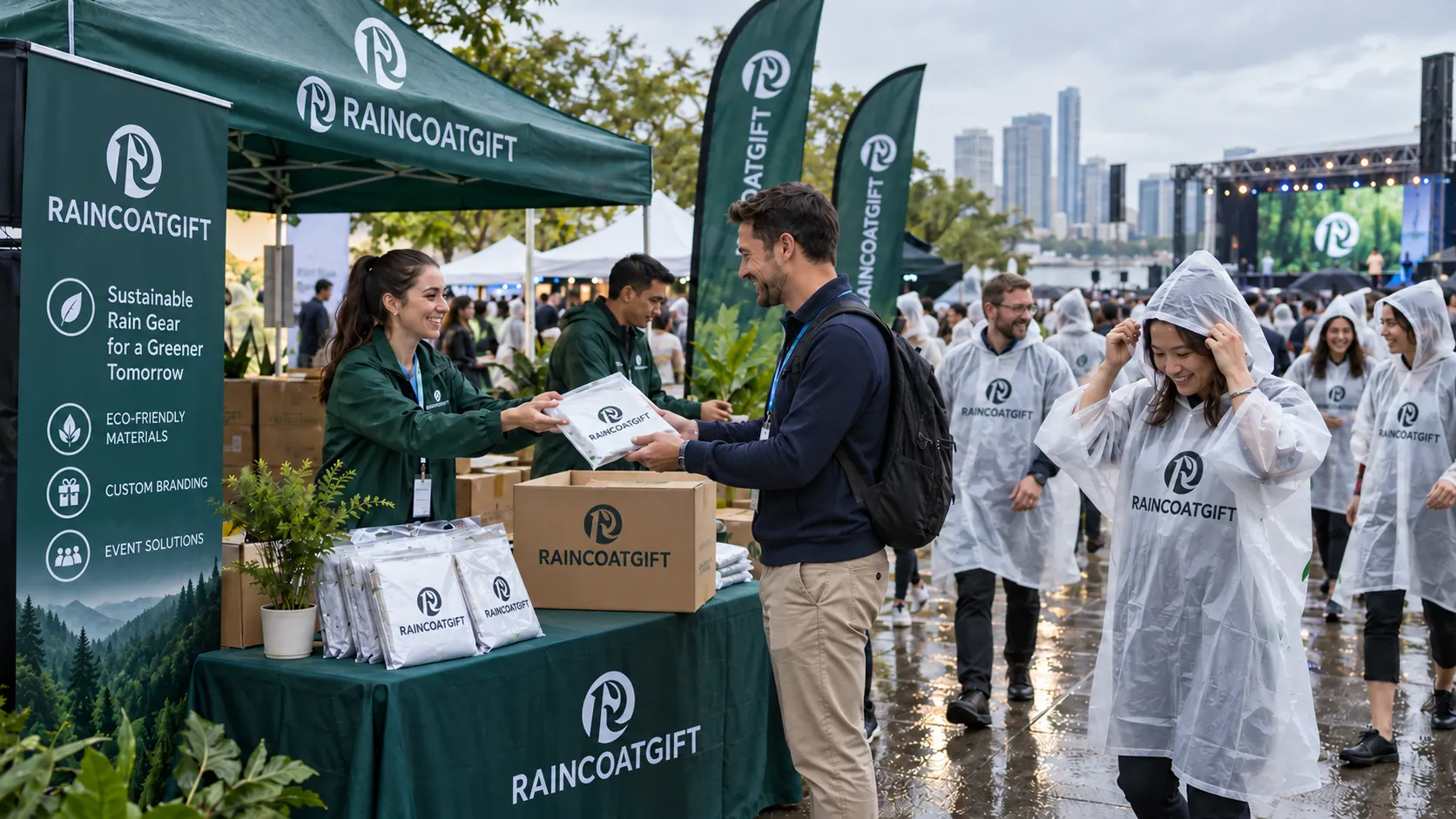
Front-chest printing can support quick brand recognition, while a larger back print may be more visible in queues and moving crowds. Sleeve or lower-body positions can provide additional branding, but their visibility depends on the poncho’s cut, movement, and folding pattern.
Large logos are not automatically more effective. Artwork can become difficult to read if it crosses seams, falls into repeated folds, or extends beyond the supplier’s recommended print area. Buyers should confirm the finished dimensions, printable location, artwork orientation, color limitations, and whether a physical or pre-production sample is available.
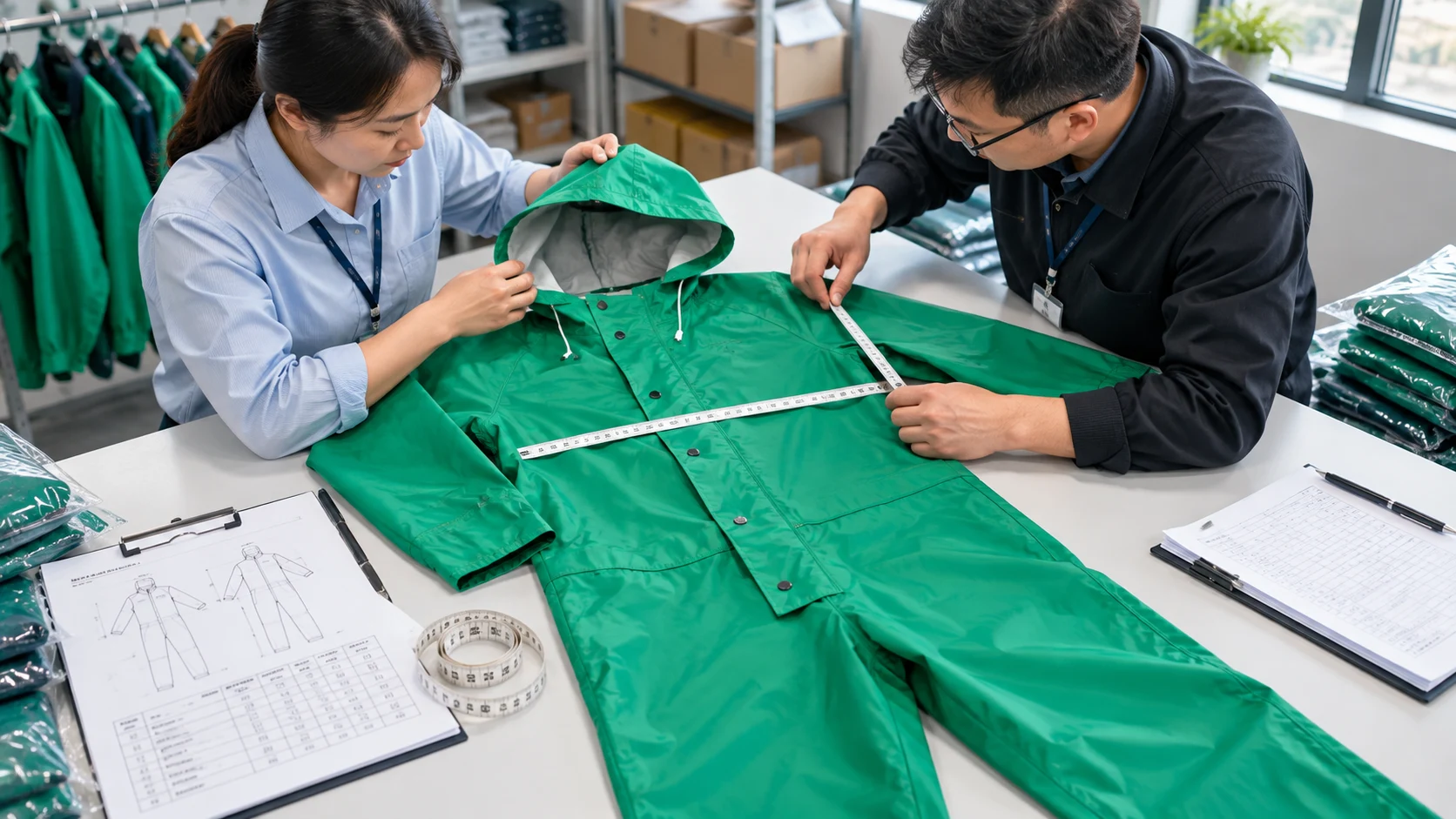
The raincoat product range can be reviewed when assessing which poncho or rainwear formats may suit an outdoor event. Final material, size, printing, and performance requirements should still be verified against the relevant product specification.
Logo Placement on Promotional Umbrellas
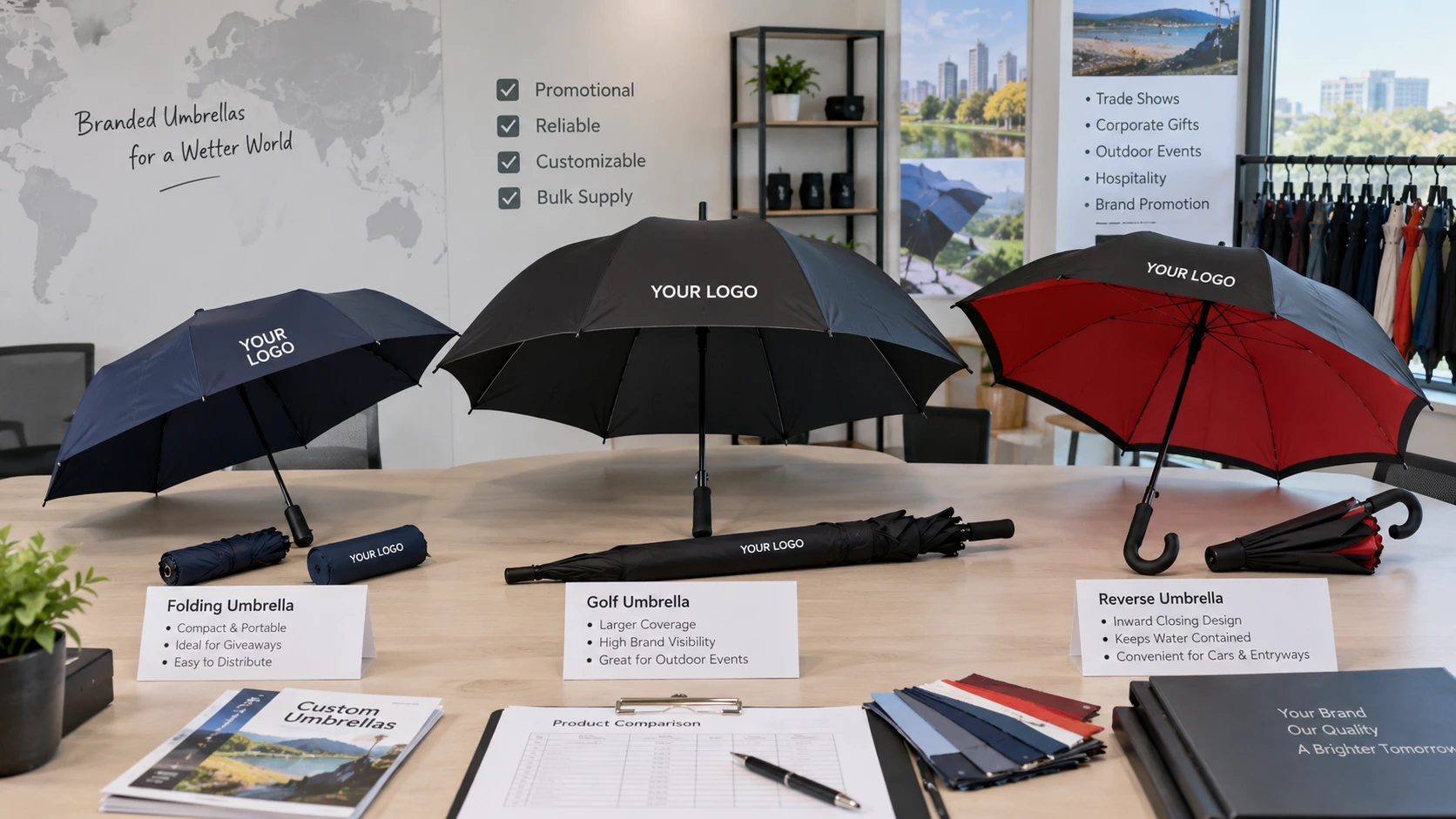
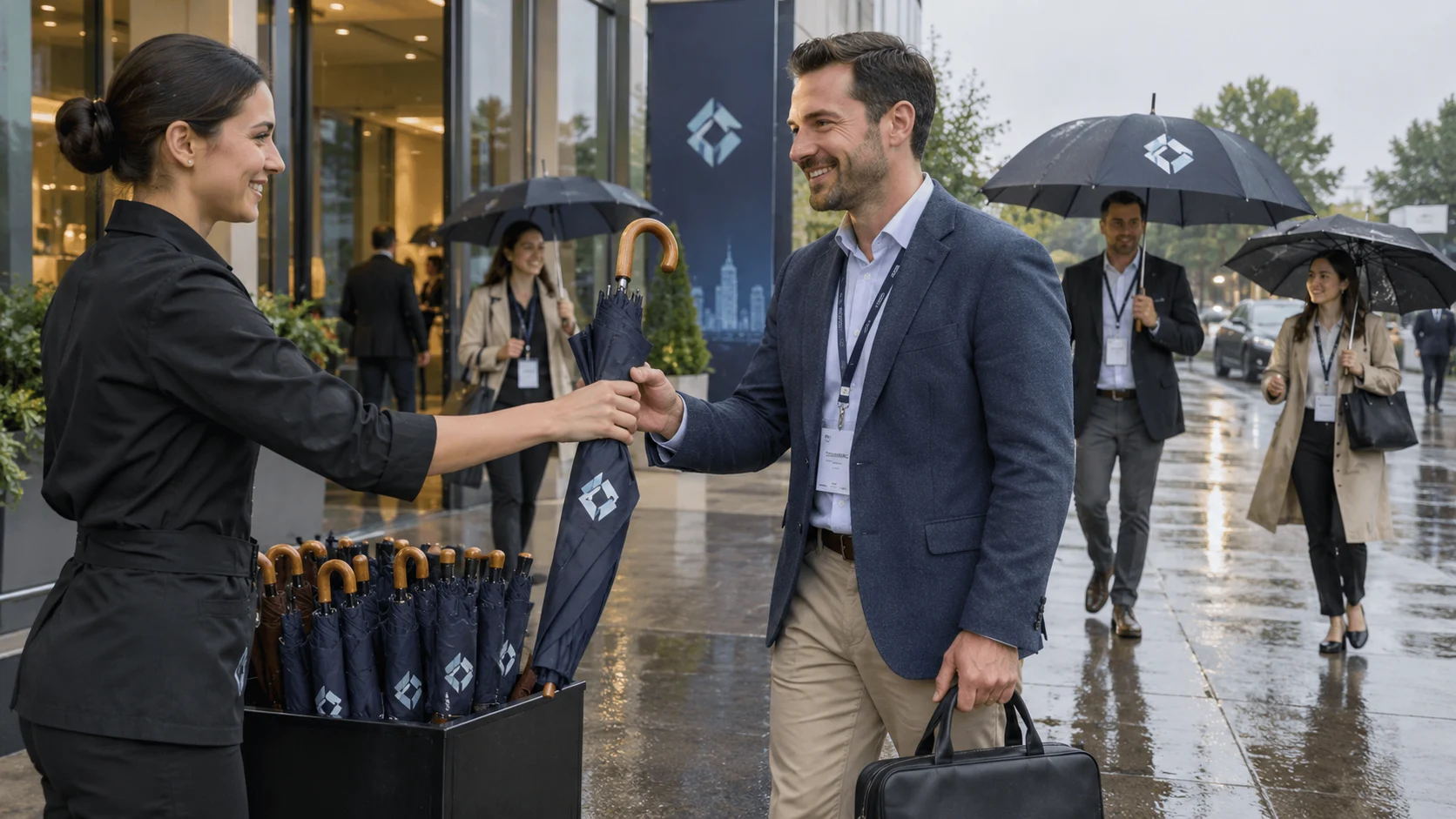
An umbrella panel provides a visible branding area when the product is open. A repeated logo may improve visibility from different directions, while a single-panel design may be more suitable for larger artwork. The correct choice depends on viewing distance, artwork complexity, and budget.
Buyers should also evaluate visibility when the umbrella is closed. A branded fastening strap or storage sleeve may retain some exposure, but these areas usually support less information. Fine text and complex graphics may not reproduce clearly on small or curved surfaces.
Before ordering promotional umbrellas with logo, confirm the number of printable panels, logo orientation, color matching method, packed dimensions, and any venue restrictions that could prevent attendees from using umbrellas safely.
Logo Placement on Custom Event Bags
The main face of a bag usually provides the clearest branding area, but handles, closures, side panels, and the intended contents can affect the layout. A centered design may suit simple sponsor identification, while an information-heavy campaign may need more space than the bag can provide without reducing readability.
The bag should be selected for its actual job. A lightweight giveaway bag may hold a packed poncho and printed materials, while a bag intended for repeated outdoor use may require a different construction. Load capacity, closure design, carrying comfort, and exposure to water should be confirmed rather than inferred from product photographs.
Buyers can compare custom event bags when planning how rain gear and other sponsor merchandise will be packaged and distributed.
Product Specifications to Confirm Before Ordering
Terms such as waterproof, reusable, lightweight, or environmentally preferable can mean different things across materials and product configurations. They should not be treated as measurable specifications unless the supplier provides supporting details.
Materials, Sizes, and Intended Use
A product designed for short-term emergency use may differ from one intended for repeated wear. The appropriate option depends on the event duration, expected rain exposure, audience profile, handling method, and disposal or reuse plan.
For ponchos, confirm material, finished size, closure details, hood design, and packed format. For umbrellas, review dimensions, structure, opening method, and intended wind conditions. For bags, check dimensions, closure, carrying method, and the type of contents expected.
Any required performance claim should be checked against the product specification or available test information. Buyers should avoid adding unsupported technical or environmental statements to campaign materials.
Artwork, Color Matching, and Sample Approval
Suppliers need usable artwork files, target colors, print locations, and finished-size expectations. Small text, gradients, fine lines, and multi-color graphics may require a different approach from a simple one-color logo.
A digital layout helps confirm position, but it may not show how colors appear on the selected material. A sample may be appropriate when color accuracy, logo size, folding, or presentation is commercially important. The approval process should identify who can authorize artwork and how late changes affect price or production timing.
Festival Rain Kit Procurement and Supplier Selection
An accurate RFQ reduces quotation gaps and makes competing proposals easier to compare. It should state the event date, destination, product categories, target quantities, required colors, artwork, packaging, and sample expectations.
RFQ, MOQ, Lead Time, and Quality Checks
Minimum order quantities may differ between ponchos, umbrellas, and bags. Buyers should request unit prices at relevant quantity levels rather than assuming that one volume applies to the entire kit.
The timeline should include specification confirmation, artwork preparation, sample approval where required, production, inspection, packing, and transport. Artwork delays are a common source of schedule pressure, so the internal approval deadline should be earlier than the production deadline.
Quality checks should cover the factors that matter to the event: correct product and quantity, artwork position, logo readability, color acceptance, packaging, and carton identification. The RAINCOATGIFT product collection provides a starting point for reviewing relevant product categories before preparing the RFQ.
How to Evaluate a Festival Rain Gear Supplier
A suitable supplier should be able to clarify product specifications, explain artwork requirements, identify print limitations, and respond to questions about packaging and delivery planning. A quotation based only on a product name and total quantity may leave important assumptions unresolved.
RAINCOATGIFT offers category-level access to rainwear, umbrellas, and bags, allowing buyers to identify potential components before discussing configuration details. Product suitability may vary by material, size, artwork, quantity, and event conditions, so the final selection should be based on confirmed specifications rather than a generic festival kit description.
Common Problems and Preventive Actions
A logo that is too small, hidden by folds, or printed in the wrong orientation can reduce sponsor visibility even when the product itself functions correctly. Requesting an artwork layout and reviewing how the item appears in use can expose these problems before production.
Another risk is selecting products based on broad claims instead of event conditions. Wind exposure, crowd density, rain duration, venue rules, and distribution space can all make an otherwise suitable product impractical.
Late artwork approval can also affect sampling and production. A simple responsibility schedule—covering specifications, artwork, sample decisions, production approval, and shipping—helps prevent avoidable delays.
Conclusion
A branded festival rain kit should be built around the event environment, audience, branding objective, and procurement timeline. Ponchos, umbrellas, and bags serve different purposes, and the most effective combination is the one that balances practical use with visible, technically feasible branding.
Buyers preparing a project can contact RAINCOATGIFT with the event type, target quantity, preferred product categories, required delivery location, artwork, packaging expectations, and sample requirements. These details provide a clearer basis for product review and quotation.
FAQs
What should be included in a branded festival rain kit?
A kit may include a rain poncho, umbrella, and event bag, but all three are not always necessary. The selection should reflect audience size, weather risk, venue rules, distribution method, and budget.
Are ponchos or umbrellas better for festival giveaways?
Ponchos are generally easier to store and distribute to large crowds. Umbrellas may offer longer-term use and prominent branding but can be unsuitable in dense crowds, restricted venues, or windy conditions.
Where should a logo be placed on a custom poncho?
The chest and back are common visibility areas. The final position should account for seams, folds, hood coverage, garment movement, printable dimensions, and how the poncho looks when worn.
What information is needed for a custom festival rain gear RFQ?
Provide the product type, quantity, event date, destination, material or usage requirements, colors, logo files, print positions, packaging needs, and sample expectations.
How early should branded festival rain gear be ordered?
Timing depends on product configuration, quantity, artwork approval, sampling, production, and shipping. Buyers should obtain a supplier schedule and work backward from the required delivery date.