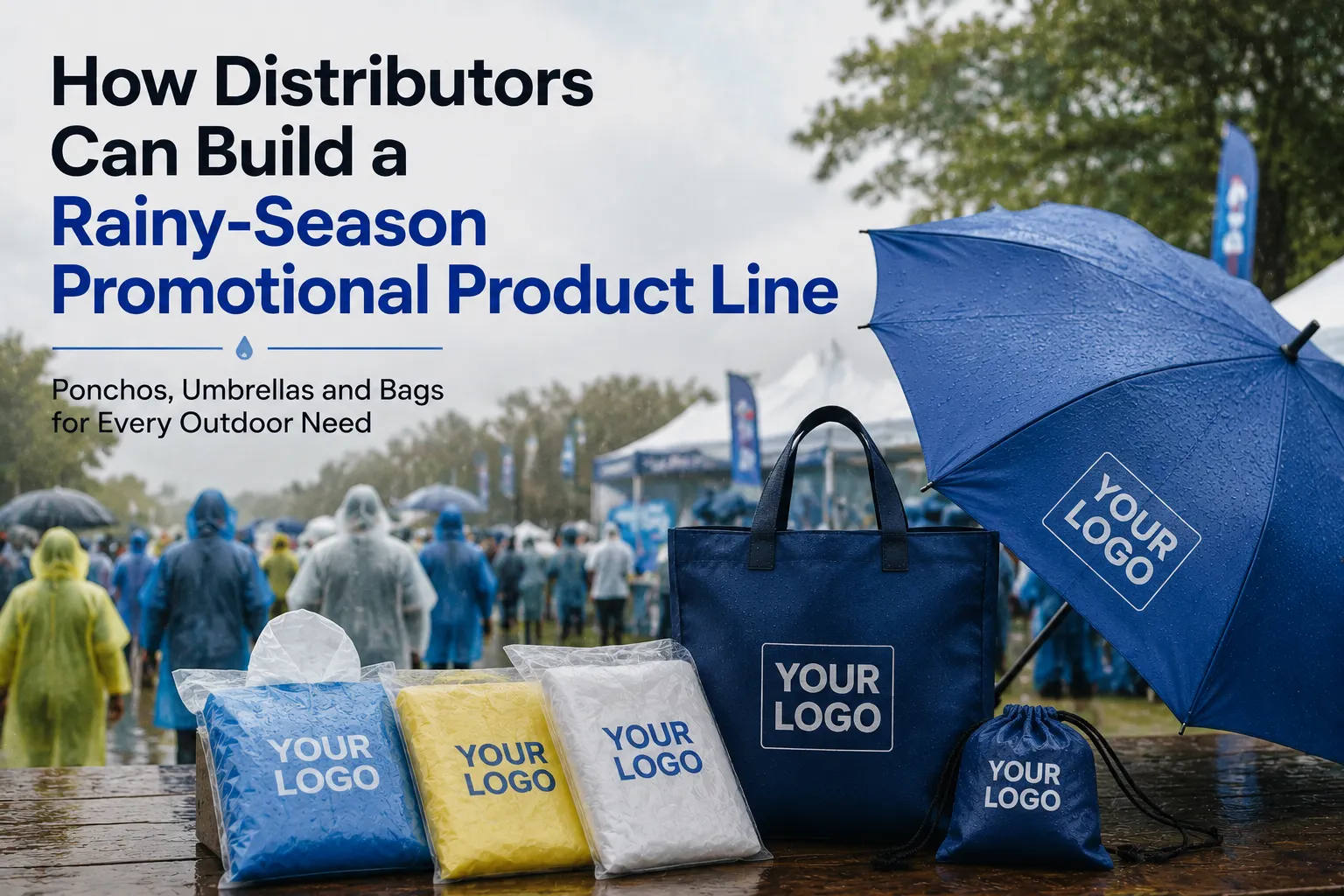
A rainy-season promotional product line gives distributors a practical way to serve customers planning outdoor events, school programs, retail campaigns, logistics operations, and corporate gifting. Instead of offering unrelated products, distributors can organize branded rain ponchos, umbrellas, and bags around specific customer needs, order quantities, budgets, and delivery schedules.
The challenge is deciding which products deserve space in the catalog, which combinations are suitable for each buyer, and how to control seasonal inventory risk. A structured assortment also makes supplier discussions easier because product categories, artwork, quantities, packaging, and replenishment needs can be defined before an RFQ is submitted.
Why Rainy-Season Products Deserve a Dedicated Assortment
Rain changes the value of promotional merchandise. A product that protects people or carries other items may be used immediately, while a general giveaway can be ignored during bad weather. For distributors, this creates an opportunity to present useful products for a defined season without turning the catalog into a broad list of unrelated gifts.
Which Customer Problems Create Demand for Rain Gear
Outdoor event organizers may need rain protection for attendees, staff, sponsors, or volunteers. Schools and universities may require practical items for outdoor activities. Retailers may use branded rain products for seasonal campaigns, while logistics and outdoor service companies may need merchandise that fits mobile work environments.
The customer’s operating conditions should guide the initial recommendation. A crowded festival may need products that are easy to distribute and store. A corporate gift program may place more value on presentation and repeated use. A distributor should ask where the product will be used, who will receive it, how many units are required, and whether the item is intended for one event or a longer campaign.
These questions help separate a genuine promotional rain gear requirement from a general request for inexpensive merchandise.
Seasonal Assortment Versus a General Promotional Catalog
A focused rainy-season product line can make sales conversations more efficient. Products can be grouped by use case, price level, audience, and customization requirement instead of being presented as isolated items.
The assortment should remain selective. Too many colors, sizes, packaging options, and product combinations can increase inventory complexity and make replenishment more difficult. A practical starting point is a small group of rain products that can serve several industries, followed by additional options when customer demand becomes clearer.
The Core Products in a Rainy-Season Promotional Line
Rain ponchos, umbrellas, and bags have different functions. Treating them as interchangeable can lead to unsuitable recommendations, excess stock, or unclear quotations.
Branded Rain Ponchos for Events and Outdoor Campaigns
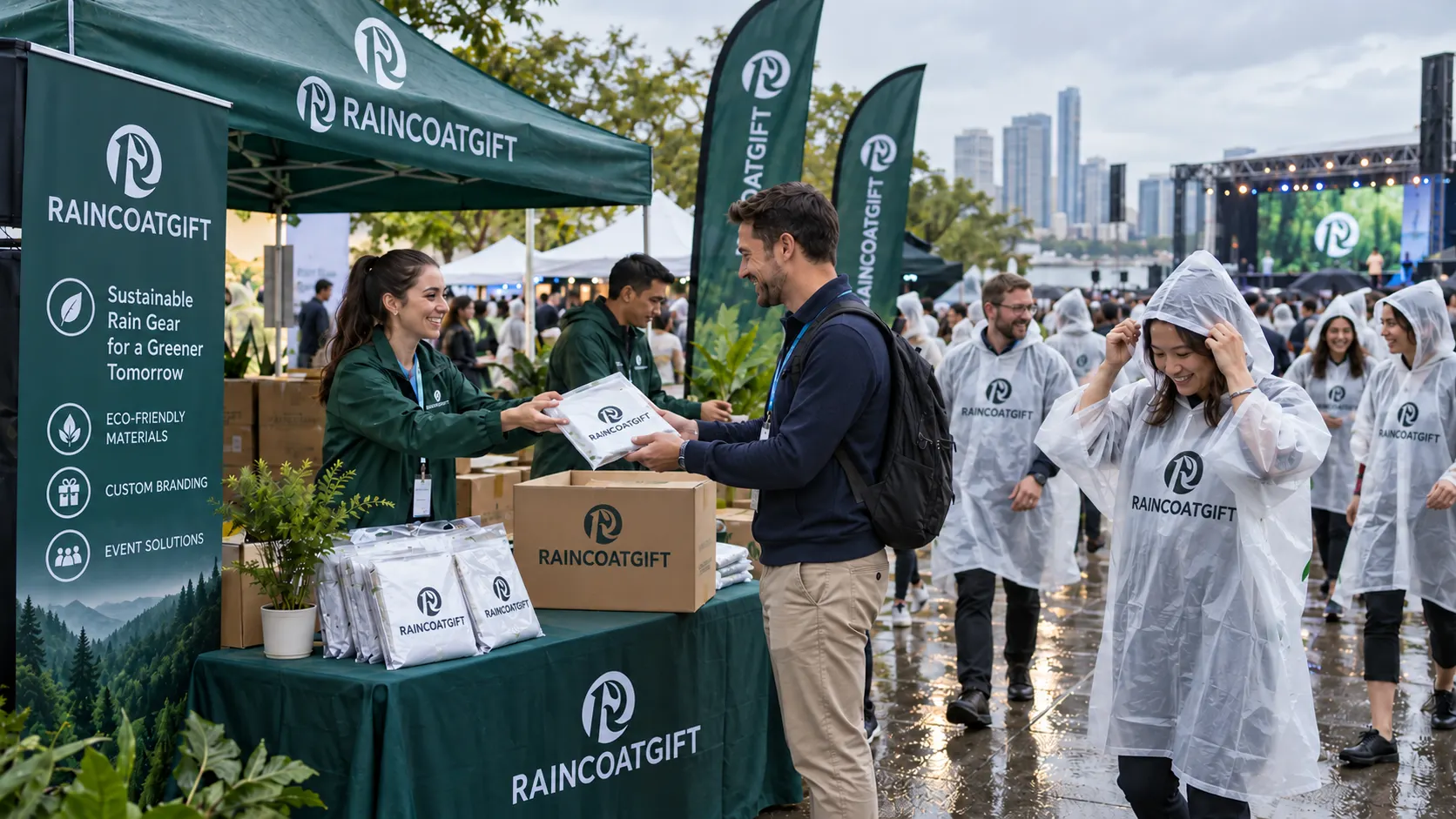
Branded rain ponchos may suit festivals, sports events, campus activities, public campaigns, and outdoor brand activations where many units must be distributed. A poncho-first assortment can support large-volume requests because the product is intended to provide immediate coverage and can be allocated by entrance, team, or event area.
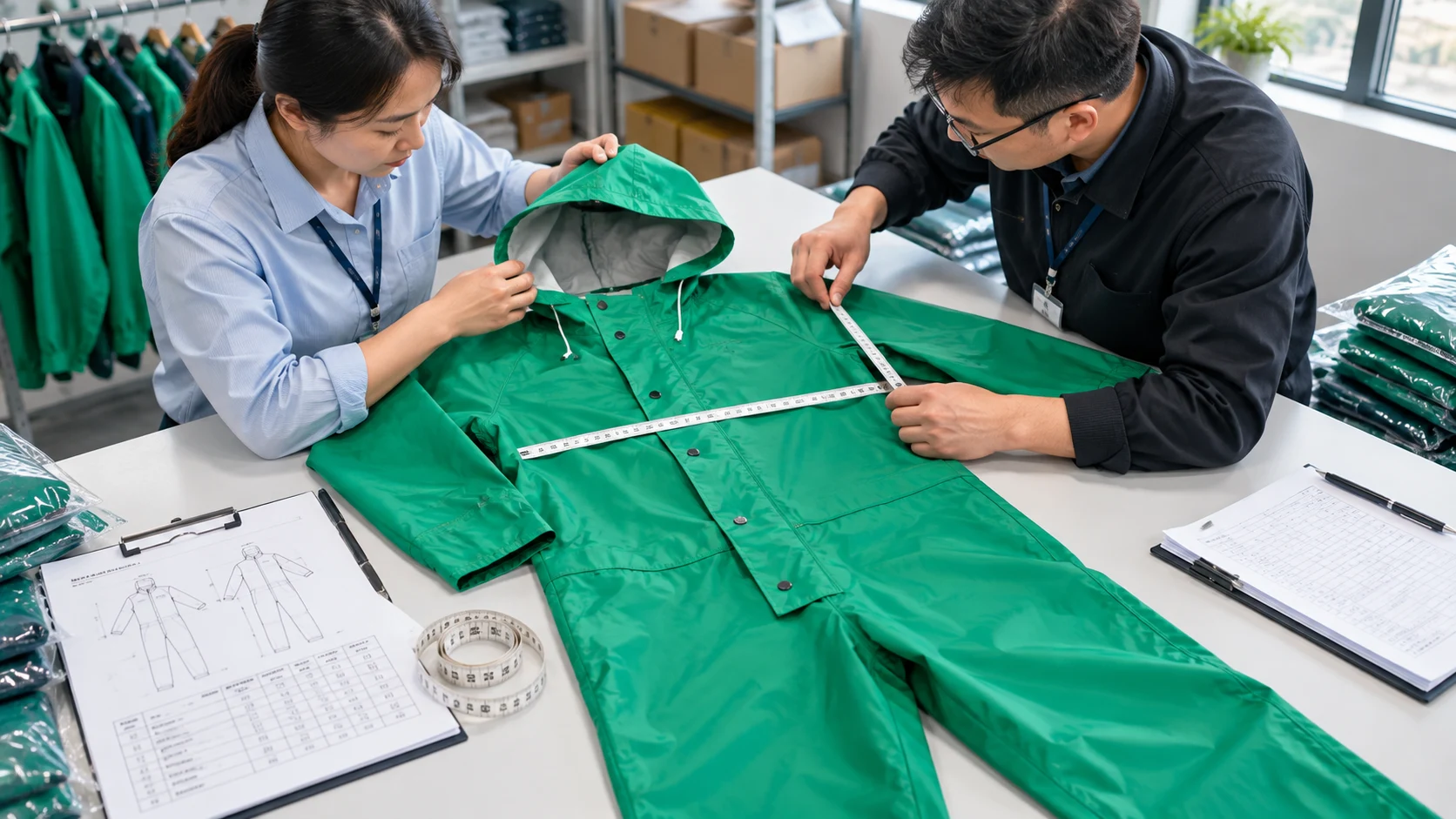
The product still needs to match the application. A short-term event item may not suit extended professional use or repeated wear. Before recommending wholesale ponchos for resale, confirm the material, finished size, closure details, hood design, packed format, available colors, and printable area against the product specification.
The raincoat product category can help distributors create an initial shortlist. Product suitability may vary by material, size, artwork, quantity, and operating environment, so a catalog description should not replace supplier confirmation.
Promotional Umbrellas for Higher-Value Recipients
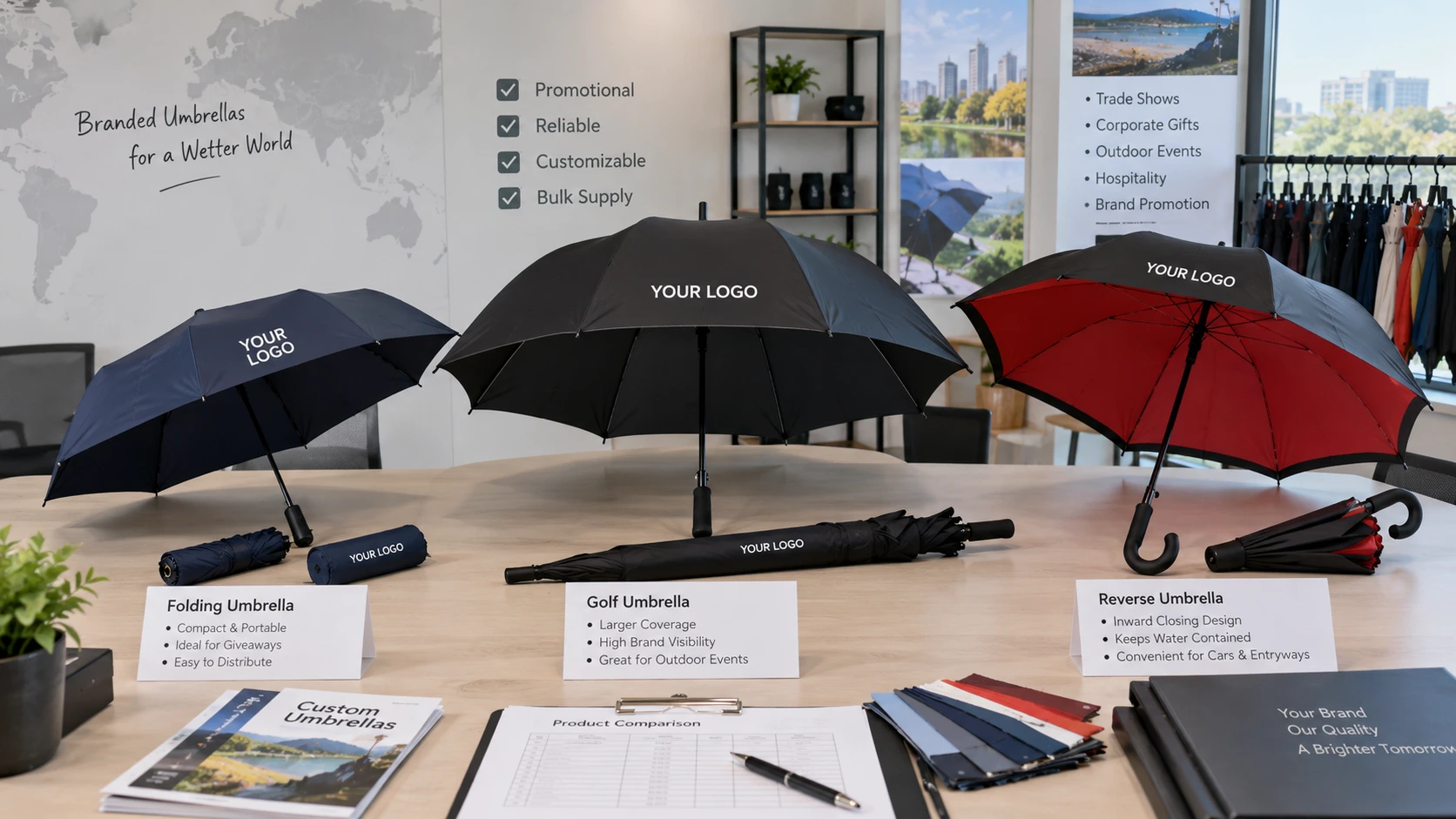
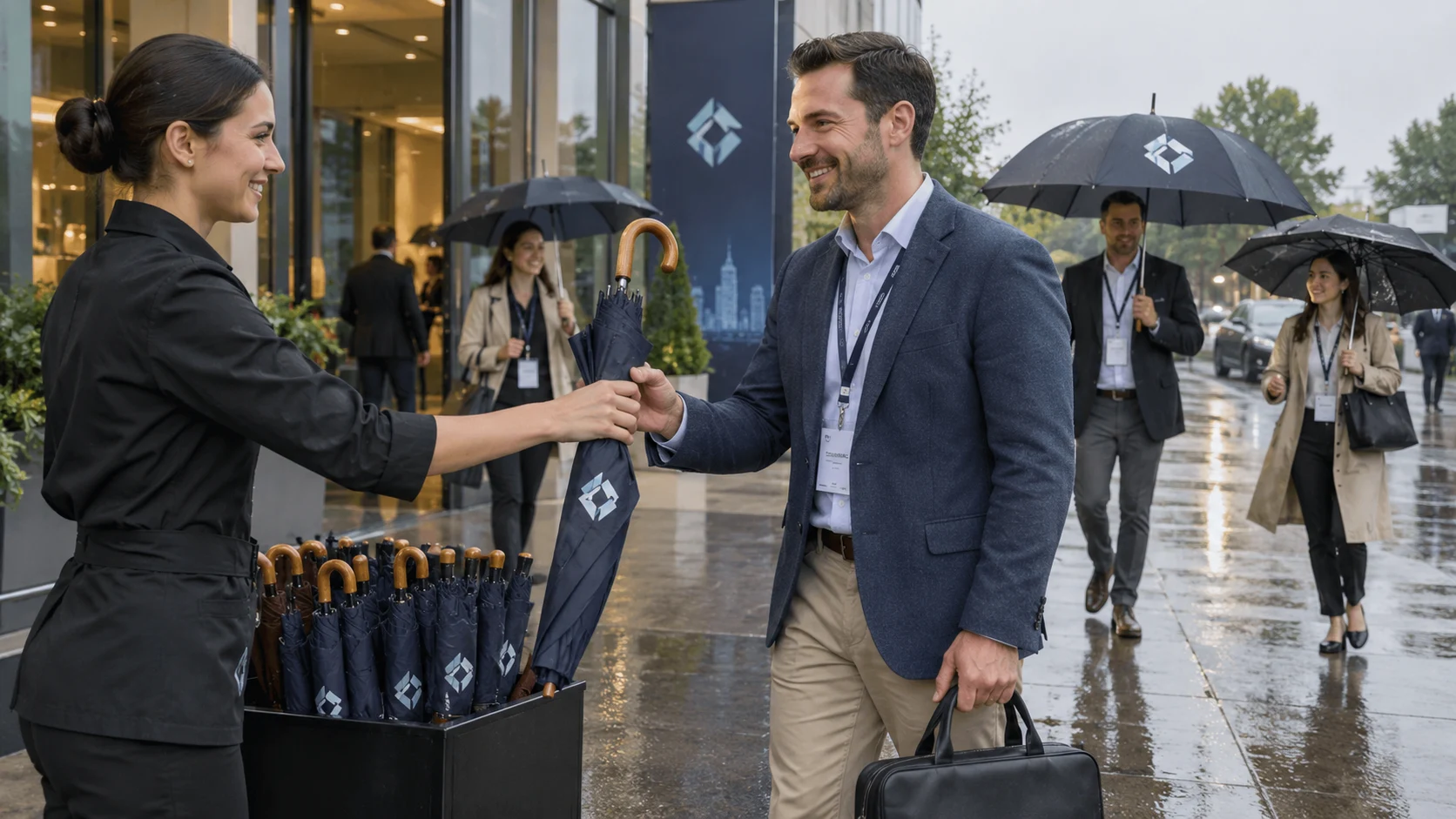
Umbrellas can work well for corporate gifts, staff programs, customer appreciation, hospitality areas, and smaller outdoor activities. Their branding surface is visible when opened, but the product requires more storage and handling space than a compact poncho.
Crowded walkways, narrow entrances, strong wind, and venue restrictions may make umbrellas unsuitable for some campaigns. A distributor should ask how the product will be used before presenting it as a standard rainy-season option.
The custom promotional umbrellas category can support product selection discussions. Buyers should confirm the finished dimensions, opening method, panel layout, packed size, logo position, and intended use conditions before approving a quotation.
Custom Bags for Packaging and Added Brand Exposure
Bags can function as standalone promotional products or as packaging for rain ponchos, umbrellas, printed materials, and other gifts. Their value depends on the customer’s intended contents, carrying method, and branding objective.
A lightweight bag may be suitable for a simple giveaway, while a bag intended for repeated carrying may require different dimensions, closure details, and handle strength. Distributors should confirm the capacity, print area, carrying method, packaging format, and expected load before recommending a bag for a specific campaign.
The promotional bags wholesale category can be used when building a coordinated product line. The bag should be described according to its confirmed specification rather than assumed performance.
How to Build Product Bundles for Different Buyers
A product line becomes easier to sell when each bundle has a clear purpose. The following structure can help distributors prepare options without assigning the same product to every customer.
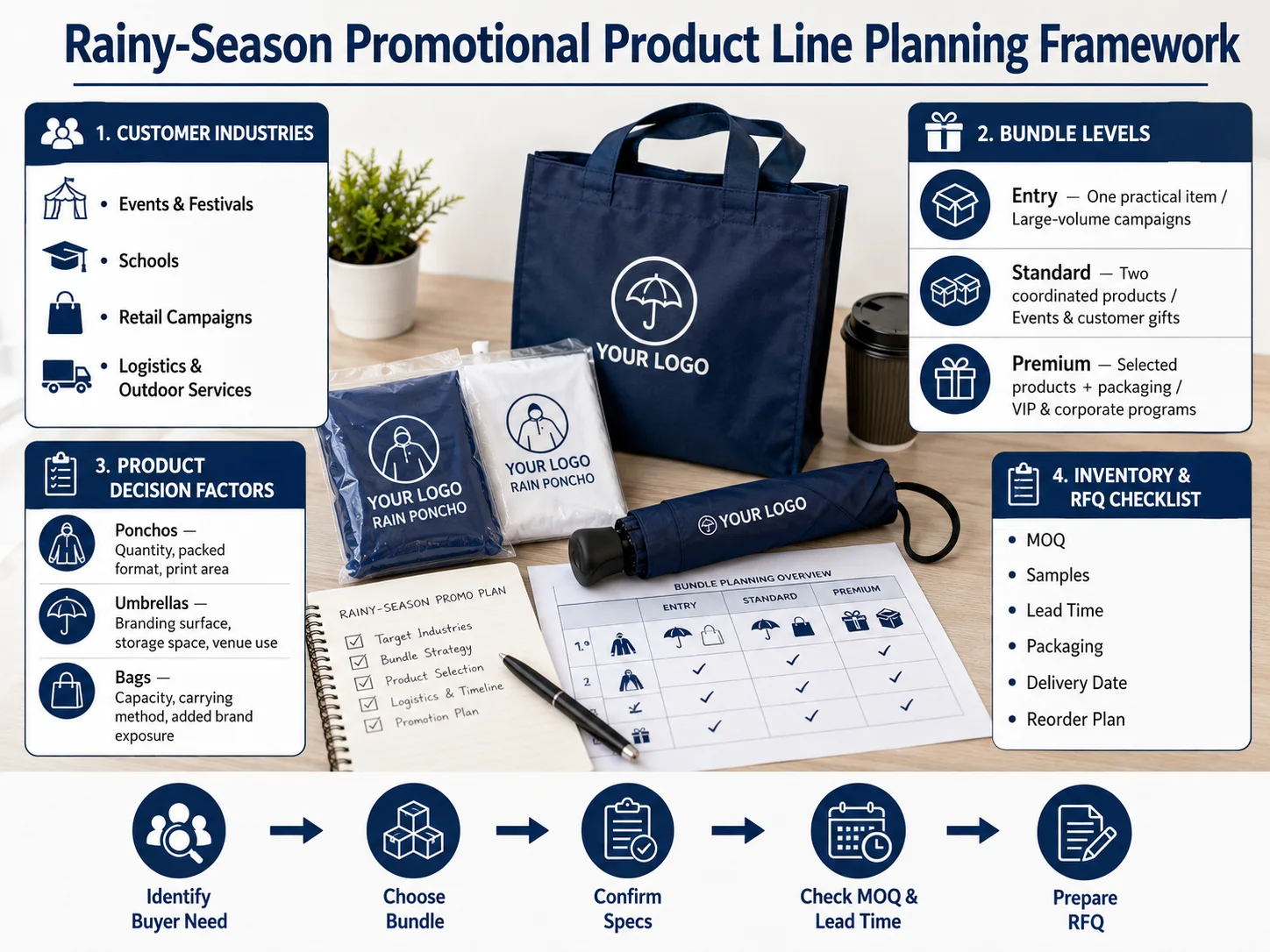
| Bundle level | Typical use | Possible focus | Main decision |
|---|---|---|---|
| Entry | Large-volume campaigns | One practical rain product | Quantity and distribution |
| Standard | Events and customer gifts | Two coordinated products | Balance of utility and branding |
| Premium | VIP and corporate programs | Selected products with packaging | Presentation and customization |
Entry-Level Kits for Large-Volume Campaigns
An entry-level kit may suit schools, public events, festivals, and campaigns where the main requirement is practical distribution at a controlled cost. The product mix should remain simple so that the distributor can manage quantities, colors, and delivery without creating unnecessary stock variations.
The quotation should identify the expected use, target quantity, packaging, and delivery date. Lower unit cost should not be evaluated separately from storage, artwork approval, and the risk of holding unsold seasonal stock.
Standard Kits for Events and Customer Gifts
A standard kit may combine a rain poncho with a bag, or an umbrella with a bag, depending on the recipient and campaign objective. The combination should provide a clear reason for including each product.
Before presenting the bundle, check whether the products have different minimum order quantities, sample requirements, and production schedules. Separate pricing for each component helps the customer adjust the order without rebuilding the entire quotation.
Premium Kits for VIP and Corporate Programs
Premium programs may focus on presentation, coordinated artwork, packaging, or products intended for repeated use. They are more suitable for selected recipients than for an entire crowd.
The distributor should confirm the customer’s expectations rather than using unsupported claims about quality, durability, or value. Sample approval may be appropriate when color, logo placement, folding, or packaging affects the customer’s decision.
Match the Product Line to Customer Industries
A product’s commercial potential depends on the customer’s application, not only on the item itself.
Events, Festivals, and Sports Organizations
Event customers may need different products for attendees, staff, sponsors, and VIP guests. Ponchos may be allocated to large groups, while umbrellas or bags may be reserved for controlled areas or selected recipients.
The distributor should request the event date, estimated attendance, delivery location, artwork, venue restrictions, and backup quantity. These details help determine whether the requirement is for bulk rain gear, a branded gift program, or a mixed distribution plan.
Schools, Retailers, Logistics, and Outdoor Services
Schools may value simple, high-volume products for activities and campaigns. Retailers may prefer seasonal merchandise that supports a promotion or customer gift program. Logistics and outdoor service customers may have different expectations for carrying, storage, and repeated use.
Ask what the product must do, who will use it, and how it will be distributed. This prevents a generic umbrella or bag recommendation from being applied to an unsuitable work environment.
Manage Seasonal Inventory and Reorder Risk
Seasonal products can create commercial value, but they can also create stock risk when demand, weather, and campaign timing change.
Start with a Focused Assortment
A distributor can begin with a limited range of core rain products and expand after receiving customer feedback. Limiting initial variations in color, size, and packaging makes purchasing easier to control.
The assortment should also reflect the expected sales cycle. A product intended for one campaign may require different stock planning from a product that can be offered across several industries.
Confirm MOQ, Samples, Lead Time, and Reorders
Minimum order quantities should be checked separately for raincoats, umbrellas, and bags. Samples may be needed when artwork, color, material, or packaging is commercially important.
The purchasing schedule should allow time for artwork preparation, supplier review, sampling, production, packing, and delivery. If repeat orders are likely, ask whether the same specification can be used again and whether future orders may be affected by quantity or material changes.
Supplier and RFQ Checklist for Distributors
Information to Include in a Distributor RFQ
An effective RFQ should include:
- Product categories and target quantities
- Intended customer industries and applications
- Colors, logo files, and print positions
- Packaging, labels, and sample requirements
- Delivery destination and required date
- Expected reorder frequency
- Any known size, material, or handling requirements
This information helps a supplier identify assumptions before preparing a quotation.
What a Suitable Supplier Should Clarify
A suitable supplier should explain the available product configuration, artwork requirements, minimum quantities, sample process, packaging assumptions, and delivery conditions. A quotation based only on a product name and total quantity may leave important details unresolved.
RAINCOATGIFT’s product categories provide a starting point for reviewing raincoats, umbrellas, and bags. The final selection should still be checked against confirmed specifications and the customer’s application. Product information, distributor terms, samples, and delivery capability should be confirmed before making a commercial commitment.
Conclusion
A rainy-season promotional product line should be built around buyer use cases rather than product names alone. Rain ponchos, umbrellas, and bags can serve different customer groups, but each item needs a defined role, suitable quantity, clear customization requirements, and realistic replenishment plan.
The RAINCOATGIFT product collection can help distributors begin reviewing relevant categories. For a quotation, contact RAINCOATGIFT with the target customer industry, product types, quantities, artwork, packaging needs, delivery location, and expected campaign date. These details provide a practical basis for product selection and supplier discussion.
FAQs
What promotional products sell well during the rainy season?
Rain ponchos, umbrellas, and branded bags may suit seasonal campaigns, outdoor events, schools, corporate gifts, and customer programs. Product suitability depends on the recipient, quantity, budget, and application.
Which rain gear should a promotional products distributor stock?
A focused assortment may begin with rain ponchos, selected umbrellas, and bags for packaging or added branding. The right range depends on customer industries and expected order patterns.
Are umbrellas suitable for every rainy-season campaign?
No single product suits every campaign. Crowded venues, narrow walkways, strong wind, and venue rules may limit umbrella use, making ponchos more practical in some situations.
How can distributors reduce seasonal promotional product inventory risk?
Start with a focused range, limit unnecessary variations, confirm MOQ and lead time, and request customer quantities before placing large orders. Reorder conditions should also be discussed with the supplier.
What should distributors ask a wholesale rain gear supplier?
Ask about product specifications, customization, MOQ, samples, packaging, production timing, delivery assumptions, and whether the same configuration can support future replenishment.