
When an outdoor crew works near vehicles, equipment, traffic, or low-light areas, a raincoat set has to do more than keep water off the wearer. Procurement teams must verify visibility, weather protection, movement, sizing, documentation, and repeatable bulk production controls as one system. A jacket that looks reflective in a product photo can still leave the lower body poorly marked, restrict movement over work layers, or lack the evidence needed for the destination market. This checklist explains what to examine before approving reflective raincoat sets for outdoor work crews. It also separates supplier claims from the details that should be confirmed on a sample, specification sheet, and purchase order.
Define the work exposure before comparing sets
Start with the job, not the garment name. Record whether the crew works on roads, construction sites, logistics yards, utilities, landscaping, agriculture, or general maintenance. Note traffic proximity, lighting, rainfall, wind, mud, abrasion, temperature, shift length, and the layers worn underneath. A short emergency deployment has different priorities from a reusable set worn throughout a wet shift.
The risk profile determines what the reflective raincoat set must accomplish. Near moving vehicles, visibility layout and contrast may be decisive. In heavy rain or muddy work, seam construction, coverage, cleanability, and resistance to snagging deserve more weight. For active work, the set must allow reaching, bending, climbing, kneeling, and tool access. Put these conditions into the RFQ so suppliers quote against the same use case rather than a vague request for a waterproof rain suit.
Check the set as a coordinated system
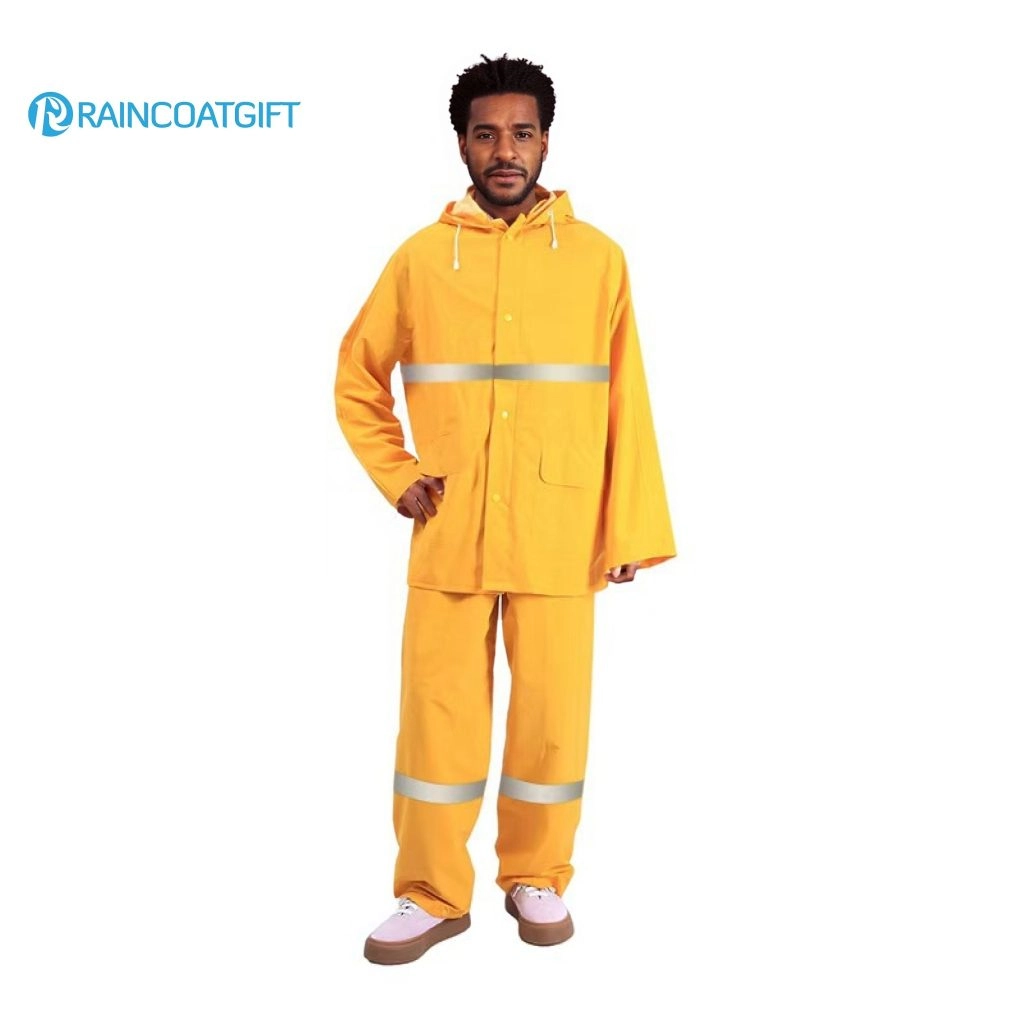
A two-piece set should be reviewed as a jacket-and-pants system, not as two unrelated garments. Confirm that the jacket hem and trouser rise overlap in the working positions employees actually use. Check whether reflective bands continue the visibility pattern across the waist and upper legs, and whether a tool belt, vest, harness, or other required equipment will cover them. A highly visible jacket cannot compensate for dark or poorly marked trousers when workers are seen from the side or rear.
Review the hood, cuffs, waistband, ankle openings, front closure, pockets, and adjustment points together. Workers should be able to close the set while wearing gloves and normal base layers. Pant openings should fit over work boots without creating a trip hazard. If the supplier offers several styles, ask for the exact jacket and pant combination proposed for the order, including color, reflective placement, trim, and size grading. Do not approve a jacket sample and assume the matching pants will be equivalent.
Verify reflective layout and compliance evidence
Reflective tape is only one part of a high-visibility design. Ask the supplier to identify the fluorescent or high-visibility background color, the reflective material, the width and placement of bands, and any areas that may be hidden by closures, pockets, equipment, or branding. Request front, rear, and side images or drawings showing the complete set. The approval record should state which surfaces must remain visible during normal work movements.
If the end market or employer specification calls for ANSI/ISEA 107, EN ISO 20471, or another high-visibility requirement, request current documentation for the actual garment configuration, not a generic fabric statement. Confirm the standard edition, garment class or performance level, test scope, and whether the certificate or report covers both pieces of the set. Reflective details may improve visibility without proving compliance. Treat missing or mismatched documentation as an open procurement issue that must be resolved before release.
Inspect waterproof construction and service details
Waterproofing should be evaluated at the construction level. Inspect the fabric or coating specified for the order, then follow the seams from hood and shoulders through the underarms, crotch, pockets, and leg openings. Look for skipped stitches, weak bonding, lifted tape, puckering, unfinished edges, and openings where closures or drawcords are anchored. A short water check can expose an obvious leak path, but it does not replace an agreed performance test when the order requires one.
Compare materials against the work conditions. PVC or PVC-polyester may suit teams that need durable, easy-to-clean rainwear, while lighter constructions may be considered when portability and movement are more important. The correct choice depends on exposure, abrasion, heat, flexibility, and expected reuse. Check care instructions, cleaning compatibility, odor, and storage requirements as well as the headline waterproof claim. A garment that is difficult to clean or dry can become an operational problem even when it initially sheds water well.
Test fit, mobility, and the full size range
Size charts should be checked against real work layers rather than a nominal adult size. Test representative wearers in the planned base layer, uniform, fleece, or insulation. Close the jacket and pants fully, then reach overhead, bend, squat, kneel, climb a low step, turn, and access normal pockets. Watch for rising hems, short sleeves, tight shoulders, restricted knees, exposed ankles, hood obstruction, or closures that gap under movement.
Repeat the review across the intended size range. One comfortable middle size does not validate every size. Record wearer measurements, layers, sample size, pressure points, coverage gaps, and mobility findings. If the pattern or material changes, repeat the same movement sequence so the revised sample can be compared on a consistent basis. The approval record should distinguish a fit issue from a visibility issue and assign a required correction to each one.
Review the sample and bulk-production controls
Before approval, confirm that the sample represents the planned order. The material, color, reflective trim, closure type, logo method, measurements, and size should match the quotation or technical specification. If a substitute fabric or trim is used for sampling, record it explicitly and require written confirmation before production. Inspect seams, closures, adjustment hardware, reflective attachment, and packing in good light, and photograph defects with a clear location reference.
Turn the approved sample into a production reference. Ask how the supplier will control reflective placement, size tolerances, color consistency, seam quality, and carton packing during bulk manufacture. The supplier’s existing guidance on work rainwear sample inspection before bulk production provides a useful framework for documenting approval, but the reflective layout and set-level checks should be added to the order-specific record.
Build a procurement-ready RFQ
A useful RFQ should state the application, work environment, target market, quantity, size breakdown, jacket-and-pant style, background color, reflective layout, logo artwork, packaging, inspection expectations, destination, and required arrival date. Add the layers worn underneath, the main movements, and any employer or regulatory requirement. Ask for a dimension chart, material description, sample plan, documentation list, and a clear explanation of what is included in the quoted set.
Use a verified product fit check before the RFQ
RAINCOAT GIFT presents rainwear categories that include PVC-polyester options for outdoor work. Its PVC-polyester rainwear category can help buyers identify a relevant starting point, while the OEM/ODM PVC raincoat product page shows the type of commercial information a supplier should disclose, including material, customization, sampling, MOQ, packing, and production fields. These published details are a starting point only; reconfirm current specifications, reflective configuration, size grading, and timing for the actual order.
For broader material-selection context, procurement teams can also review the existing construction rain gear selection guide. The new set-specific checks in this article should be used alongside, not instead of, the project specification and destination-market requirements.
Conclusion
Reflective raincoat sets should be approved through a documented decision process. Define the exposure, evaluate jacket and pants together, verify reflective layout and applicable evidence, inspect waterproof construction, test real movement over work layers, and convert the approved sample into production controls. This approach helps procurement teams compare suppliers on usable protection and traceable requirements rather than on appearance or a generic waterproof label.
Frequently Asked Questions
Are reflective strips enough to call a set high visibility?
No. Reflective strips can support visibility, but the full garment design, background color, coverage, and required market documentation determine whether a set meets a specific high-visibility requirement.
Should jacket and pants be approved as one sample?
Yes. Review the complete set for overlap, reflective continuity, fit, movement, closures, and coverage. Approving only the jacket can leave important lower-body or coordination problems undiscovered.
What should a supplier provide before bulk production?
Request a production-representative sample, measurement chart, material and trim description, reflective layout, applicable compliance documents, packaging details, and a written resolution for any approved substitutions.
What information should be included in a reflective rainwear RFQ?
Include the work environment, target market, quantity, size range, set configuration, colors, reflective requirements, logo details, packing, inspection expectations, destination, and delivery timing.
When the specification is ready, contact the RAINCOAT GIFT technical team with the work conditions, set configuration, material preference, quantity, size breakdown, reflective requirements, logo artwork, and destination so the quotation can be checked against the intended application.