Cheap bulk event ponchos usually tear because cost has been removed from the film, seam construction, pattern dimensions, or process control. For an event buyer, the useful question is whether the production lot can survive unfolding, dressing, arm movement, crowd contact, and wind-driven rain. Compare measurable construction details, inspect stress points, and test randomly selected units before approving a bulk order. RAINCOATGIFT offers rainwear for promotional and event applications, but the same disciplined checks should be applied to any supplier quotation.
Why Low-Cost Bulk Event Ponchos Fail
A disposable poncho is simple, yet its failure is rarely caused by one number. Film thickness matters, but resin quality, thickness consistency, seam geometry, cutting, and packing all influence whether a small notch becomes a long tear. A low price becomes a false economy when the specification cannot distinguish an intentionally lightweight product from an uncontrolled one.
Thin or Inconsistent Film
Very thin film requires less material, which lowers cost and packed volume. It also leaves less material around the neck opening, arm openings, and side seams to distribute force. Average thickness alone can conceal weak areas. If extrusion varies across the sheet, one edge may be noticeably thinner than the center. Ask how thickness is stated, how it is measured, and what tolerance applies across the width and across the production run.
Weak Seams and Sharp Cut Features
A seam can fail even when the film itself is adequate. Insufficient sealing energy may produce a seam that peels apart; excessive heat can embrittle the edge beside the seal. Abrupt corners, narrow seal margins, or rough die-cut edges concentrate stress. Neck openings are especially sensitive because users pull the garment over the head and may tug the hood while wearing it. Inspect the transition from opening to body, not just a flat section of film.
Fit That Creates Load Instead of Allowing Movement
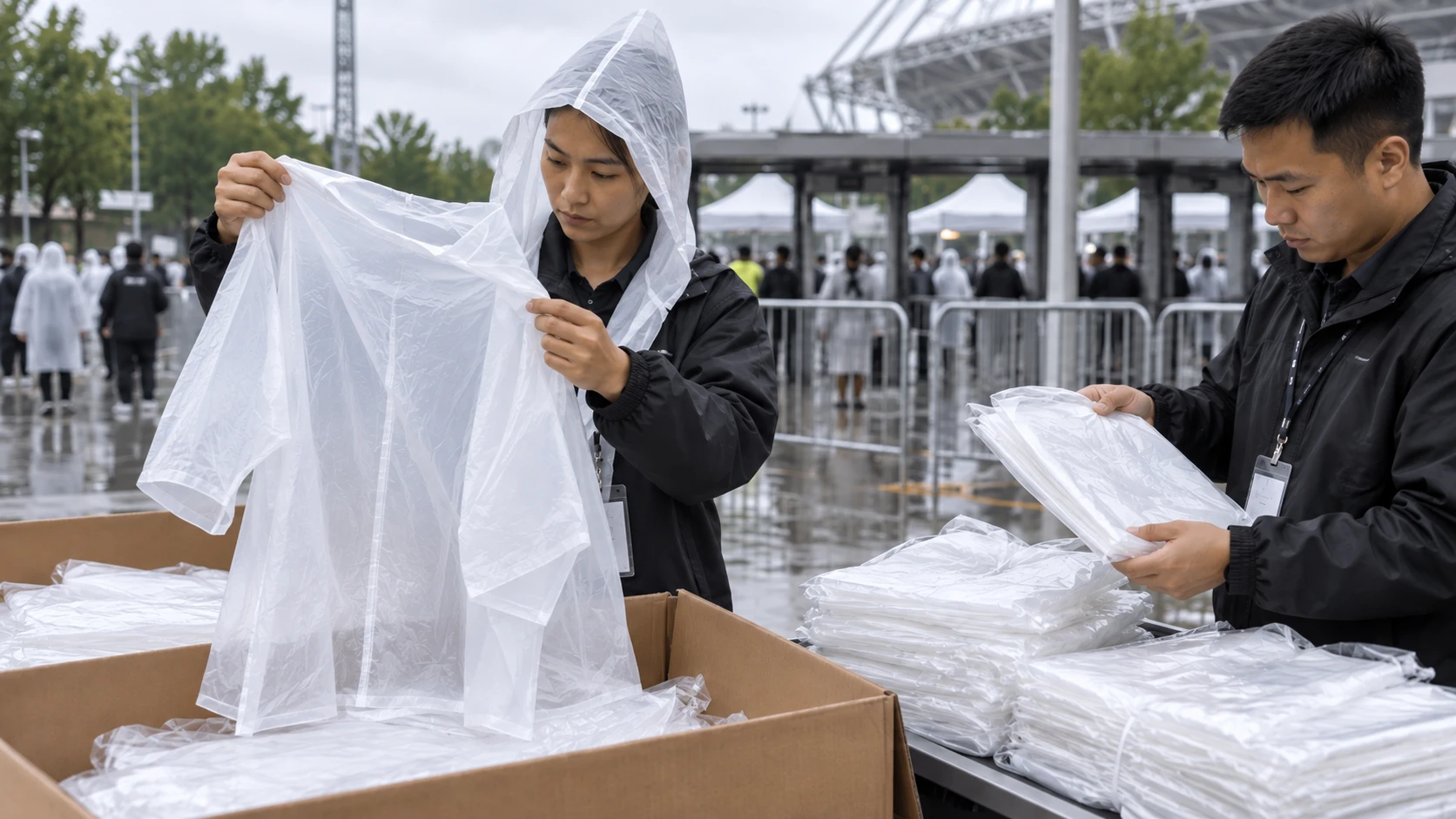
An undersized poncho can feel acceptable while standing still and tear as soon as the wearer reaches forward or pulls it over a jacket. Event audiences also vary in height, build, clothing layers, and mobility needs. The specification should state finished dimensions and the measurement method. A one-size label is not enough for a procurement decision; buyers need to know whether the garment provides useful movement allowance for the intended crowd.
Packing and Storage Damage
Tight folding, sharp packaging edges, and carton compression can create creases or pinholes before distribution. Heat and prolonged storage may also affect handling. A display sample does not prove that individually packed units will arrive in the same condition. Test production-style packages after representative storage and handling when the schedule allows.
The Buyer’s Quality Checklist
Use a written specification and an agreed inspection method. The goal is not to demand a heavy reusable garment when the application needs an economical emergency layer. It is to make the required performance visible, comparable, and repeatable.
- Confirm the intended use. State whether the poncho is for short rain showers, queue management, stadium seating, festivals, outdoor staff, emergency kits, or repeated wear. Include expected clothing layers and likely wind exposure.
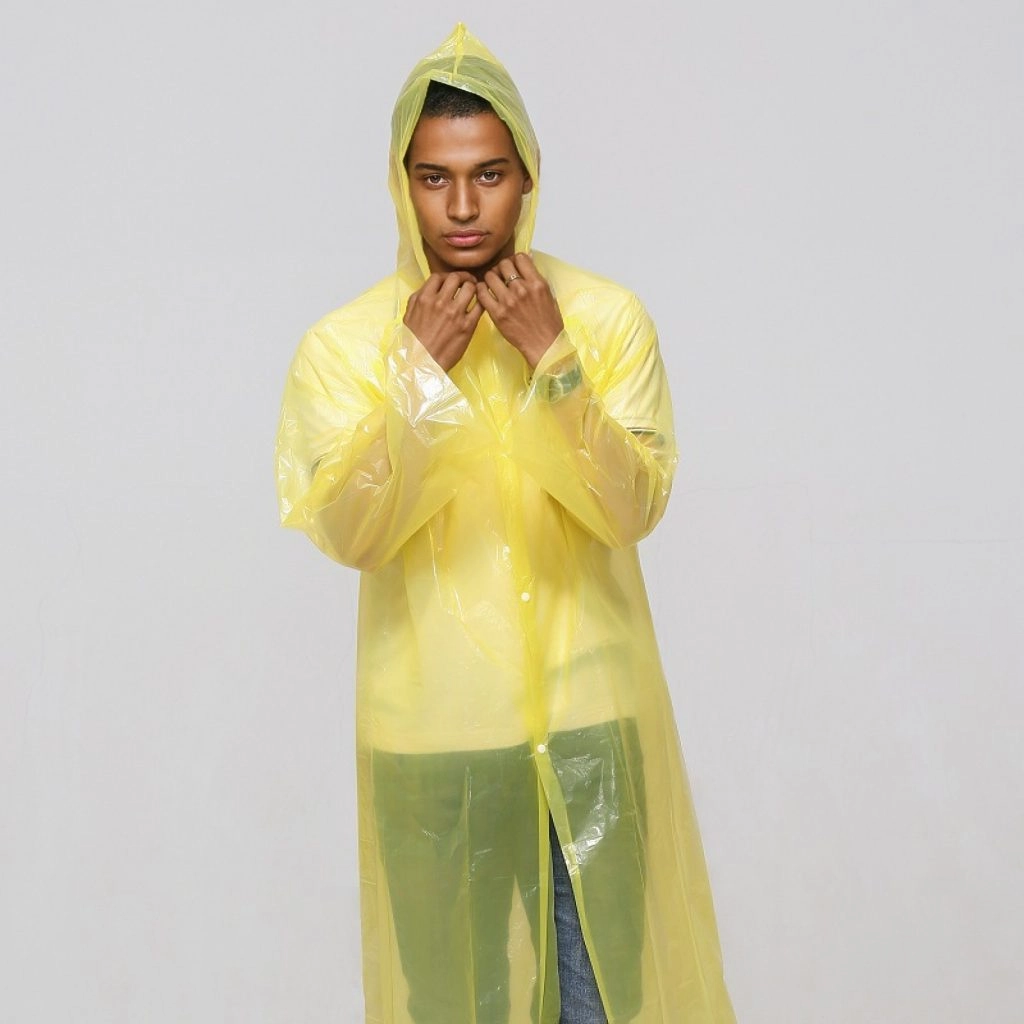
- Identify the material. Require the supplier to name the film or fabric rather than use only “plastic.” PE, EVA, PVC, and coated polyester options behave differently. Review the available PVC and EVA raincoat ponchos before treating unlike constructions as interchangeable.
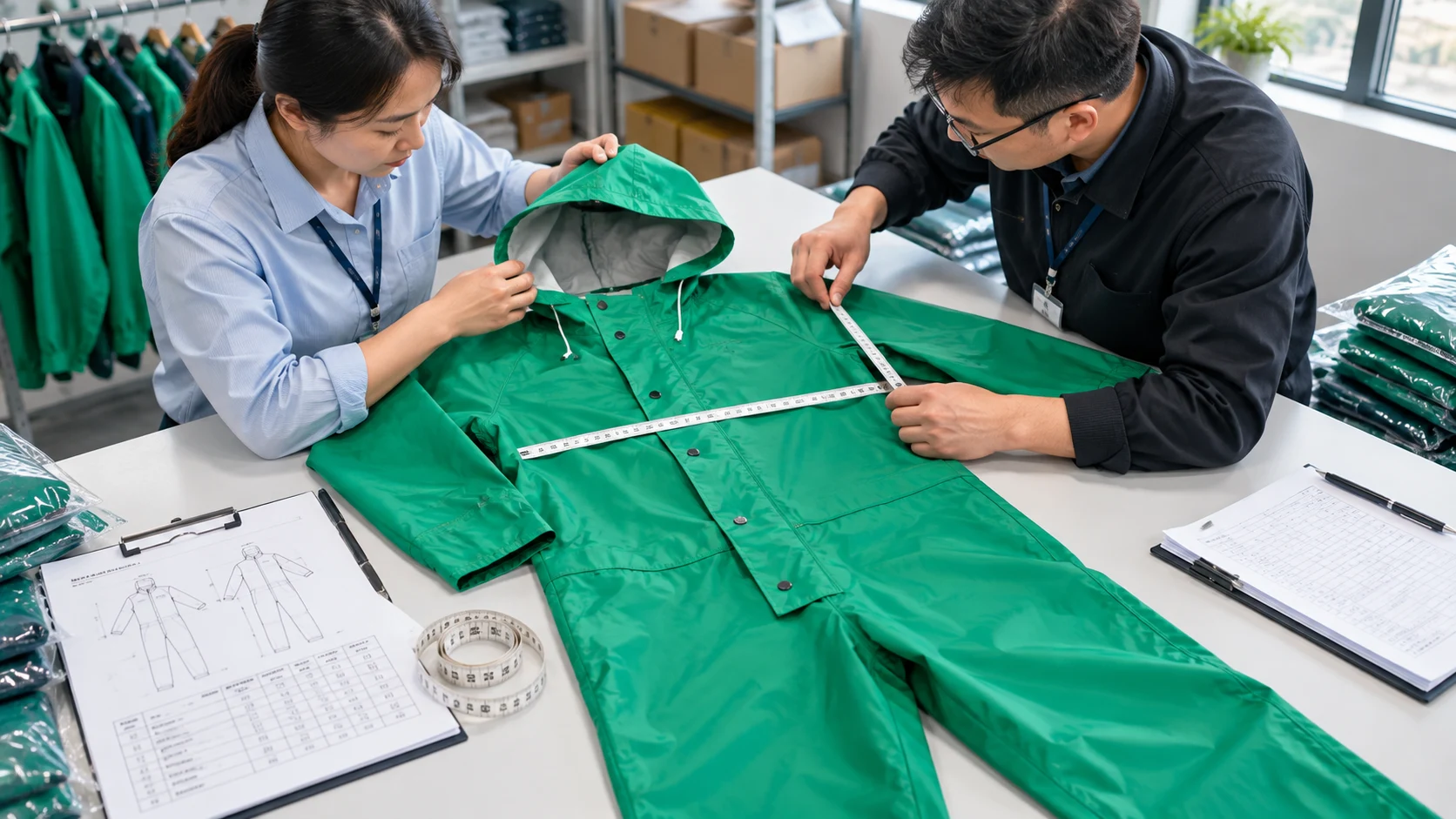
- Define finished size and tolerances. Record body width, body length, sleeve or arm coverage, hood dimensions, and opening dimensions using an agreed measurement diagram. Check multiple units, not one showroom sample.
- Specify thickness or fabric weight with tolerance. Ask where measurements are taken and whether the stated value is nominal, minimum, or average. For laminated or coated materials, clarify what the number represents.
- Inspect seams and openings. Look for continuous seals, adequate seal width, clean cuts, smooth transitions, and reinforcement where the design provides it. Reject unexplained burn marks, channels, wrinkles, or partially bonded areas.
- Test movement and dressing. Have users put the poncho on over representative clothing, raise both arms, reach forward, turn, sit, and remove it normally. Record where stretching, whitening, or tearing begins.
- Check packaging and carton condition. Confirm individual pack format, count, carton dimensions, labeling, and protection from sharp edges or excessive compression. Open samples from different carton locations.
- Approve a production-representative sample. A prototype made by a different process or material is useful for appearance only. Tie approval to a controlled specification, artwork version, packaging method, and agreed acceptance criteria.
How to Run a Practical Pre-Shipment Check
Sample randomly across several cartons and locations within each carton. Count obvious defects, then use the same sequence on every test unit: open, unfold, put it on over event clothing, complete the planned motions, perform a controlled water check, and remove it.
Focus the water check on visible holes, open seams, and leakage paths. Compare tear behavior under the same conditioning and method. A hand pull can reveal gross weakness but cannot replace an agreed protocol when performance is critical. Record the sample size, method, failures, and acceptance rule.
Match the Poncho Construction to the Event
The lowest acceptable construction depends on consequences. A brief giveaway for an unexpected shower may prioritize compact packing and fast distribution. A multi-hour festival, staff deployment, or windy venue places more load on seams and openings. Branded programs add another concern: printing should not hide defects, interfere with seals, or make the film stiff at a high-movement area.
In the RAINCOATGIFT catalog, a verified starting point is the PE rain poncho product specification and compare its stated material, size, packaging, customization, and sample terms with the written requirements for the event. Treat every supplier statement as a specification item to confirm, especially where size, material, configuration, and production method can change.
Questions to Put on the RFQ
- What exact material and construction will be used for the production lot?
- What finished dimensions and tolerances apply, and how are they measured?
- What thickness or weight tolerance applies across a unit and across the lot?
- Which seam method is used, and what visual defects trigger rejection?
- Will the approval sample use production material, tooling, printing, and packaging?
- What inspection sample plan and acceptance criteria will appear on the purchase order?
These questions convert “good quality” into evidence. When comparing wholesale rain ponchos, they reveal whether a price difference comes from material, dimensions, packaging, printing, or quality control rather than from an undefined grade.
Conclusion
Cheap bulk event ponchos tear easily when low material use is combined with inconsistent film, weak seals, stress-concentrating cuts, restrictive dimensions, or damaging packing. Buyers can reduce that risk by defining the application, measuring construction, inspecting stress points, and testing randomly selected, production-representative units. The objective is not maximum thickness; it is a controlled product that performs for the planned event without paying for features the audience does not need.
RAINCOATGIFT lists PE, PVC, and EVA rainwear options for bulk and customized programs. To evaluate fit, send the intended event, quantity, material preference, finished dimensions, packaging, artwork, and acceptance requirements when you contact the rainwear team. A complete RFQ allows the supplier to confirm what can be produced and which details still require sample validation.
Frequently Asked Questions
Does a thicker poncho always resist tearing better?
No. Thickness can improve the amount of material available to carry load, but resin quality, thickness uniformity, seam condition, cuts, fit, and storage also matter. Compare complete constructions under the same test method.
Which areas should buyers inspect first?
Start at the neck opening, hood attachment, sleeve or arm openings, side seams, and any abrupt corner or notch. Then check folded areas and package contact points for pinholes or permanent damage.
Is one approval sample enough for a bulk order?
One sample can confirm basic appearance and dimensions, but it cannot show lot consistency. Approval should identify the production material and process, while shipment inspection should use randomly selected units from multiple cartons.
What should an event buyer send with an RFQ?
Provide the use scenario, expected weather exposure, wearer and clothing assumptions, quantity, material preference, finished dimensions, printing, packaging, delivery requirements, and the inspection or acceptance method.