Bulk rain ponchos can help marathon organizers protect participants, volunteers, and event staff during wet pre-start queues, exposed aid stations, and finish-area recovery. The right option is lightweight enough to carry in volume, compact enough for controlled storage, and simple enough to hand out without slowing the event. Those benefits depend on more than a low unit price. Organizers should define when the poncho will be worn, how it will be packed, where it will be distributed, and what construction must be confirmed before ordering.
Define the Poncho’s Role in the Race Plan
A marathon poncho is often most useful while people are waiting rather than while they are running. Pre-start corrals, shuttle lines, registration areas, volunteer posts, and finish zones create periods when people are stationary and exposed. A compact emergency layer can be issued quickly when rain arrives or placed in selected kits before the event.
Do not assume one product suits every phase. A poncho worn during active running may restrict arm movement, trap heat, catch wind, or interfere with a bib and other equipment. If organizers expect participants to run in it, fit and operational suitability should be verified under realistic movement and weather conditions. Otherwise, communicate that it is intended for staging, waiting, or post-race use.
Choose Lightweight Construction Without Losing Function
For lightweight rain ponchos, consistency matters as much as low packed weight. The selected construction must still support the planned wear time, handling sequence, and weather exposure.
Select Material for the Intended Wear Time
PE, EVA, PVC, and coated fabric constructions can differ in feel, pack size, durability, and cost. A short-use emergency poncho may prioritize low weight and compact storage, while repeated staff use may require a more substantial option. Review available PVC and EVA raincoat ponchos as separate constructions rather than treating all waterproof garments as equivalent. Material, thickness, and performance should be verified against the final specification.
Check Finished Dimensions and Movement Allowance
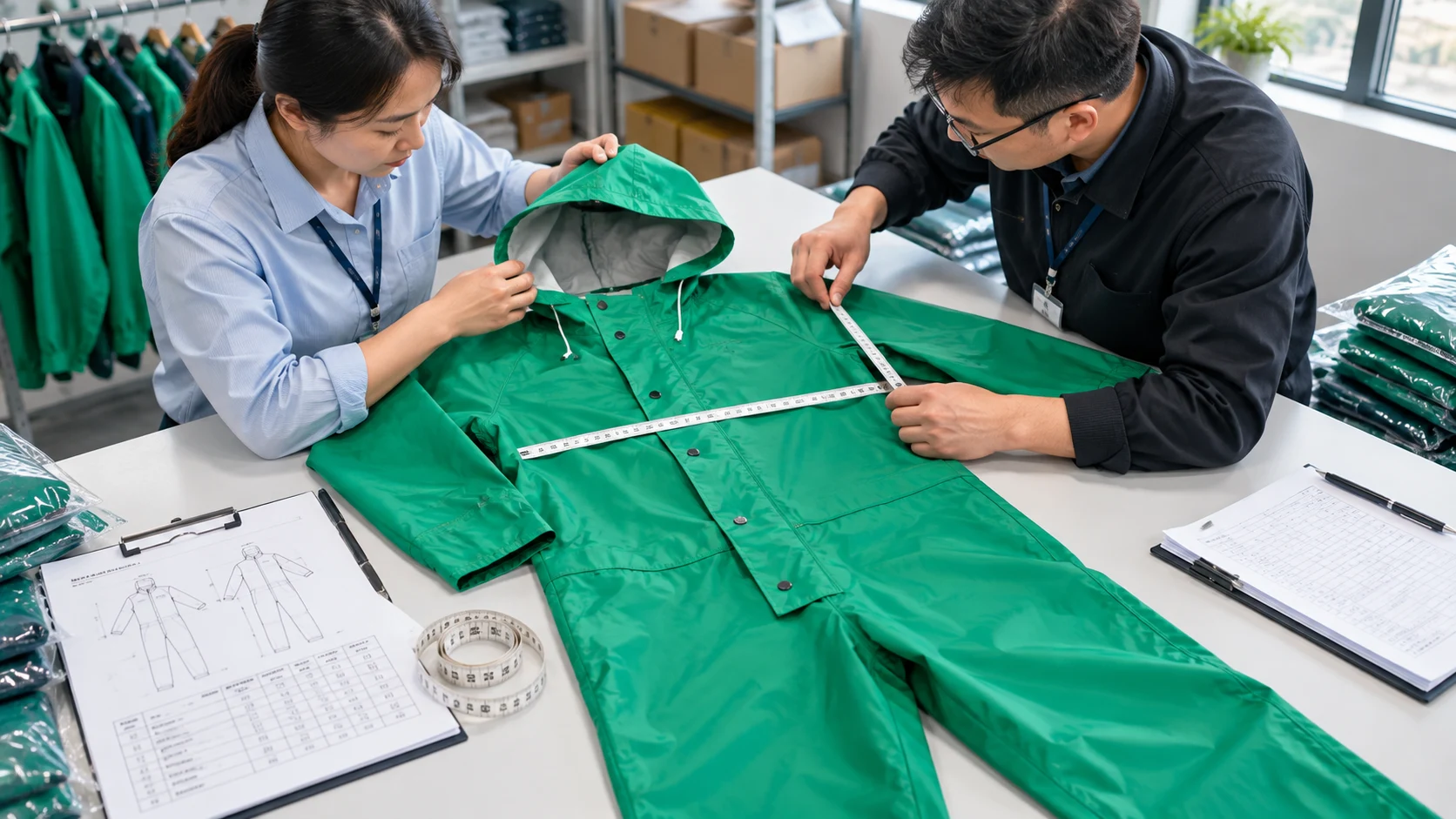
A one-size description does not show whether the poncho will cover runners wearing warm-up layers or volunteers carrying radios and small packs. Ask for finished body width, length, hood dimensions, and arm coverage, together with tolerances and a measurement diagram. Test the sample over representative clothing. The wearer should be able to put it on, reach forward, sit, and remove it without loading the neck opening or side seams.
Inspect Openings and Seams
Lightweight film can perform for limited use when cutting and sealing are controlled. Inspect the neck opening, hood connection, arm openings, side seals, and any sharp corner where a tear could start. Look for continuous seals, clean cuts, consistent margins, and no visible pinholes or partly bonded areas. Random samples from production packaging provide better evidence than a single presentation sample.
Make Packability Part of the Specification
Packability is an operational requirement, not just a product feature. Individually packed units stay organized, are easier to count, and can be separated into station-level cartons or bins. The pack should open quickly without tools, yet protect the folded poncho from punctures, dirt, and uncontrolled unfolding. Carton dimensions and unit counts should match the storage space and handling method used by the race team.
One RAINCOATGIFT listing provides a PE rain poncho product specification that identifies PE construction and individual bag packing. Marathon buyers should confirm that the quoted configuration, finished dimensions, pack format, carton count, and labeling apply to their production order rather than assuming every PE poncho uses the same details.
Build a Distribution Plan for Bulk Rain Ponchos
The order quantity should follow the rain-response plan. Start with the populations that may need coverage: registered participants, volunteers, medical and course teams, transport staff, and a defined contingency allowance. Then decide whether units will be pre-positioned, held centrally, or released only when a weather threshold in the event plan is reached. Avoid scattering uncounted cartons across the course, because stock becomes difficult to locate and rebalance.
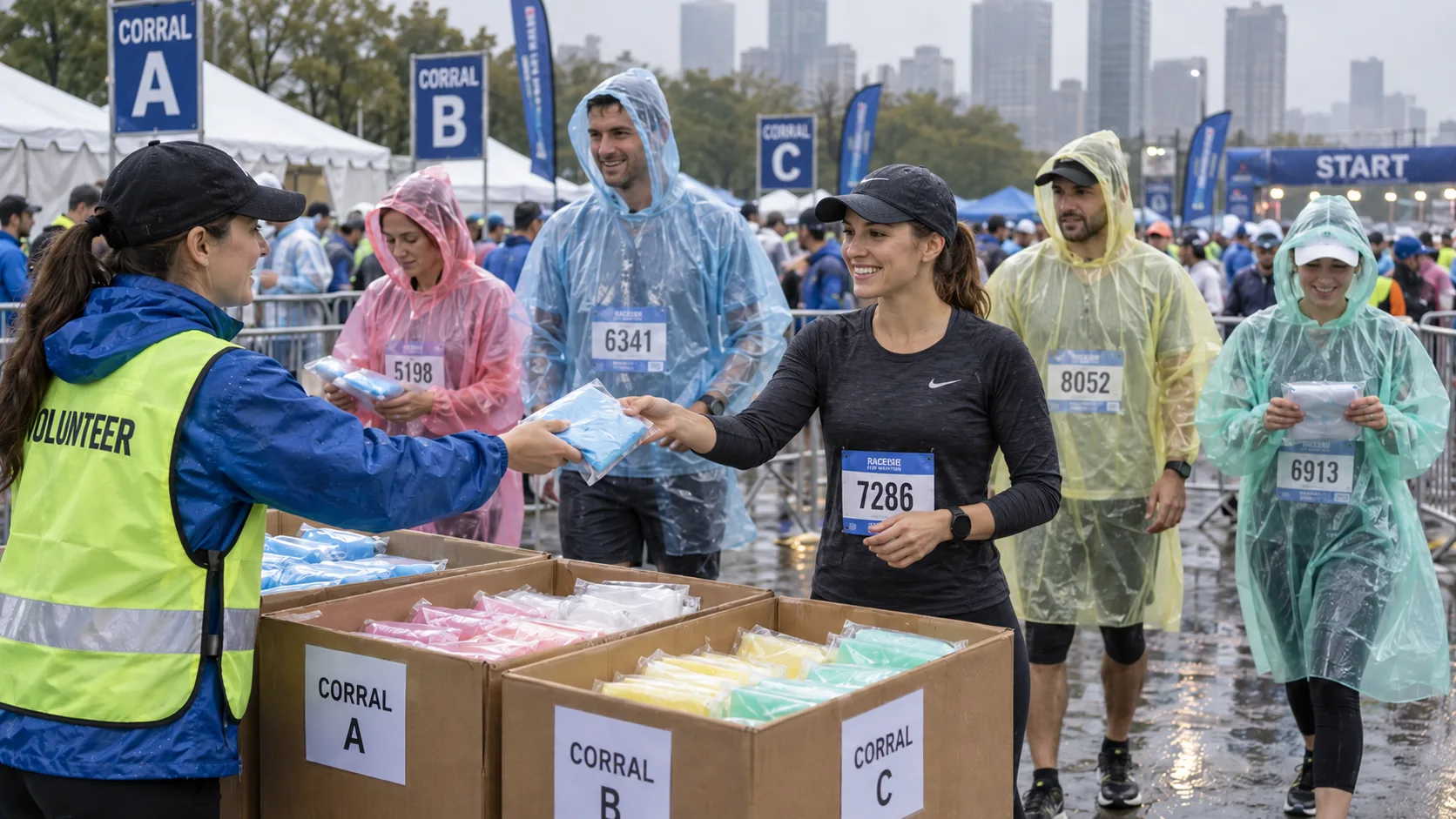
- Allocate stock by location. Give each start corral, transport hub, aid station, and finish zone a documented quantity based on expected occupancy and exposure.
- Prepare station packs. Use clearly labeled cartons or bins with a consistent unit count so volunteers can report remaining stock without opening every package.
- Design the handout flow. Position staff beside, not inside, participant movement lanes. Separate distribution from information, baggage, and medical queues.
- Define replenishment. Assign a central stock point, transport method, contact person, and trigger for moving reserve cartons to a busy location.
- Plan collection and disposal. Place suitable receptacles where participants are likely to remove ponchos and align disposal instructions with the actual material and local event procedures.
Run a tabletop distribution test before race week. Time how volunteers open a carton, count units, replenish a bin, and hand out ponchos without blocking movement. Confirm that labels remain readable in wet conditions and that the package is manageable with the gloves staff may wear. The rehearsal can expose weak cartons, unclear station counts, or packs that are slow to open, then guide carton allocation and volunteer instructions.
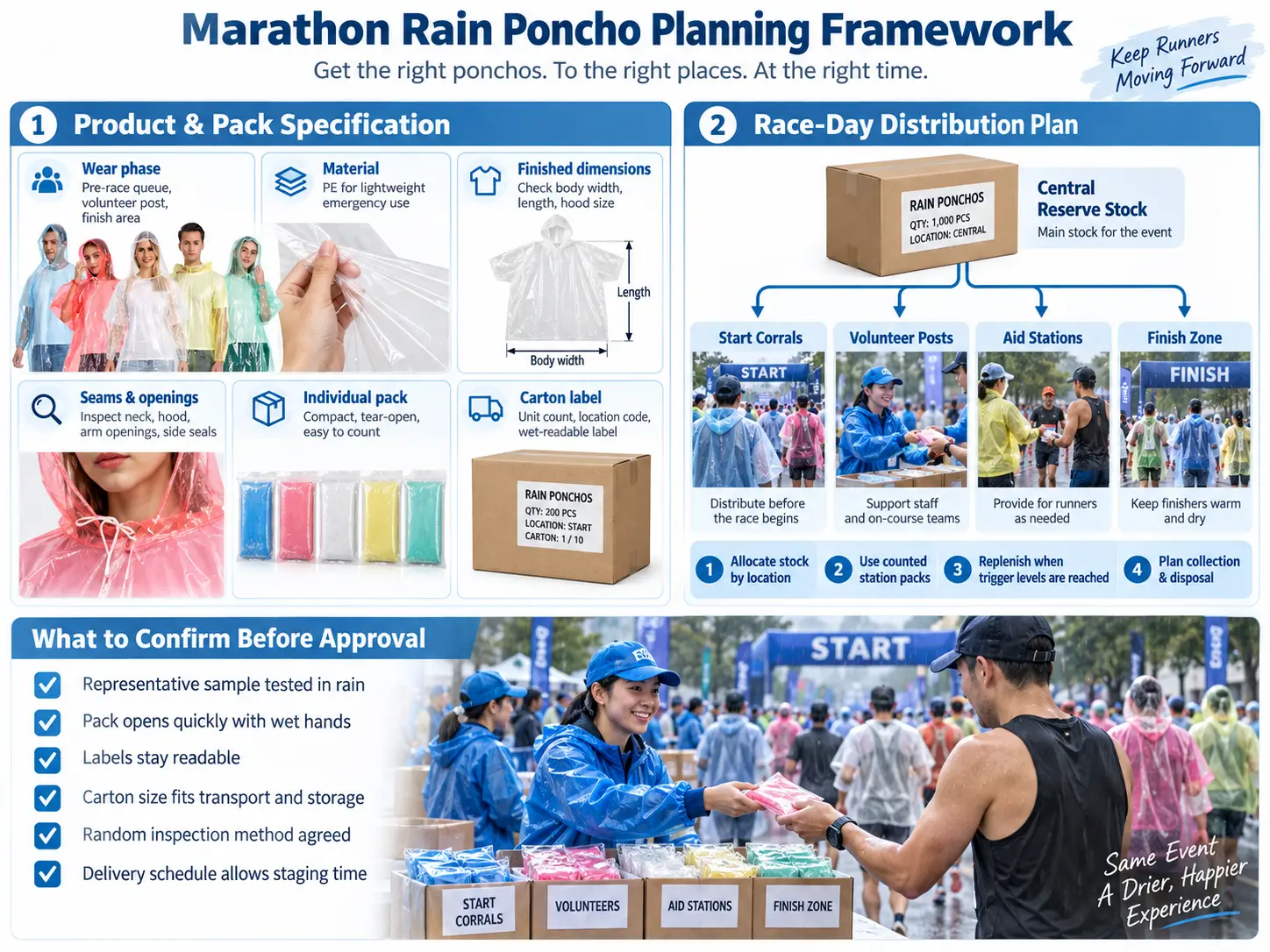
What to Confirm Before Placing the Order
- Intended user groups and whether wear is pre-race, post-race, stationary, or active.
- Material, thickness or weight, finished dimensions, and agreed tolerances.
- Hood, neck, arm opening, and seam construction shown on a production-representative sample.
- Individual pack dimensions, opening method, unit count per carton, and carton labeling.
- Logo location and artwork approval, if branding is required, without placing print across critical seals.
- Random pre-shipment inspection method, sample size, defect categories, and acceptance criteria.
- Delivery schedule with enough time for receiving, counting, station allocation, and contingency planning.
For a large event, approve the written specification and a representative sample together. Record what can vary and what cannot. Incoming checks should then compare random units from multiple cartons with the approved material, dimensions, seams, printing, packaging, and count. Marketing terms such as lightweight or durable should not replace measurable purchase-order requirements.
Connect the Product Choice to the RFQ
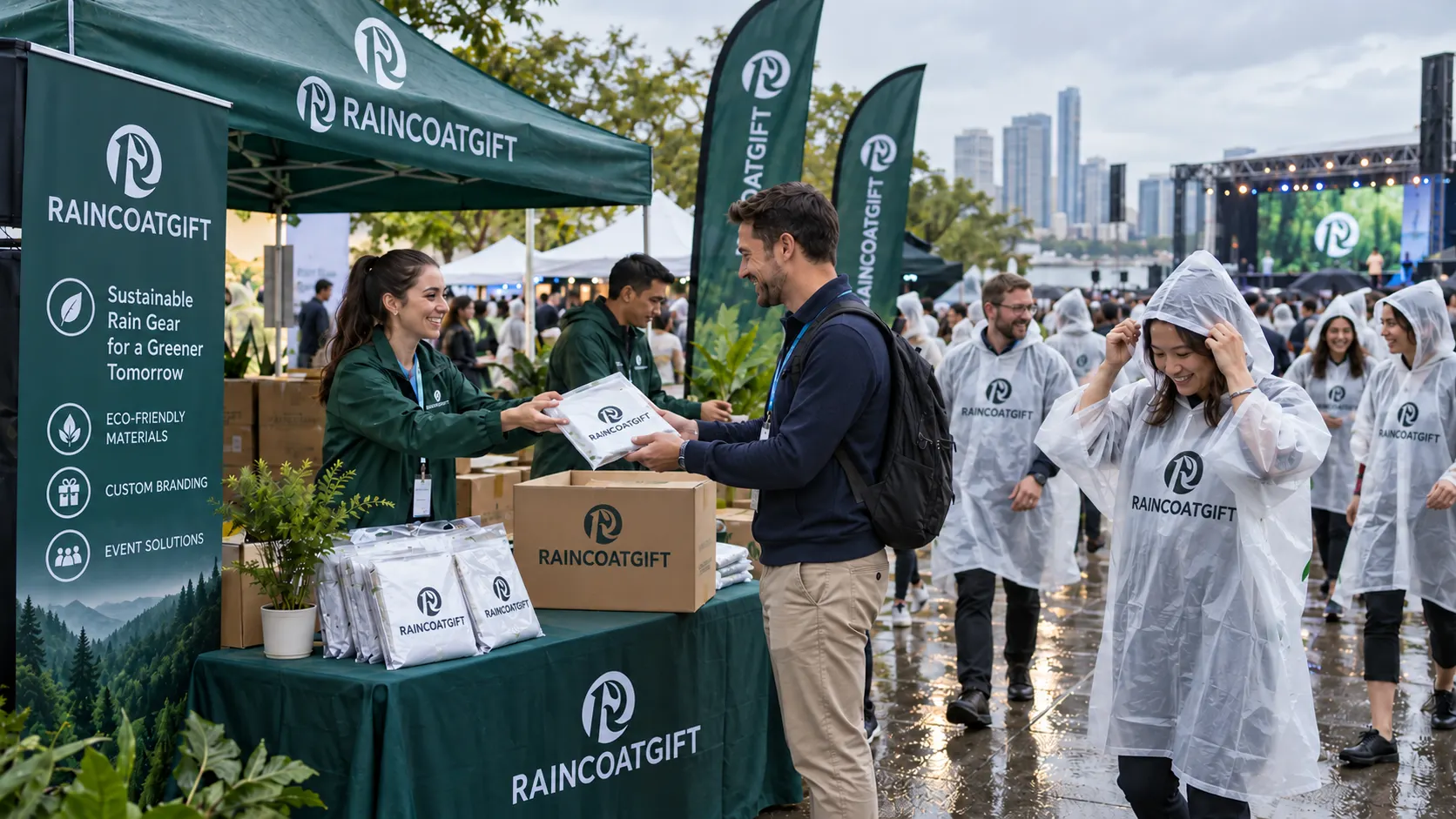
RAINCOATGIFT lists multiple rainwear constructions, including a dedicated PE raincoat and poncho category. Use the category and applicable product page to identify a starting configuration, then ask the supplier to confirm which material, size, pack format, customization, and sample terms apply to the marathon program. Requirements may change with the application, order quantity, dimensions, printing, packaging, and production configuration.
Conclusion
Bulk rain ponchos work best for marathon organizers when product selection and event logistics are planned together. Define the wear phase, verify material and fit, specify individual packing, allocate stock by location, and rehearse the handout and replenishment process. A lightweight poncho is valuable only when it reaches the right person quickly and performs for the conditions in which it will actually be used.
To request a fit check or quotation from RAINCOATGIFT, contact the rainwear team with the event date, expected users, quantity, intended wear phase, material preference, finished dimensions, branding, pack format, carton labeling, and inspection requirements.
Frequently Asked Questions
Should runners wear disposable ponchos during the marathon?
Not by default. A poncho can be useful before the start or after the finish, but active-running suitability depends on fit, movement, heat, wind, bib visibility, and event rules. Test the proposed product under realistic conditions.
Why is individual packing useful for race organizers?
Individual packs simplify counting, station allocation, clean storage, and handout. Buyers should still confirm that the package opens quickly and protects the folded poncho during carton transport and outdoor staging.
How should organizers estimate the order quantity?
Base the quantity on defined user groups, exposure points, the weather-response plan, and a documented contingency allowance. Allocate the total by location before ordering so the number reflects an operating plan rather than a general estimate.
What should be checked on an approval sample?
Confirm material, finished dimensions, movement allowance, openings, seams, printing, individual packaging, labeling, and carton configuration. Make sure the sample represents the proposed production method and record the acceptance criteria in writing.